serangoon road s01 e06: tracks of my tears

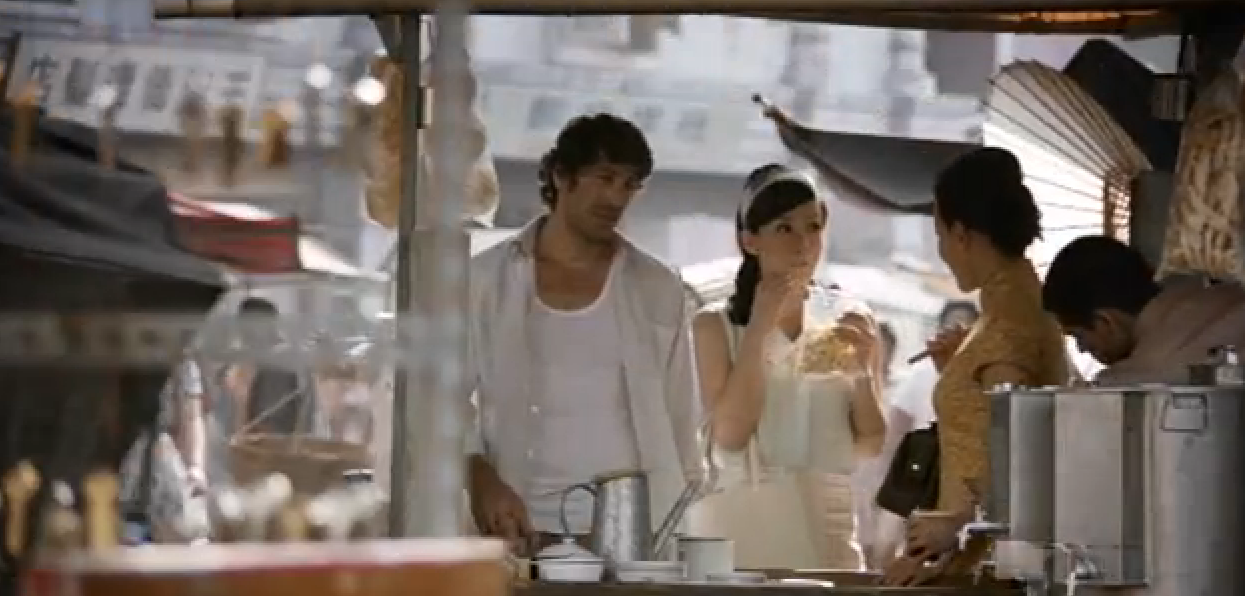
In Episode 6 of Serangoon Road “Tracks of My Tears”, it’s time for the Hungry Ghost Festival! Kay Song’s sister goes missing, a mysterious adorable baby is left on the doorstep of the detective agency, and boring ang moh things happen. Also I get more grumpy about colonialist attitudes in Singapore. And who comes up with these episode titles? 

The episode opens with prayers and performers during Hungry Ghost Festival, and Kay Song doing some praying! I love that he has Tong Goons to place his incense on the altar for him.
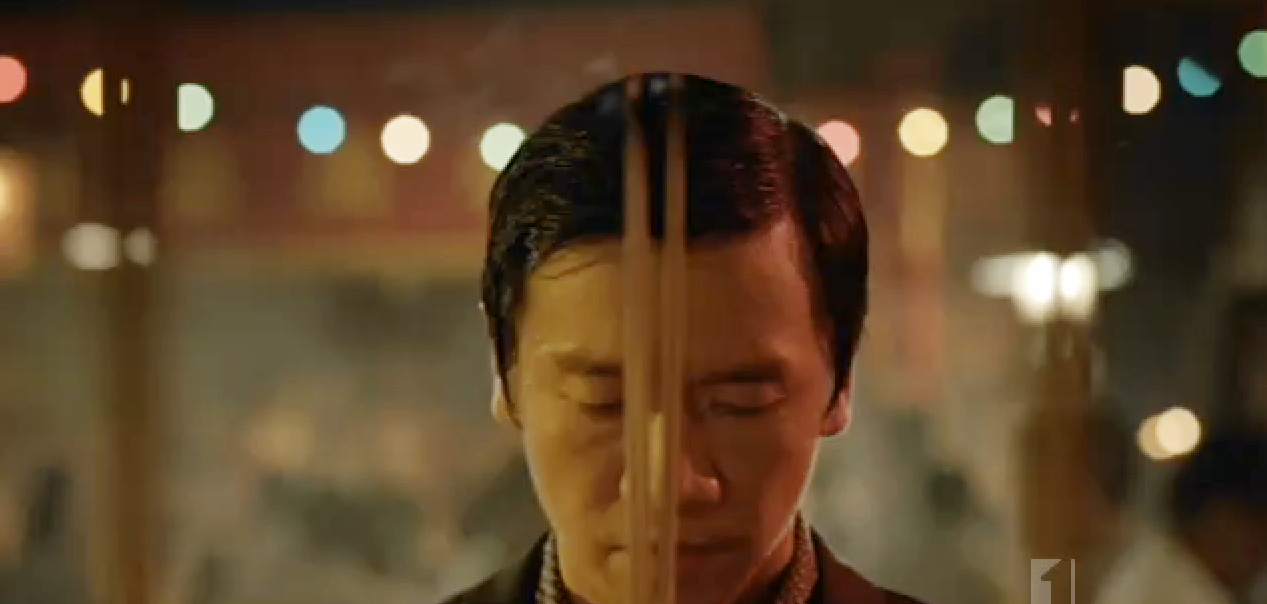
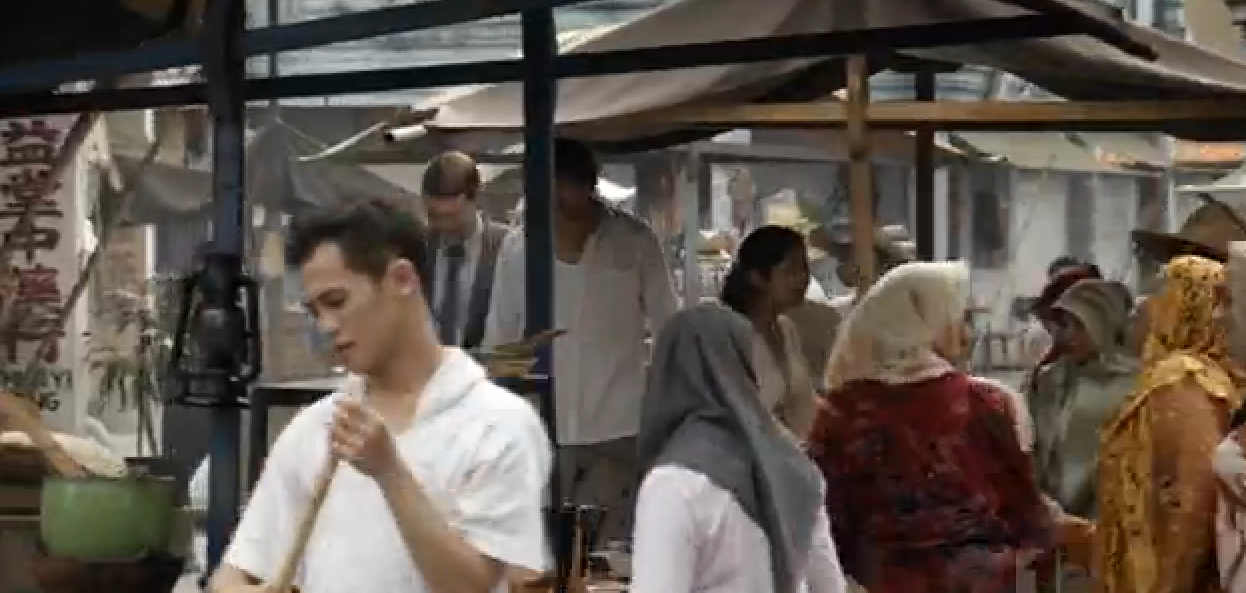
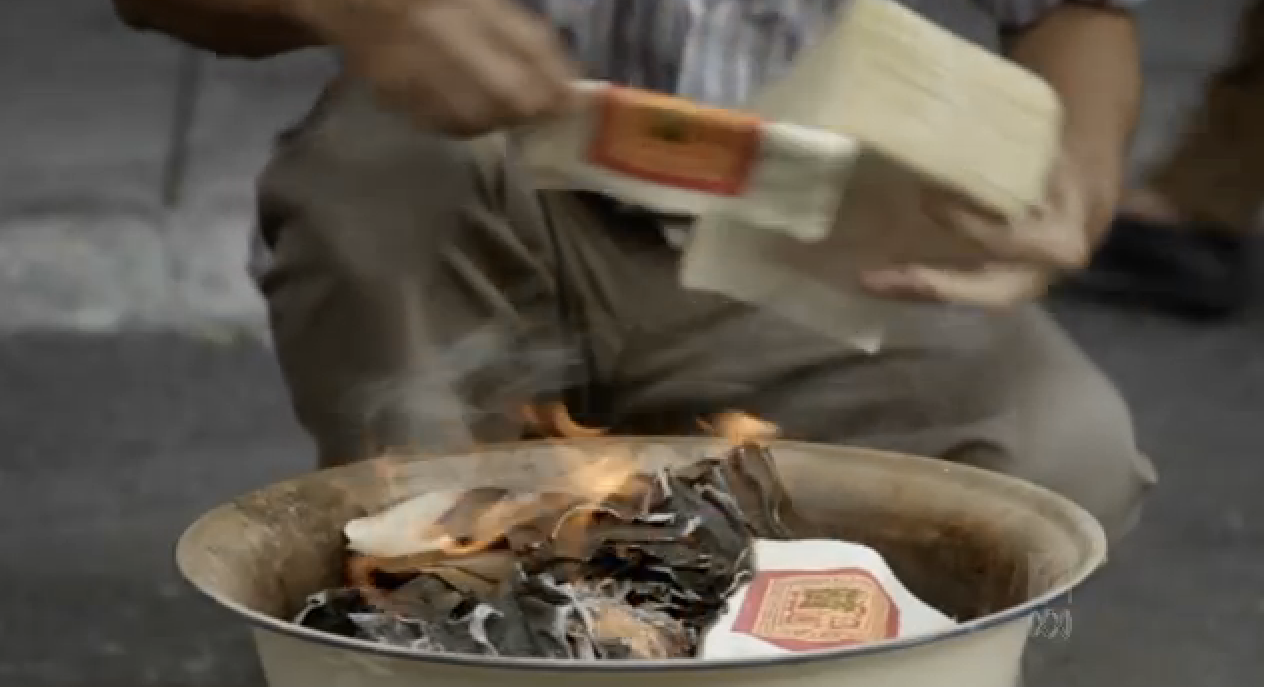
Sam is back in his white shirt watching performers, and he and Kay Song exchange mysterious nods as he leaves and wanders out onto the street. There are a lot of gratuitous lingering shots of people praying and burning hell money and joss sticks. A little kid flips out, calls him e’gui and there’s sinister music and I cry laughing.

饿鬼
饿鬼

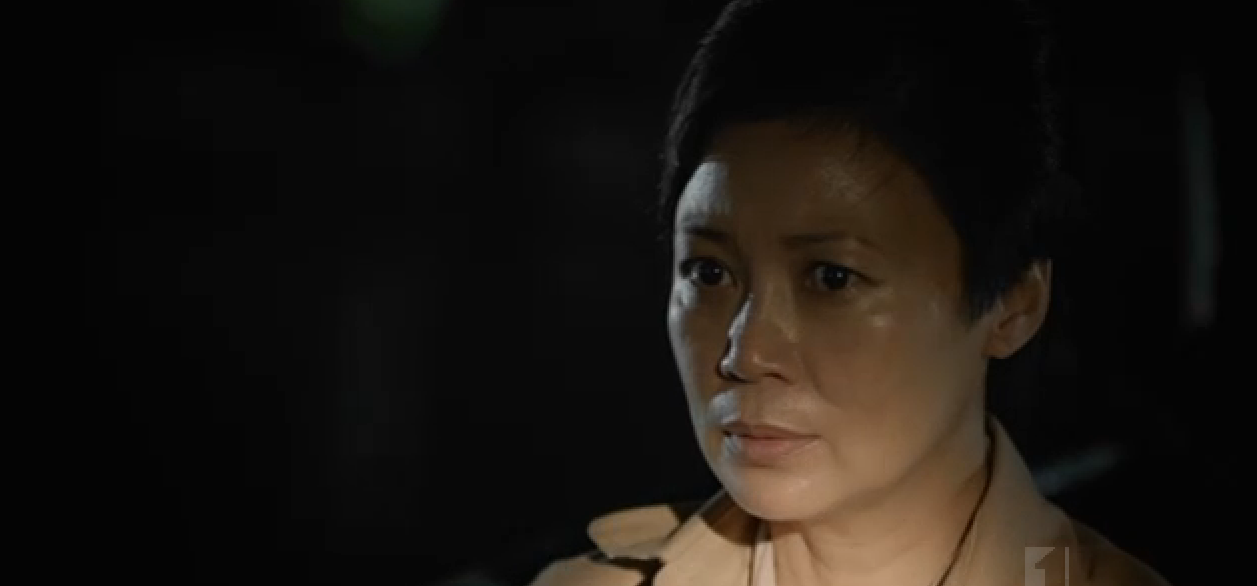
We cut from calls of e’gui to blue coloured scenes and the sound of air raid sirens, so I guess we’re in a memory! Two men walk on the grass to a house. Cut to house. It’s Claire’s house! Is Claire living in Don’s childhood house? Surely not because that’s creepy. I don’t understand why Claire is still here she’s so booooring. Claire gets out of bed; Don creepily watches the window like a creeper.

sr6-memories

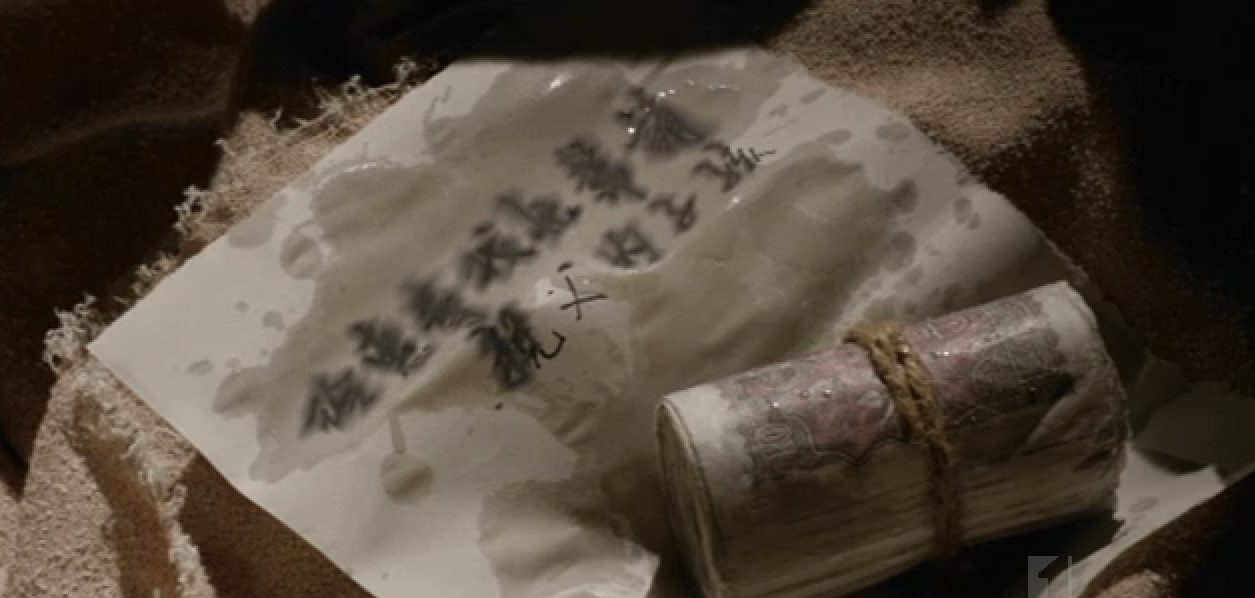
Sinister music plays over this entire section, which is great. Cut to Joan in the street finding A BABY. The baby has a water-stained note with it to which Don says “it’s definitely written in Mandarin but I can’t make it out” to which I say: a) lol; b) dude you are talking to two Singaporeans. You think maybe they might know that?

More importantly, Pamelyn asks who abandons a male baby; and starts sassing (Mr Callaghan, where were you nine months ago?). Don gets a totally hilarious look on his face.
sr6-money

CHINESE HISTORY NOTE: Or Chinese current note, I guess. Similarly to Europeans, historically girls are for marrying off and boys are for bringing in a new girl to the house. So you never give a boy away because he’s an asset, and also in our patriarchal society he is the one with the family stuff going on, the one in charge of looking after the ancestral tablets, etc etc. This is in part what’s led to the huge disparity in male vs female children and young adults in China since the promulgation of the One Child Policy.

We have a little side adventure with Don that goes nowhere, where he tries to locate a woman named Shuang because maybe he impregnated her? It’s pretty weird, but it comes to nothing because he tracks her down and she’s married and has a baby in the house with her and dead end adventure.

CIA dude drops by on Pamelyn, finds her looking after the baby. “It suits you,” he says; “Conrad if you upset this baby I will shoot you,” is her reply. Go Pamelyn, sass him, he’s not good enough for you!

baby isn't gonna take your shit, CIA dude
baby isn’t gonna take your shit, CIA dude

Back in Serangoon Rd, Uncle Owner is very superstitious, spending the whole episode burning hell money, waving joss sticks and admonishing Don that it’s a bad time to be helping strangers. Song Ge threatens Alaric, asking where his (Song Ge’s) sister Weilin is. Alaric might know because he’s been selling black market LP’s to her. But before the threats get far, a dude comes in and whispers to Song Ge, who runs out. Alaric and Don chase him down, and find him by the water’s edge, where there’s a body floating; it is Kay Weilin.

“Man, don’t go in the water,” Alaric comments from the distance of a bridge far above the water. “Spirits of the drowned are everywhere this time of the year.” A) I hear you, bro; B) pipe for the non-Chinese?
i hope the kay family are into this
i hope the kay family is into this (too soon?)

Down in the police station Ario, as always our token speaking-part Malay, tells us that she died of blood poisoning from complications of giving birth. He reveals that there’s no sign of the baby and that the family didn’t know she was pregnant. Should Ario be giving this much info to Don? Are there gonna be favours owed? I don’t understand their professional relationship. Don realises that the baby is a member of the Kay family and they desperately need to get him out of Chinatown because, Don decides, they can’t leave the baby with Song Ge and his Dragon family.

ario our token malay

So he takes the baby to Claire, sneaking past Song Ge and Song Ge’s Tong Goons, who are ripping through Chinatown trying to find the baby. Because that’s his only solution? How is she gonna explain this to Frank? They’re only supposed to be acquaintances as far as he knows. Claire at least protests that he can’t just do this, but she takes the baby anyway because she’s a lady.

Investigation reveals that Kay Weilin had an angmoh friend so Don meets up with Pamelyn who coaches him on turning up to an event where they might be able to identify and discover the friend. She tells him he needs to look stern, but that he actually looks like he needs a digestive tea. I laugh because I love Pamelyn most when she’s being sassy. That’s all I want. Sass. Don tells her to do better than CIA dude. “You sound like my father,” she says, which, there’s nothing wrong with that in this instance, you ARE too good for him, Pamelyn!

moar grumpy!
moar grumpy!

Pamelyn discovers the ang moh bestie and attempts to charm her but is literally the worst, and I can’t tell if this is language issues, acting issues or script issues. It’s like with Violin Daughter from ep 2 all over again. Ang moh bestie isn’t buying it and sashays off.

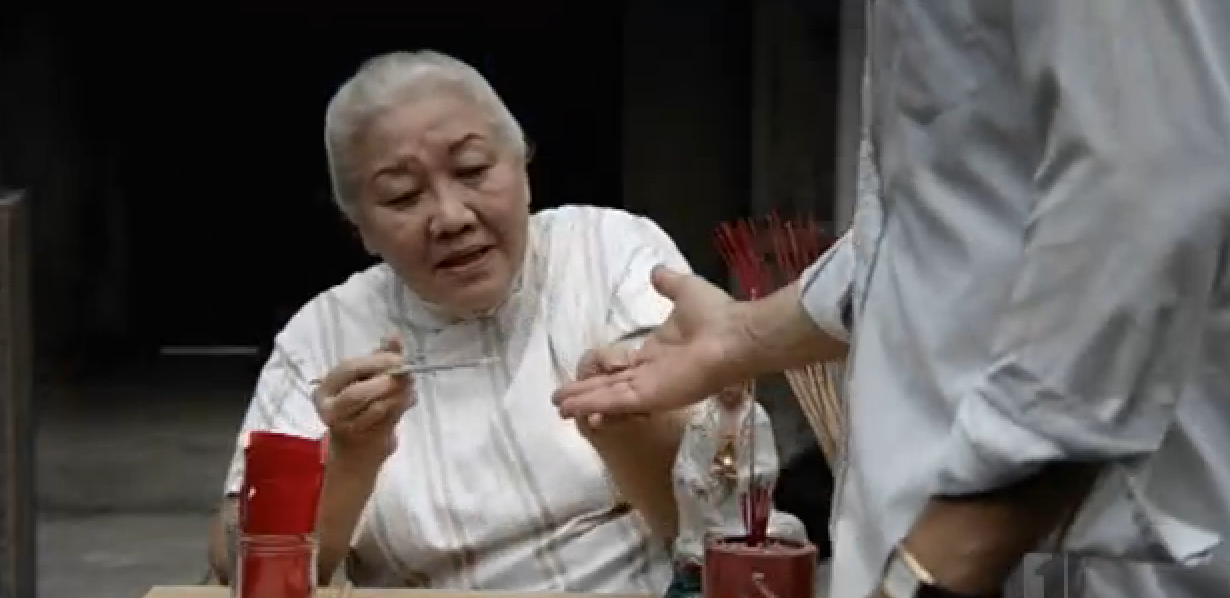
Back in Chinatown they discover that Auntie Fortune Teller, who knows all the Amahs in town (historically quite possible), actually knows who Kay Weilin’s Amah is and they wheedle it out of her by suggesting that if the Kay family finds the Amah first they’ll kill her! Auntie Fortune Teller gets him to promise on his ancestors to keep her safe, which is an interesting thing to get an ang moh you don’t fully trust to swear.

auntie not impressed with you, little ang moh

In the kampungs, Don gets beaten up until he reveals he knows about the baby; Amah actress not so good, reveals that she left Weilin by herself to go cover up with the family and when she came back Weilin was feverish and then she died, so she gave the baby to the ang moh bestie and consigned Weilin to the water and now Weilin is doomed to come back and seek revenge. We are a superstitious bunch, aren’t we? (I would probably be scared too, ngl). As Amah is tearfully confessing to it all being her fault, Don says, “so [ang moh bestie] took the baby,” which, thanks Don, have some sympathy you’ve only been dealing with us your whole life, I mean seriously.

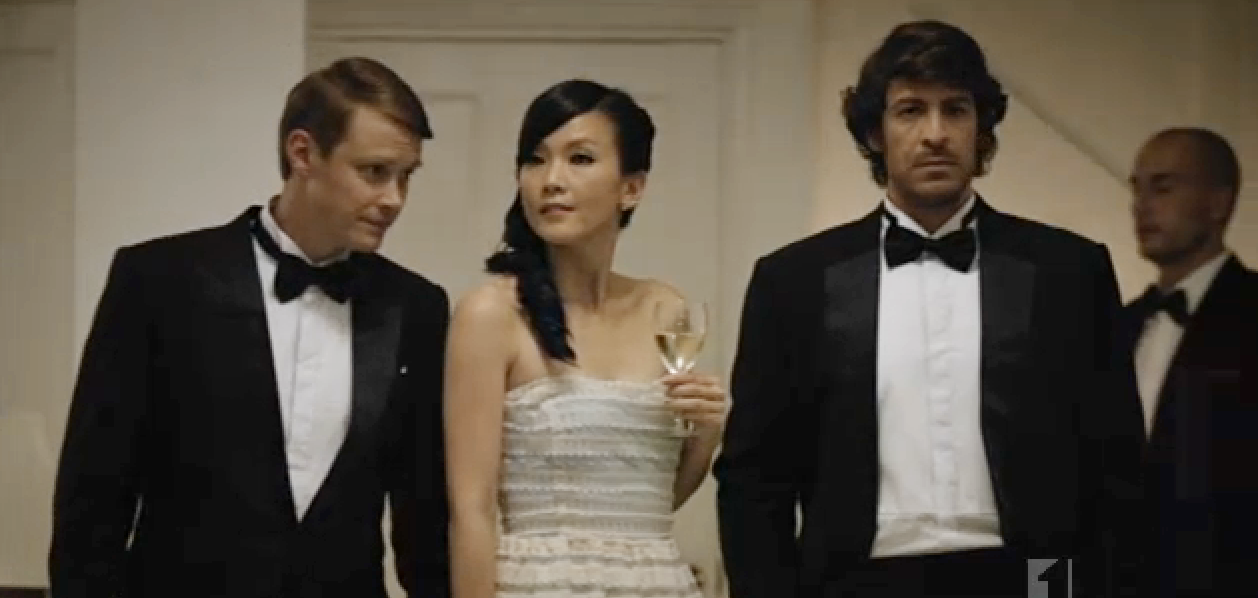
Back in the office, Team Detective are trying to come up with a new way to get in contact with ang moh bff and get her to spill what she knows. “What about that ang moh party tonight?” Pamelyn asks, as if all ang mohs know each other which given Singapore in the 60s, they probably do hahah. After Claire calls the office for “help” from Don re: the baby (what would Don know?!), we cut to another party which I swear they’re all held in the same place (also possible), and Pamelyn is wearing the same dress she wore on her date with CIA dude! PAMELYN YOU ARE PERANAKAN HAVE SOME RESPECT. Don is wearing a suit. CIA looks like he could use a digestive biscuit.
pamelyn no
pamelyn no

They convince ang moh bff to separate from her parents and she reveals that Weilin thought the boy she was sexing thought he was going to marry her. Awwww! And he’s here tonight! Dude (Chinese Singaporean with an Australian accent which is funny because he’s supposed to be English-Educated Singaporean doing uni in England) is in denial; he never received any letters though ang moh bff swears Weilin wrote them. His father storms into the room and admits he stole the letters! The boy wants to take the baby on but his father won’t let him, making it clear that he should never have gotten involved with someone from a Tong family and now he’s just gonna have to deal with how the father is choosing to fix it. Boy storms off, making it clear he’s not emotionally mature enough to have an infant anyway.

Back in the office, the phone rings. “Guess who,” Joan says, holding the phone out to Don. The looks on her and Pamelyn’s faces are priceless. Don turns up at Claire’s house and I’d like to know where Frank is in all of this? Claire comments that Don is a natural with kids arhghg help. He says he was around kids a lot growing up – in Changi? Claire asks. Claire you don’t just ask someone! Frustrated by not being able to give the kid a home that isn’t in the Kay clan, Don asks Claire, “You know any expat kids who wanna adopt a Chinese baby?” Claire, continuing to show some basic common decency as a human baby, replies “He’s a baby, not a puppy. Given expat circles I think a dog would have a better chance.” Thank you, Claire. DON YOU ARE THE PROBLEM WHAT IS YOUR PROBLEM YOU CANNOT JUST PALM OFF A CHINESE BABY TO A RANDOM EXPAT FAMILY ALDKAJFADF.

this is how we all feel right now

Sorry. Hi. We cut quickly to the detective agency and Serangoon Road. There is a mysterious woman walking the streets holding a package, which she drops on the steps of the Cheng Agency, which is becoming a bit of a pattern. She knocks and runs off, and Joan comes out to discover the locket from episode 3, with the picture of Joan and Winston in it. DUN DUN DUNNN.

Meanwhile, trying to hit an emotional note, Claire advocates for giving the baby to the Kay family and asks “did your life turn out the way you thought it would?” Don has some more misty flashbacks, and we transition to the truck that appears to have replaced the Kombi. “This is gonna get you killed, man,” says Alaric.

I’m so pissed off that it’s up to the white people to decide to give the baby to the Kay family. I get why they spent all this time investigating – if Weilin went to so much effort, given she was living at home, to hide her pregnancy from her family, clearly she maybe didn’t want them to know and maybe she didn’t want the baby to be a part of the Kay family, for whatever reason. But Weilin died without leaving written instructions, her ang moh bestie knew she wasn’t keen on it but didn’t know what else to do, the father can’t take the baby and Kay Song is tearing Chinatown apart for the baby. What does that tell you, you judgemental ang moh?

In what is probably Don’s longest monologue so far, Don gives the baby to Grandfather Kay, and shows honour and respect in returning the baby, and asks that in return he grants a favour: not seeking vengeance. Grandfather Kay is clearly feeling magnanimous and/or wants Don to do him more favours in the future; he grants the favour for the boy and the girl, but he says, a member of my household – “she cannot go unpunished.” Don asks him to reconsider, but Grandfather Kay doesn’t even look at him, he just keeps playing with the baby as he says “It is already too late.” The music over this whole scene is amazing.

Don races off to the kampung to find Kay Amah, leaving behind Alaric who went to get drinks or something (for reals). In the kampung, Kay Amah is cooking and turns to find Song Ge staring at her. He floats into the room, Amah serves him some food and he kneels down beside her at the table. He is quiet and kind of menacing. “I’ve been having these dreams, Amah,” he says. “I would have you sing.” It’s kind of menacing and kind of not, and I honestly can’t tell whether he’s gonna kill her or not, so excellent work my friend. Amah sings and Song Ge lies his head on the table and looks up at her.

Don swings to a stop at the kampung and leaps out of not the Kombi. Song Ge walks into sight, pulling his sleeves down. They face off, Don all puffed and Song Ge all quietly sinister. “I slit her throat and fed her to the crabs” he says, and Don believes him until Amah comes into sight. He’s sending her off to hid! “If my Grandfather finds out, it is you who I shall be giving to the crabs” Song Ge threatens as Amah sails off; doesn’t look back.

In the boat house, Alaric agrees to something with two Chinese guys, without their ang moh partners present. “Don’t worry about him, just keep this between us,” they all agree. ALARIC NO. Why sometimes such good decisions, other times clearly such bad decisions!

Joan plays with the locket and talks out loud. We pull back and discover she is sitting talking to Winston at his tablet. She is puzzled and unsure and I love you Joan. Uncle Owner is still burning money, and this was so superficially about ghosts, I really did expect more instead of this sledgehammer of meaning and just bam bam bam! It really could have been about ghosts, or about the Chinese fear of ghosts (especially in SEA), instead of whatever this mess was.
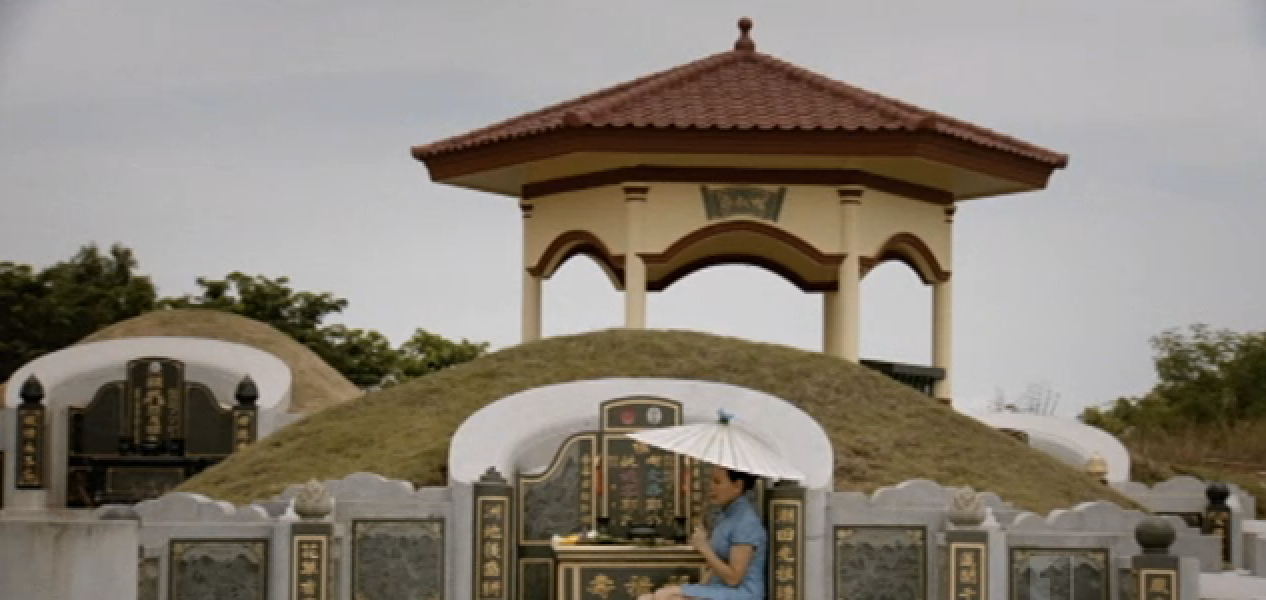
We end with Claire hiding out in Don’s house, telling him she’s gonna leave Frank. But if she leaves Frank won’t she have to go back to Australia? I find it hard to believe she has her own funds. Then the ang mohs make out and I yell at the screen.

This was a weird episode, with real attempts to make sure that the A plot was basically the entirety of the focus, with only little hints of other things, but it still felt like it lacked whatever was needed to bind it together. The moments with the ghosts and babies and traditions felt forced, not artificially added on but as if they were uncomfortable being there; but at the same time it gave some excellent moments of colonialism and attitudes in Singapore in 1964. I feel very mixed about this episode: I definitely can’t say it was a good one because there were some notes I loved; but at the same time it was terrible.

A, Miscellany:

  • The writing and the acting has definitely dropped again in this episode. WHY MY ABC WHY.
  • Don and CIA dude get into fights over the Singaporeans in their lives. Don threatens CIA dude re: Pamelyn (I don’t care how you treat me but “you upset her, that’s another story”); CIA dude threatens Alaric (he’s on a communist watchlist ?!!? “if we do not stand up against communism it will destroy us.” Americans.)
  • I wish they’d stop trying to make fetch happen with Pamelyn and the CIA dude. It’s so contrived and awful, AND he just keeps pushing for a yes past every one of her nos until she just gently drops into not a no. “I’m repulsed by every single thing you stand for,” Pamelyn says, and I wish they’d stick with that!
  • Alaric: “you know I can’t read white guys.” I hear you, 哥哥.
  • I’m always glad when we get more background on characters, but Song Ge was super upset only this was the only time we’ve ever seen Kay Weilin. Dead lady only in a Singaporean setting for the gangster baddie is still a lady in the fridge. Expansion only with dead ladies is it?
  • Fortune Teller Auntie! So the best. She tells Don to stay out because it’s Chinatown business and I love it, because no matter how much he wants to be a part of it he still always holds himself a little separate, like all ang moh in SEA at the time. Perfect characterisation. Also yes, he should go give sacrifice instead. Baby Grandaddy tells Don “you’re an outsider, you don’t understand;” I would really love it if they keep exploring this aspect through the show, how Don wants to be considered wholly Singaporean but he never will be because he won’t let himself be.
  • Every instance of Joan making fun of Don makes me happy.
  • Why ‘Tracks of My Tears’? Why not something to do with it being 中元节? Something to do with ghosts or…something.
  • Speaking of all ang mohs knowing each other, did I mention that time I was trailing behind my parents at 10:00 in some random shopping centre in Penang and my dad literally bumped into another ang moh he knew when he was stationed at Butterworth 25 years earlier? All ang mohs really DO know each other in SEA in the 60s-70s.
  • No Rachael Blake, no Tony Martin. Boooooo.
  • Hokkien watch: lots of use of ang moh.

Next week: Alaric is caught smuggling explosives and Pamelyn refuses to help clear him. DUN DUN DUNNNNN

if you are the one (stereotypes for dating)

While living in China I met my friend Wendy, also a Chinese-Australian from Melbourne. We would hang out often, through the afternoon and into the evening. Eventually, though, she would run off from me, to go watch her Chinese dating show. I would make fun of her. Then we came home to Melbourne.

fcwr-4

If You Are The One (非诚勿扰) is that Chinese dating show. I love it.

The premise is that there are 24 women, and they stay on the show episode after episode until they end up with a date. Each episode features 4 guys; they show some (pre-filmed) videos and the women ask questions, and through this process the women turn their lights off if they become disinterested in the contestant. At the end, if there are lights on, the guy can choose one of those remaining women.

Often, even if there are lights on, the guy will say no to those remaining, and leave without a date. Frequently, they will leave without a date anyway, because all 24 women will have turned off their lights. Sometimes the contestant will have a large number of women to decide between, and the women will have done the hard sell on themselves, which is always super excellent – I love a woman who puts herself forward, and is in a situation where she is supported in putting herself forward, as they all are on 非诚勿扰.

Each guy is on stage for between five and ten minutes, so everyone has to decide fast. The guys might have a better idea of the women, as the women stay on episode after episode (and are filmed and screened regularly), and viewers can get an idea of their personalities. The questions are pointed, and cover all sorts of things; the decisions are snap and sometimes seemingly random. The outcome is serious.

Prior to watching 非诚勿扰, I’d always considered dating shows boring, superficial things; nothing wrong with them, but kind of pointless and not for me. At the end of each opportunity, two people leave to have a date, and if it doesn’t work out it doesn’t work out. 非诚勿扰 is not like that. It is portrayed as very life or death, must end in marriage stuff. If it’s going to be ‘let’s have a date and it might not work out,’ people clarify with “let’s start as friends and see what happens,” rather than the other way around.

fcwr-1

Now that we are home, and 非诚勿扰 airs on SBS2 Tuesday through Thursday nights, Wendy and I watch it together, from our own couches. We text our often snarky comments back and forth, making snap pronouncements and guesses as to the outcomes. It is easy to do.

非诚勿扰 is incredibly stereotype based; it’s all snap decisions and assumptions, and every word and every choice is weighed for significance and, usually, allows someone to be found wanting. One contestant came out in a t-shirt, and a woman berated him for not caring about his appearance. Another woman came to his defence – she was an art gallery owner, and analysed his clothes, correctly deducing that he had designed the print on the shirt and was wearing it for the first time this evening, and based on that deduction would be happy to leave her light on for him. (He chose her, in the end)

If a contestant is a little large, or 胖, we assume they will lose a number of lights. If the contestant is nerdy looking, or old, or bald, or too ridiculous when they come out; if they focus too on one thing, or talk too much about their parents, then the women will turn their lights out.

One contestant says “I lived in Taiwan for so many years, and most girls I have met are Chinese, so I’ve become accustomed to getting along with Chinese girls…Unlike foreign girls who always keep talking during a chat, showing no respect to others, Chinese girls are generally more considerate,” said Joel. “Maybe they’re influenced by traditional Chinese culture, Chinese girls are good listeners.”

Gosh! We are, aren’t we? I know I totally am.

fcwr-3
(the contestant’s reply to ‘every girl you know in Australia is very independent?’ was ‘i don’t hang out with locals’)

Over two weeks SBS2 aired the Australian specials of 非诚勿扰, and despite the many things I could say about the show, it is this in particular about which I would like to chat.

非诚勿扰 is allegedly based on failed Australian dating show Taken Out, and is currently so popular in Australia it’s discussed on AFL forums. It’s been profiled on the Vine, with an article entitled ‘Why we’re obsessed with If You Are The One’.

Why ARE Australians obsessed with 非诚勿扰? Why am I?

We’ve seen dating shows before, and we’ve seen this dating show in particular before, and it failed. But it’s now so popular here it’s on SBS2 three nights a week (though last night’s episode was a repeat).

How much is laughing with, and how much is laughing at? These two screencaps at The Vine really highlight that for me:

fcwr-2 fcwr-1

This is a Chinese way of speaking, of communicating; of making sense of the world. Was this cap set chosen because we’re making fun of Chinese people? I mean, I know it’s awkward in English but are we as Australian viewers being encouraged to make fun of Chinese language quirks? (an aside: I totally struggled with this when I spoke Mandarin every day)

Don’t get me wrong, I make fun of Chinese people. But that’s a thing I get to do as a Chinese person, having lived in China, understanding what it is exactly that I’m making fun of; understanding that I am, in essence, making fun of my self, of my family, of my history.

And I wonder, what is the line between real and unreal; between stereotypes for good and for bad? And how will that impact me, in my life? People take this show seriously, so I feel justified considering its messages seriously.

There is growing scepticism within China as to whether foreign specials, and participation of foreigners on the show, is viable and realistic, or simply a ratings grab. Can foreigners have stable long-term relationships with Chinese people, due to the cultural differences?

The Australians on the show (all Chinese, born outside of Australia – from China and Malaysia), if they mention dating an Australian woman, say it didn’t work out due to cultural differences.

As someone with an Anglo-Australian father, even I’ve had a whole lot of cultural differences in failed relationships with other non-Chinese Australians, yes, but to attribute all of them?

My mother, when I first started dating, advised me not to date a mainland Chinese man – for fear he would be too traditional, too feudal; he would expect me to stay at home and look after the children. The opposite, indeed, as suggested by this article:

Zhou also said she believes that many foreigners don’t fully understand China. “All they have learned is the old feudal culture, which says that women should stay at home raising children and doing housework. I also met one who didn’t want his girlfriend to be a model or an actor, as he thought that was not appropriate for Chinese women.”

Even news.com.au is talking about 非诚勿扰, and they mentioned the Australian special:

If they’re serious about a dating show, they – and you – need to get onto If You Are The One. Chinese dating show. Big there – 50-odd million viewers – but not huge given the population. It’s culty though. You wait til you watch it. SBS has now put it on Tuesday through to Thursday, because people are discovering it and its frank charm. It’s a kind of panel show, the guy comes out, there are questions, they give their assessment, he gives his, his friends appear in a video and say their piece, he picks his girl, the end. It’s sensational. None of the fakery of The Bachelor. It just feels fake doesn’t it? They’re all too scared to say anything real, I feel like. So last night there’s a guy on, Luo Si, 29, he’s from Sydney, where the universities have no gates – this is what he says – and his experience with relationships is very discouraging. “Like waves, they don’t settle down … I just want to find the right girl. But who is the right girl? Can you tell if you believe in love? What is love?” Fantastic. His friends came on – and it would’ve been better if this bit hadn’t been shown – and talked about how he was in love with a girl he chased for two years. She showed “no reaction.” Each time he was rejected, one them said, he’d drink by himself. In the end Luo Si chose the girl who said she liked cooking and cleaning.

It’s culty, they say. But what makes it culty? Is it the seriousness and the earnestness? Is it the ridiculous costumes my current favourite wears? Is it the attitudes and the silly noises and dances? Or is it the laughter, the laughing at and the laughing with?

my current favourite always wears costumes

I love laughing with it, too. And I love the insights it gives to Chinese culture, traditional and otherwise, and how it reminds me of being in Beijing, even reminds me of the friends I have long since left behind there.

In China, an article in Time suggests, 非诚勿扰 and shows like it are popular because they’re honest, and because they place capital in being honest, and there is a lot of dishonesty in China and across the world, in dating and in other areas. And I love that about it, too.

One of the Australian contestants was doing well, he had 24 lights on at the first video, and still over ten as his last video began. In it, his cousin tells a story of when they were younger, they were making dumplings and the contestant was sent out to purchase chives, and brought back ‘green vegetables’ (this usually means gailan or bokchoi) instead. The cousin laughed and said, but I’m sure he’s better now, but it was too late. Almost in unision those lights turned off, the implication already there: this man cannot look after himself. That from a 20 second tale about vegetables.

One woman, when asked how she budgets, confesses that she spends all her money by the end of the month and doesn’t save at all. A previous woman was notoriously stingy, rejecting immediately any man who she felt spent too much, regardless whether he had the personal wealth to support it.

“I can’t tell if you didn’t shave or if this look is intentional,” murmurs one woman. “You look much better in the video than in real life,” states another. I love them and their honesty and their abruptness. It seems so genuine. I think this is in large part why I love this show.

I have no real conclusions, except to state that based on the assumptions on this show, I’m only ever gonna have great relationships with other half-Chinese half-Anglo Australians from Malaysia.

If you’re in Australia, you can watch If You Are The One with English subtitles on SBS2 or on SBS Ondemand. If you hang out on twitter you can chat about the contestants using the #ifyouaretheone hashtag, which the SBS2 twitter does quite actively. If you’re not in Australia, you can watch it on the Official Youtube (no English subs).

serangoon road: s01 e02 reach out

In this week’s Serangoon Road, Macca the Journalist convinces Don and Joan to take on the case of a woman’s missing husband, I fall in love with Xiang Yun, Alaric Tay is devastatingly absent and I have some feelings about the attitudes of Australians in SEA in 1964 and even now. So many spoilers, for history and for this episode.

We open to some Singaporean cops searching two small boats, shining lights in faces, and asking to see identity papers (this is the English translation, which distracted me so I can’t remember what the Mandarin was but it wasn’t identity papers). A lady looks stern and silent (it is Xiang Yun and you should love her); she jumps over board without moving a facial muscle and I flip my shit.

Look at that stone cold acting from Xiang Yun

We move to the boring white lady hanging out with Don Hany, where he warns her that Bugis Street is “not Sydney or Paris Claire, it’s dangerous” and please, I don’t even need to bet you $10 that she goes to Bugis Street in the next ten minutes.

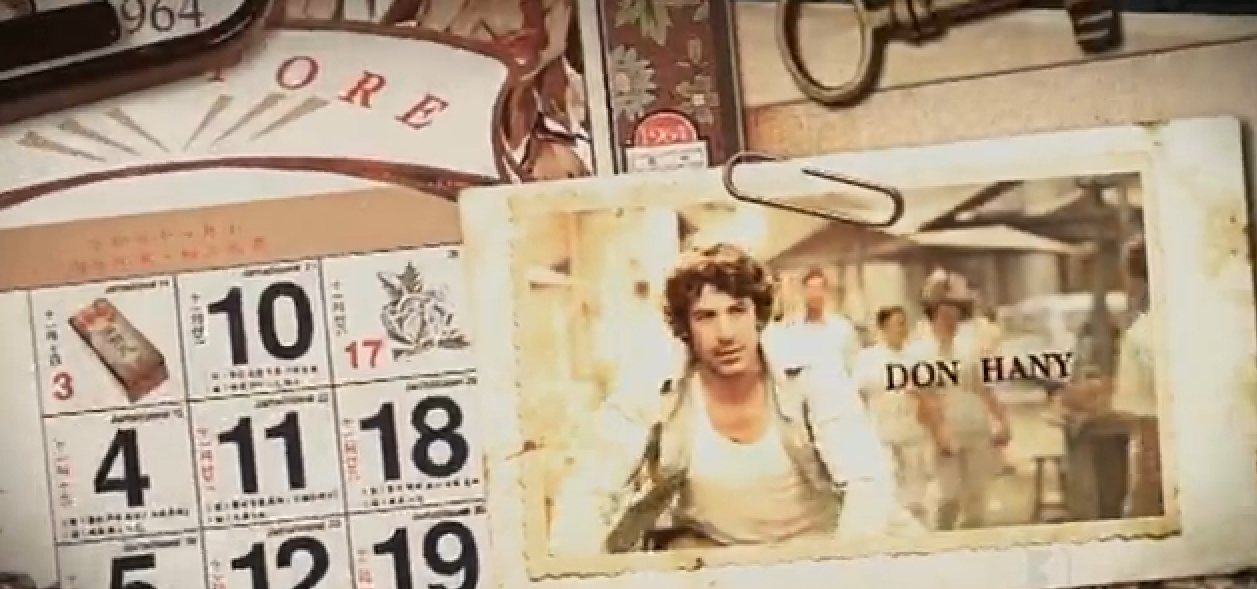
bikes in singapore: quaint thing of the pastThis cap comes to you courtesy of the credits, which I actually quite like. Reminds me of being at home, with the Chinese calendars all my family always has hanging on some random hook in the house or apartment.

The next scene in Bugis Street had me crying with laughter which I am almost certainly sure was not its intention. Don Hany glimpses his white lady chatting and smiling to a local Malay vendor (NOT EVEN TWO MINUTES) and as Don gets distracted by his white lady, Alaric Tay gets distracted by porridge and this is basically the last we see of him all episode, bye Alaric I love your delivery of “I’m going to get porridge.”

Claire who adds nothing of interest and fun to this show follows the Malay trader down an alley where he gets aggressive and tries to sell her some sex and then his buddies come to steal her purse and Don comes to rescue her, which a) racist and b) oh what a surprise, thanks everybody.

Today’s A-Plot mystery of the week is about Xiang Yun, who moved from China to Singapore when she was 18, and whose husband sent her away during the war and then OH NO NO MORE HUSBAND and Xiang Yun has just smuggled herself back in to Singapore to see if she can find him. I actually quite enjoyed many elements of this week’s A-Plot (most especially Xiang Yun) but I have some questions: 1) if she was living in Singapore for several years, now that she’s back, why is she considered an illegal immigrant? Would like to know her status at that time. 2) it is hinted that it took her a long time to get the money together to smuggle herself back into Singapore and out of China and I can attest to that on a personal level but twenty years? with no risk of indenture at the Singapore end? hmm. not sure.

Don and Joan take on the case, and start by trying to locate where Xiang Yun used to live. Now, this show has some bad acting at times, but usually the Singaporeans can be relied upon to be excellent actors. Except apparently not in this scene, featuring some terrible acting by Singaporeans and I retract the ‘adequate angmoh’ I granted Don Hany’s Mandarin last episode.

Singaporean terrace houses! Love them

This episode’s random incursion to the lives of white expats introduces us to Nicholas Bell playing Maxwell Black, who tells us “it’s all very civilised once you get used to the heat” and that it’s key to marry “keepers” because they’ll stay with you and not fly away; I expect next episode we’ll be meeting another expat who is going to tell us to marry a local woman and I’m going to raze everything to the ground. The thing is this scene is not wrong. It’s averagely acted and poorly scripted but the thing this show is doing right is the condescension to the environment and the situation and the locals, as if nobody matters but themselves and their opinions. It’s perfect, I am a product of this time and it is so perfectly written I want to kill everyone.

The one thing that jars in this characterisation of every Australian in SEA in this period is when Claire tells Don that their taxi driver pointed out the ‘Tiger Dragon,’ leader of the Red Dragons and grandfather to my boyf Song 哥, eating in a noodle house. Unless their taxi driver is their regular driver and it’s just a dialogue issue, local driver isn’t going to tell two whities that info.

Upon arrival at the makanan, Don gets beaten up and Song blows him off before Song’s grandfather delivers a deadpan “等一下” and Song covers, inviting Don in. I cry with laughter. Grandfather passes on apologies to Joan, and I wonder what is going on. We cut to Joan buying vegetables in the wet market, who is definitely a much better actor in this episode than in the previous one.

BLOOD
really broke the costuming budget on that one

Don and Xiang Yun visit a house she is sure she used to live in; she yells “this is my teapot” and “this is my hair piece” while pulling out a hair piece from a woman’s hair and it’s great. I never catch this woman’s name and you know I’m just going to spoil it for you so I’m telling you now that she’s Second Wife, and she’s pretty great. She later confesses to Xiang Yun that she met Xiang Yun’s husband because she was dressed like a man to avoid being taken as a comfort woman, they were all taken in a truck to be executed (this is the Sook Ching massacre, if you want to learn more) and Xiang Yun’s husband shielded her and she was saved and he died. I start making notes about how unlikely this is since the bodies were always checked so there’s no way she got away with it, and I’m glad to know this was a hole in Second Wife’s story and not the plot. Joan, Second Wife and Xiang Yun act the fuck out of this scene, which makes me happy, and Second Wife puts the hair pin into Xiang Yun’s hair and it BLEEDS and NOBODY SAYS ANYTHING and I’m like WHAT EVEN. I remain confused for the next twenty minutes. Meanwhile, Joan and Xiang Yun share a quiet moment about sadness and loss and I really love them, it’s an understated scene between two seasoned, wonderful Chinese actresses and it’s the best scene of the whole series so far. Joan’s quiet little “sorry” underscores this really sad, lovely scene, and I wish more of the series was like this, but I’m not optimistic. I love you, Joan.

love you, Joan

Working out why Xiang Yun collapsed and how she was poisoned was super obvious. When Second Wife put the clip in Xiang Yun’s hair there was the trickle of blood and nobody mentioned it on the show so I thought I’d imagined it, which is not a feeling I appreciate when watching a show. However when she collapsed I may have started flapping my hands at the television in disgust over how plodding and predictable it was, of course it was the clip and of course it was Second wife. There are procedurals and then there are procedurals, 我的朋友, and this one is not that clever.

I was frustrated by Second Wife and by Violin Girl. Second Wife as an actor was great, I loved her, but was frustrated by the script she was offered, because she’s all “I did it for you” and also is an unfortunate Indonesian stereotype and I hope, along with the Malay thieves and lack of Malays and Indians in the script, that we’re not going to have to be all stereotypes and racism (though I would like us to deal with racism in the text, it being a very critical component of Singaporean politics of the decade). I was glad when Daughter turned out to be Violin Girl, it explained her non acting, and her ridiculous slapping of the Secretary of my Heart, in the scene where the Secretary of my Heart was code switching like a champion and non-sequitering like the best of SEAzns.

Xiang Yun wakes up to find her husband staring at her, and it’s all very sappy. I like the cinematography in this scene, which I think borders on ‘too sappy’ but actually ends up okay. I hope desperately that Don doesn’t let this send him back to his white girl because he deserves better. This is all so sappy lah that maybe I should just accept that but I expected better than this from my ABC.

creepy grandfather (alive and dead, seriously, guan gong)

Don and Joan go to see my boyf Song 哥 and his grandfather and they have found the criminals bothering Joan (and beating Don up in the last episode). It was an accident, he says, but “if you like you can watch” because “my grandfather can have them killed.” Joan is horrified; I can’t work out why this conversation is in English when it should be conducted in Mandarin. Joan is given a statue of Guan Gong in compensation; Don thinks it’s a warning; the Secretary of my Heart thinks it’s bad feng shui; I think it’s probably got drugs inside it CHECK THE BOTTOM. Joan’s face as she says “the bad forces gave it to us” is priceless.

Joan tells us that she needs justice, and I ask aloud what kind of Singaporean she is.

The episode closes out with ‘Love Hurts’, the original version by the Everly Brothers, over Macca the journalist typing and looking at a picture of Xiang Yun and her husband (a photo in which two Chinese people are smiling? I think not!), Don and his white lady staring soulfully out of (separate) windows across the streets of Singapore, and Joan Chen doing some paperwork before smelling her pen (??!!) and tearing up. As she strokes a photo of her husband there is lightening and thunder. Because we are supposed to feel sad, everyone. NOBODY MOVE, EVERYBODY ACKNOWLEDGE THAT LOVE IS HARD. Maybe I just need to accept that this is a sappy kind of show?

I’m super happy that Don and Claire broke up. Yay!

Anachronisms of the week: Don’s hair continues to be long. I overlooked it last week but this week he went into a super exxy formal event with long scruffy hair and a blowing white shirt over a singlet; Singapore used to deny men entry to the country if they weren’t tidy enough, there’s no way he got into that building looking like that, even if he was waving his Aussie passport around. And also “partners” instead of “wives.” I know I prefer the term partner to the term wife but it’s awfully out of place in 1964 Singapore.

This script is much better than the previous episode’s script, but still not amazing. I continue to be disappointed by my ABC in this regard, especially as everyone on twitter kept talking about Wildside because Tony Martin and Rachael Blake and I’d just like to remind everyone that Wildside is the greatest Australian drama ever. Thank you for your attention in this regard.

wtf dialect

Some odd Mandarin/language issues this week – the Secretary of my Heart comments that she can’t read the book about poisons because she doesn’t “even know what dialect this is” but it is Chinese, how hard was it to read in 1964 it was all traditional so it should all be good okay?

I love all the shade that the Singaporeans constantly throw onto the Americans. This week the Secretary of my Heart shut down the CIA dude (who was talking during the violin recital!) and she’s all “or are you just not one of the brighter ones” and basically the best. I also enjoyed learning her backstory this week, that she breaks up with boys when her parents approve of them and she’s Peranakan and can trace her family back 500 years; usually in these things it’s the whiteys with the background and the Asians who are considered second, and I’m glad to see this subversion here.

I’d really like to know how they got so many great actors into a show that’s this bad; I’d also like to know why so many of them are acting so badly. I know how well they can do! Tony Martin here as Macca the journalist; Rachael Blake makes an appearance (I hope to be repeated) as Lady Penelope, looking all suave and lovely; JOAN CHEN who is usually so amazing and yet not that great in this (though much better this week than last).

A Miscellany

  • Ugh so much awkward white person sex. Must we?
  • Rachael Blake as Lady Penelope looks like she has vampire teeth. I keep hoping she’s secretly a vampire.
  • Xiang Yun’s accent was very Singaporean for someone who was only supposed to have lived there for sixish years.
  • The scene where Don and the Secretary of my Heart talk to the poisons experts was so terrible, it was weirdly scripted and very poorly acted and I’m disappointed in everyone in that scene. Nice to see got some uncle speak Hokkien though.
  • Clothes somewhat anachronistic in this episode, how hard is it to get clothes from the sixties I have clothes from 60s SEA and I wasn’t even born for another two decades. (谢谢妈妈)
  • Don Hany’s pufferfish face was so ridiculous but I loved it.
  • Minus two Singaporean ladies – where were Malina and adorable headband girl?
  • Why did the Secretary of my Heart sit down at the front of the recital when she was only going to have to get up and leave at some point? Along with this and talking to herself and non-sequitering, I’m not sure she’s a great detective.
  • Rachael Blake and Tony Martin have been married since 2003. a) how did I never know this? b) I LOVE THEM SO MUCH ARGH OMG. For non-Australians this is what happens when two actors you loved and whose characters you shipped on a show they filmed when you were a kid, get together. You die of glee.

Next week: Disrespect of Chinese and Singaporean customs; lots of explosions.

serangoon road: s01e01 shotgun

Sunday saw the premiere of Serangoon Road, a new collaboration between my ABC and HBO Asia. I’ve been pretty excited about Serangoon Road, because Joan Chen! And also because Don Hany, and a detective series! And Australians in Singapore (I am frequently an Australian in Singapore, occasional land of my misspent youth).

I was excited, especially after seeing the trailer! But this first episode failed to deliver, and it’s really only my loyalty to my ABC and my love of each of the Singaporean actors and the gambling B plot in this episode that is keeping me tuned in.

Please be warned this review contains extensive spoilers. Also contains a slur to refer to trans people (as used on the show). Also also hover over the caps for further commentary.

Image

Serangoon Road is a detective series set in 1964 in Singapore. It stars Don Hany as Sam Callaghan, a man who was imprisoned in Changi as a child and though Australian has chosen to remain in Singapore, avoiding the expat community and running an import-export company with a local partner. It features Joan Chen as Patricia Cheng, left with a detective agency after the death of her husband, and an old friend of Sam’s. It seeks to explore the racial tensions running through Singapore as it moves through Independence, along with the backdrop of the Vietnam War, Colonialism and the whole thing going down with Malaysia.

It opens with a confusing flashback of two children, one ultimately being shot blank in the face. This leads to close ups of Don Hany’s face, in bed (a bed surrounded by a mosquito net! Oh stars my youth) with a lady. She stiltedly attempts to talk to him about his dream, he turns on the radio and they start dancing.

We cut to some American sailors in Bugis Street, eating hawker food, partying and having a good time. One of these sailors is a black man; it is clear this will be A Thing. There is a commotion, he is yelling, his friend is stabbed, he is holding the knife when the other Americans turn up, it is not looking good for him! Then the street explodes.

Don Hany runs out of the house to a brand new VW kombi, and drives off to save some friends in the explosion. How did he know his friends would be there? Later we learn his friends work in a club on Bugis Street, but it is this random, unexplained, slightly anachronistic tone that sets the stage for the episode.

Image

In adequate angmo Mandarin (I could understand him) Don is informed that Joan Chen has come to visit him. An aside: I love that sometimes the use of Mandarin and Malay is subtitled; but sometimes it’s not! That’s cute! Less cute for you if you don’t speak English and Mandarin and Malay, but you lot can’t have it all, I suppose.

I love Joan Chen, but she is almost pointless in this episode. Her husband has died, leaving her with a detective agency that she can’t run but if Don Hany will do just this one tiny favour for her… it’s the Americans… It’s just a tiny favour… Don Hany guesses it’s the CIA. We meet Su Ling, Joan Chen’s secretary, and soon to be secretary of my heart. She starts throwing shade around and wanting to meet the Americans. She is a Chinese Singaporean with a curl in her hair and I love her.

Image

I’m not sure what accent Joan Chen is going for here. It’s certainly not Singaporean, but it doesn’t feel like it’s American or Australian, either. I love all the other Singaporeans, Su Ling and Alaric Tay (who, when Don Hany abandons him on an Indonesian island later in the episode, declares “fuck you man I got no shoes” in classic pissed off Singapore accent) and Chin Han as bad guy Kay Song, looking so hot I would do him immediately. I love the Singaporean fortune teller Auntie who looks at Don Hany and tells him he’s not sleeping enough, swaps between Mandarin and English as it suits her (in particular around the CIA agent), and giggles delightedly as she sits in the air of Bugis Street.

Image

I loved the character of Singapore in this, a Singapore well over before I was ever born but one with which I’m familiar, like a great grandparent one has never met but hear stories about. Singapore in 1964 was just coming into its independence, recovering from wars and keeping its distance from the Vietnam War and tiptoeing around the imminent racial issues about to explode out of Malaysia (and the way one of the police officers says Malaysia in that perfectly excellent SEA accent ugh I love you all). A special Bugis Street backdrop was created for this, because Singapore has changed so much over these almost 50 years that it’s so dissimilar now, and it was excellent to see. Singapore was also a major character in the b plot of evil mobster Kay Song and gambling addict Alaric Tay (who tries to wager his half of the boat he and Don own).

But the acting was average at times, and the script was poor. It was very tell not show, and I know in a Australian-Singaporean production for Asia and Australia and presumably the USA (given the HBO collaboration) there’s a lot of assumed lack of knowledge, but when the penguin (hilariously what one Singaporean refers to the American Seals as) shoots Don Hany and runs off, and it’s clear it’s a blank because Alaric Tay runs in and slaps Don in the face, he also says “just a blank, doesn’t hurt as much,” as if we’re completely ridiculous and wouldn’t be able to work that out ourselves. This scene also contains the most painful good cop bad cop I’ve ever seen, which feels intentional given the imminent fake shooting but at the same time it’s hard to tell in a script this patchy. Other eye-scratchingly awful scenes involved Don Hany’s ‘is he about to get high? is he not?’ lying down on the floor; Don asking the CIA ‘is this a racial thing?’ about the black sailor, and Don telling the black sailor “it’s 1964, it’s a brand new world out there sailor” when Don’s just smuggled him to Indonesia and told him to buy an illegal passport and work out if he’s going home. “There’s nothing there for me”, Crosby says. Nice work, everyone.

Image

The script gives the audience no credit, and makes no attempt, and it shows. The Seals attempt to drown Crosby, our black American sailor, who they have handcuffed but not shackled – surely a sailor can at least eggbeater kick?

There’s a lot of shade thrown on Australians and a little bit of shade thrown by Australians to Americans, and a completely random black tie event that must have been hell in 1964 Singapore with no air conditioners that served to demonstrate how half-hearted it all was, but was also classic white Australian in SEA colonialist attitude (cf everyone my father was friends with in the 70s). I did enjoy the “untie me now and I’ll pretend this is an Australian idea of a joke” from a US Seal, and “they all look the same” about the Americans.

But this is all average complaints, right? Nothing major? AND YET: Malina is introduced as just another lady character and she’s flirting with the CIA dude and she’s cagey but it’s all good. It’s later revealed that she is trans, and she was paid off by some Navy friends to go flirt with the Seal until he could grope her and find out, as someone says, “She is in fact a he.” Don Hany is all yeah she is, matter of fact and calm, and then it turns out the Seal killed his friend and let the black sailor take the fall because how dare they let him hang out with a trans person. On the one hand, I like that there’s a trans character and it’s no big deal to her friends and coworkers (one coworker says ‘she’s a bitch’ because she stole her customers but makes no mention of anything else, and I think that’s acceptance), and she wears pretty clothes in poorly lit scenes and I can’t cap her for you, and it only becomes a big deal because others make it a big deal. Trans women were definitely an obvious part of the community in the area during this time period, and to have trans women entertainers on Bugis Street is correct. On the other hand, “he discovered she was a he” and ‘you wanted them to pay for making you “feel up a tr***ie”‘ WOAH WOAH WOAH nope. My cis friends, that word is a slur and I would ask you to never use it in any circumstance, not even to demonstrate who is naughty and who is not. Everybody is naughty here and I am super disappointed in my ABC.

Image

Also: despite all the Malays meandering around in the background no actual Malay characters? (Polisi don’t count) Also no people obviously of Indian descent, I expected them at least as background. Disappoint.

The episode closes with three scenes: Joan Chen suggests keeping the agency open whilst the secretary of my heart cracks nuts and throws them in her mouth like she doesn’t care; Don Hany is having an affair with some bland white Australian chick and it’s super boring; Don gets beaten up in the most unconvincing beating up scene I’ve ever witnessed. I don’t understand how this script got approved by anyone.

In summary: loved the Singaporeans and the Singaporean Gambling B Plot featuring my new boyfriend Song 哥; disappointed in chronic underuse of Joan Chen and also her unexpected unenthusiastic acting; disappointed by overall script quality; very, very very disappointed in the transphobic slur and plot thread; very conflicted about tuning in for episode two. My ABC, I am so disappointed. Also we never learn why Bugis Street exploded.

Image

Anachronism of the week: Malina describes an American sailor as stepping outside for a smoke. Really? In Singapore in 1964?

book pusher (not a white cis dude edition)

There are books that I recommend to everyone, books that I want everyone in the world to read and love, and I am always interested when people tell me their always-recommends. So I was excited at the recent open thread up at Captain Awkward looking at exactly that; and super disappointed that it was super dudely and super white. I know that’s inevitable, in its way and in the nature of our internet and our (western) society, but still, disappointment. So I made my own open thread.

What are the books that you always recommend to people, that you always want people to love, that you shove at people and wave your hands about and reread constantly? Only rule: the author cannot be a cis white dude. Trans white dude, fine. Cis asian dude, fine. Ladies, all fine. Author doesn’t conform to your gender binary? All good.

Here, I’ll start.

The Pillow Book of Sei Shonagon: the only book I took with me in hardcopy when I moved to Beijing; a book I’ve filled with annotations and which was one of the most formative books on my writing style; a book that filled me with joy the first time I ever read it. I give it as presents and I talk about it a lot, but I never lend out my copy because it says a lot about me. TOO MUCH.

Growing Up Asian in Australia (ed Alice Pung): I wish this book had come to me when I was younger, but even as an adult it resonates and is an amazing reflection on the Asian-Australian experience that should be vital reading for all Australians.

Heartsick for Country (ed Sally Morgan, Tjalaminu Mia & Blaze Kwaymullina): another must read for all Australians. I cry every time I read this book, this reflection on being Indigenous Australian and the connection between Indigenous Australians and their countries, and that feeling of heartsickness at damage to the land, at history, at racism and at everything else. ALL THE CRIES. ALL THE RECOMMENDS. This book always reinflames my desire to be the best Australian I can be, prioritising Indigenous Australians and the land and just adflkadf.

Okay, go. Your turn.

indigenous literacy day and getting caught reading

Today is Indigenous Literacy Day! This is great because it means we are talking about Indigenous Literacy! This is bad because Australia, it means we still need to talk about Indigenous Literacy.

There is a huge gap in English literacy rates between Indigenous and non-Indigenous people in Australia. A disgustingly enormous, we should feel ashamed of ourselves gap. By year 3, the gap in reading, writing and numeracy is already significant, and by the age of 15, “more than one-third of Australia’s Indigenous students ‘do not have the adequate skills and knowledge in reading literacy to meet real-life challenges and may well be disadvantaged in their lives beyond school’.” MORE THAN ONE THIRD. That is so uncool I cannot even. But Indigenous Australians should just pull themselves up by their bootstraps and Australia is totally not racist, amirite?

The Indigenous Literacy Foundation works to alleviate this disadvantage for Indigenous Australians, and Indigenous Literacy Day (every September 4) is one of the ways it gathers public support. So far in 2013, $360 000 has been donated, with 100 000 books supplied in 230 remote communities. But through Indigenous Literacy Day, we can help increase those numbers! And through the rest of the year too.

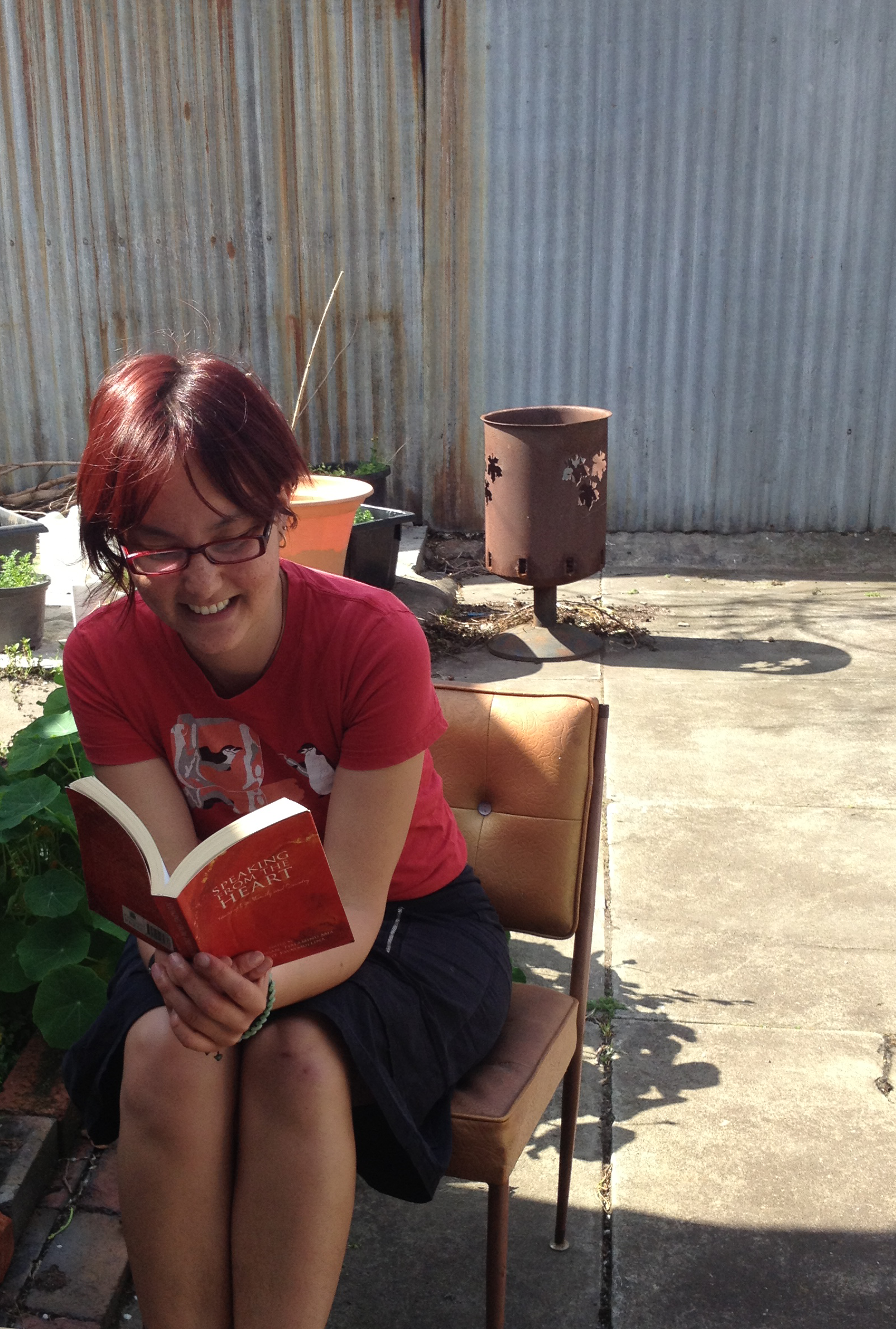
You can directly make a donation to ILF, and you can also get caught reading!  Today Liz and I are making a donation to the Indigenous Literacy Fund and we have been caught reading Speaking from the Heart (by Sally Morgan, Tjalaminu Mia and Blaze Kwaymullina), and To Say Nothing of the Dog by Connie Willis.

liz getting caught reading steph getting caught reading

A number of bookstores around the country are donating a percentage of all sales today to the ILF, so if you’re looking for a new book buy it from one of them today! (My book today will be purchased from Readings Carlton, who are donating 5% of all book sales today)

There is also a great blog post up at the Reconciliation Australia blog if you’d like some more info and stats and things.

solidarity for white women and the (white) face of aUStralian feminism

Las week Mamamia chose to blog about Miley Cyrus twerking, but I know you’ll be surprised to know that they didn’t touch on the racial aspect at all. Or will you be surprised? Maybe you didn’t notice the racial aspect yourself. We’re Australian, right? How can we be expected to know the nuances of USAmerican Feminism’s racism if it’s silent about its racism?

This is a valid question! How CAN we, Australians of an intersectional nature, be expected to know about the nuances of racism in feminism? Uh, by learning it, my friends. By recognising our own and how it’s reflected in our media. By recognising that USAmerican feminism and social justice is an imperfect fit for Australia in so many ways, not least of all because of its racism and its USCentrism.

Betty Mamzelle has written an excellent article on the racial implications of Miley’s twerking, covering all sorts of aspects including expected knowledge, commodification of black bodies, representation and sexuality. Solidarity is for Miley Cyrus: The Racial Implications of her VMA Performance. It is very USA, obviously, and it is an illuminating read in many ways if you are unaware of how racial sexualism and its politics works. And the theories within it are applicable to Australian racial politics!

As Australians I don’t think we need to be experts in the racial politics of other countries; but as Australians heavily influenced by USA media and more importantly heavily influenced by USA social justice blogging and articles, I think it behooves us to understand exactly what it is that we’re consuming. It also behooves us to more critically examine why it is that we are consuming it. (there are three links in that sentence for your further reading)

Remember when the Jackson Jive thing happened on Hey Hey It’s Saturday? A totally racist thing of blackface, for sure, and then dismissed as a USA thing that we couldn’t have known. Aside from the massive prevalence of US narratives in Australia from the period in which blackface was a huge thing, blackface is an Australian thing, too, something Australian history chooses to forget as it picks and chooses and copies from White American Feminism. I recommend reading White Australia has a blackface history by Maxine Clarke at Overland for some backgrounding; it was an important piece to me in 2009 and is still an important piece to me now on this issue.

Look, there is a limit to the USAmerican-ness of our Australian Feminism. Did you know that Australian intersectional commentators (myself included) were also expected to know that Jackson Jive = a shuck and jive reference = intentional reference to shucking and jiving? We were. And how could we? There is only so much USCentrism we can suck down. And this is not new. The Amazing Chally has long been at the forefront (for me) of Australia is not the USA and we don’t need their White Lady Feminism

By the way if you missed #solidarityisforwhitewomen on twitter, well, I’m sorry, I meant to post about it but it just didn’t happen. At some point I’d like to talk about how this applies to Australia and the ways in which it doesn’t, but for now you can read (USA narratives) Why “solidarity” is bullshit at Bitch and Solidarity is for white women (but it doesn’t have to be) by Betty Mamzelle.

Some links:

My Island Homicide: a book review and writing someone else’s face

This is mostly a book review rather than a 101 on writing someone else’s face, so we’re going book review first, issues town second.

The Book: My Island Homicide by Catherine Titasey (2013, UQP)

[Mild spoilers to follow but nothing about the crime or anything]

My Island Homicide is the first novel by Catherine Titasey, not quite a crime novel set on Thursday Island in the Torres Strait, though I received it under the guise of being a crime novel. I would not describe it as a crime novel, though the crime is there and looms large: it’s more a slice of life, and it’s kind of fun.

There are not that many fiction books about the Torres Strait, and there are even fewer books that end happily (as it were); that have an Islander protagonist; that are this great slice of Torres Strait Life that I wanted to just keep on keeping on. I loved the minutiae in the book. I loved the Sissys getting more and more animals as Jack palmed them off. I loved everyone’s casual acceptance of maydh (a curse), and the mostly natural weaving in of the local Broken English, and I loved loved loved the protag’s mum coming home to Thursday Island and finding herself again.

And I wanted to love it as a book. But it reads weird. It was billed as a mystery (and it is), but it’s also a romance and it’s also a slice of life. On pg 138, almost halfway through the book, there’s suddenly a family mystery! At times it seems as if the pedestrian plodding of the story – not of the plot, but the pace of the book itself – is a reflection of life on Thursday Island, just going with the flow and letting it happen, but at other times it simply felt like uninspired pedestrian writing. I wish that the book had been able to settle into what it wanted to be, rather than hopping back and forth.

My Island Homicide talks about all sorts of issues, but only briefly. It mentions in passing the predominant local crimes (assault and theft) and their causes (alcohol, hunger). It makes a major plot point of the lack of education in the Torres Strait, and how easy it is to pretend like the white man is doing something when really he isn’t. It laughs away DV and assault, and it’s hard to tell when it’s poking fun with versus when it’s poking fun at the things that happen in island life. These are major issues in the Torres Strait and also incredibly damaging stereotypes when seen through non-TSI eyes, and I wish more had been done to flag this as not okay.

There’s a lot of unquestioned behaviour and acts which seem less than ideal. A white person describes the abuse they’re suffering from a black person as ‘racist,’ with no looking at the fact that it’s not possible (due to the equation of privilege + power = racism). There was some super dodgy stuff going on around the young gentleman who was unable to talk (sometimes it was implied he had suffered brain damage, sometimes just that he couldn’t speak and refused to sign) in terms of attitudes.

The book keeps making jokes at the expense of Gen Y, followed by some vegan hate, which didn’t endear it to me. (At one point a member of Gen Y declares they don’t know what Twister the board game is, which, I call nope). This is obviously less critical than the class and social issues in the Torres Strait, but also totally not cool!

Thea’s mother thinks Thea’s under maydh, and though Thea is unsure she goes with it, being treated for the curse and in the end she recovers with two answers: a western medicine answer, and a maydh answer. I love this resolution. Of course there’s a western medicine answer, because western medicine is always trying to quantify non-western traditional methods and outcomes. But there’s a ‘traditional’ outcome and solution too, and we’re never told which one is right in the context of the text. It just is.

It was really nice to read a book set in the Thursday Islands, and to be reading a book that was trying so hard to do justice to the Torres Strait and to this part of Australia’s population and culture. But it wasn’t a great book, and I can’t whole-heartedly recommend it to you. It was fun and easy to read, but it took me about 100 pages before I was actually into it. If I was handed another book by this author I would consider reading it, and I would certainly support what she’s doing (writing about Torres Strait Islander communities) but I wouldn’t leap to read it. Three out of five jiaozi.

If you want to read the book, let me know, there’s a possibility this copy is mine.

People as Food

Milk chocolate. Almond. Burnt honey. Olive. Dark olive. Peanut brown. Nut brown.

I made a list of the ways brown people are described in My Island Homicide. I recoiled at that last one, particularly as it was the last sentence of the novel, used to described Thea’s (the POV character) baby. Note Thea describes herself as light brown. (Her mother is milk chocolate)

Hey you know what we are not? We are not a menu. We are not food items or items for export or exploitation or fetishisation, even after you give birth to us, much like many of these items were (or still are). Coffee and cocoa in particular, with their slave labour connotations and the indigenous exploitation inherent within, makes these comparisons, even when unintentional, totally on the dodgy side.

It is not a compliment to describe brown characters in food terms.

Working with (and Reading) Someone Else’s Culture

This blog post is not a cultural appropriation primer or anything like that, because I don’t have the time nor the patience, and also because many other people have done that work, though maybe not from an Australian point of view. So maybe that’ll come another day.

My Island Homicide is very firmly a book set in the Torres Strait. It is on Thursday Island and Horn Island and a couple of tiny dotted islands in between. Titasey is white; though she is married to a Torres Strait Islander with TSI children, and has lived on Thursday Island for 20 years.

The POV character is a half-Islander, half-Caucasian woman whose family moved away from the Torres Strait and now she’s come back, wanting to live her stereotypical idyllic island lifestyle and maybe along the way she’ll learn some things. This worked for the most part as a frame for explaining things about the culture to an assumed non-Torres Strait audience. Thea learning Broken English was woven with shame (at not knowing it) and embarrassment and also naturally into the text, in a way that didn’t throw me out and that was awesome. Things were explained where explanations worked, but the text didn’t assume the reader was completely lacking in knowledge (except, inexplicably, when it explains that Billabong is a surf company).

You can tell, when you’re reading My Island Homicide, that Titasey is an outsider but has worked to not be an outsider. She presents this culture that isn’t hers as respectfully as she can, and though I wish it’d been better written I really appreciated that.

Australia’s Jaegar Program (ps, racism and history)

How awesome is it that Australia is one of the active Jaegars in Pacific Rim? Totally awesome. I’m an Australian who loves me some giant mecha, and imagine the opportunities! We are a land of opportunity and resources, we have so much of the raw produce required, we have so much experience building for example high quality cars, and a whole lot of space. We also, given the Kaiju approach the population areas via the sea, require an effective defence program. We are, after all, girt by sea.

Liz talked about some stuff, but I’d like to talk about the logistics of pilots and Jaegars in Australia.

Australia’s Jaegar Program

Historically, at least historically in the last 150 years, as a nation, we are a bit obsessed with defending from those who come across the sea, and are incredibly xenophobic and closed-minded. And I say that as an Australian from across the sea, who is here today because of an illegal boat trip. I wish we weren’t but there’s the White Australia Policy, and the Yellow Peril panic of the 90s, and the Tampa and all the things going on right as we speak. It’s Christmas Island and Indonesia and the fact that our refugee intake is so low compared to many other countries

Despite an ongoing and illogical reliance on the ANZUS Treaty, leading Liz to suggest that it’s unexpected that Australia isn’t just relying on the US Jaegars (valid point), I don’t think it’s actually a surprise that Australia still has Jaegars around, holding on to them until the end. And I don’t think it’s a surprise that there was more than one, I think Australia would have had more than that at one point. There would have been complaints about the cost (and a scandal involving outsourcing bits, and discussion of extending allowances under the 457 Visa), but Jaegars, oh we would have them.

Slayer and Striker Eureka

I mentioned this briefly in a tumblr post, but Eureka is both a great and hilarious word to use within the Jaegar name. Eureka has many connotations in Australia, but mostly it means rebellion and fighting against the man. At another level it also represents democracy and mutliculturalism and the desire for profit. The Eureka Stockade was a rebellion on the Victorian gold fields, where workers from many country rebelled against being unduly taxed by the government (through licenses), in 1854. This event led directly to the reformation of unfair laws in Australia. It also led to the Southern Cross flag being used as a symbol of protest and sometimes me wanting to punch people, but that’s only to be expected.

In this context, Striker is a puzzling choice. The Eureka Stockade is sometimes referred to as a Strike. To call it the Eureka Strike (or Eureka Striker) would almost certainly have been a problem, but does that apply to the Striker Eureka? It is hard to say, and though an odd choice, it is not completely out of the realms of possibility. Slayer is the greatest bogan naming choice I’ve ever heard, politically I doubt it would happen but I love it. I love it a lot, and again it is not out of the realms of possibility.

More likely however are things involving things like kangaroos, bushranger names (omg the Ned Kelly!), and maybe we’d end up with one named the Captain Cook or something.

The Politics of Pilots 

We are a nation of immigrants, colonialists, criminals; people running away from things; people running too things; of Indigenous Australians and those who have come in the last 250 years. Despite the words, this was never Terra Nullius, and I live here on the lands of the Kulin Nation and I pay my respects to their elders. I am descended from an illegal immigrant; I live a life of superstition and being Chinese in all the ways that hurt and all the ways that don’t hurt. My father was in the air force and I grew up a military brat, moving from city to city, my father in the bowels of a herc. I am Australian.

Here are the ways you become a pilot in Australia: you have the money to pay for private lessons; you join the Air Force and give away a certain number of years of your life. One assumes the training and skills required for a Jaegar Ranger are more arduous, but still exactly like this: you give your life to the military, or you have a lot of money.

It does not completely surprise me that the Australian rangers are stern looking white men with a dog. No matter who the Australians were, I’m glad they had a dog, that’s fantastic, though I hope they’ve considered the Quarantine issues they’re going to face bringing Max back into Australia. That’s very important, because our quarantine laws are very strict and I’m sorry for Max. Though if we’re going for stereotypes he should have been a blue heeler at least.

The face of Australia is white. Despite everything, our television is white, or representation is white. I still get excited when I see a non-white Australian face on tv, though it’s never quite perfect. When a non-white family moved onto Ramsey Street, they were brand new immigrants. Never mind our generations living here, since the goldfields. Never mind our Indigenous people. Just our white people, the face of Australia. Always in our prestigious roles.

So the white father and his white son, sun kissed and well built, that makes sense. Politically, economically, historically. Frustratingly. In the movie and in our rock star Jaegar pilots.

A friend pointed out how this image of Australia is consistent with the image of Australia often found especially in Europe and the USA. He mentioned that this is largely how White South Africans are viewed in Australia: parochial, a bit backward, hilariously racist.

But imagine how amazing it would have been if our pilots were islanders or indigenous. The Australians in Pacific Rim were not portrayed by Australians, but what if they had been played by Jay Laga’aia and Lani Tupu; or by Deborah Mailman and Aaron Pedersen as a brother-sister team (the noise I just made).

In other news, no Australian calls their Australian son Chuck. Chaz, maybe. Charlie, sure. Chuck, rarely if ever. It’s what you call your dog. At least when he yelled ‘kick its arse’ he said arse and not ass, I suppose.