(Sorry. Sometimes the opportunity presents itself and I can’t resist.)
I’m a big fan of Lorde. That’s not really news, because she’s the first New Zealand solo artist to top the US charts. She’s not exactly underground.
But she feels underground. She’s a New Zealander, singing in her own accent about the experience of being on the receiving end of the USA’s cultural imperialism.
Some Americans find that uncomfortable. Consider this post and its follow-up, which essentially boil down to “please perceive American culture from an American perspective, not your own.”
On the other hand, let’s reiterate, number one song on the US charts. I’d imagine lots of Americans have taken her to heart.
And why shouldn’t they? We live in a time of shocking disparity between the wealthy and the poor, so a song critiquing consumer culture in music is going to strike a chord. (So to speak.) And I’d argue that the Feministing posts are incorrect when they argue that Lorde singles out African American pop culture for critique. “Royals” also refers to rock culture (“trashin’ the hotel rooms”), pop (ball gowns), and more. It’s not just about consumption, but destructive consumption.
Maybe Feministing’s blogger would have preferred if Lorde had taken an apologetic approach to discussing the different experience of the Antipodean pop singer. Take, for example, Australian Iggy Azalea, who raps:
Walk a mile in these Louboutins
But they don’t wear these shoes where I’m from
I’m not hating, I’m just telling you
I’m tryna let you know what the fuck that I’ve been through
Two feet in the red dirt, school skirt
Sugar care, back lanes
Three jobs, took years to save…
But I got a ticket on that plane…
People got a lot to say
But don’t know shit ’bout where I was made
Azalea is kind of the anti-Lorde. And not just because of the traditional (loving) rivalry between Australia and New Zealand. Azalea is older and tougher, and in contrast to Lorde’s apparent overnight success, Azalea is still bubbling under. She has a mix tape, she’s supporting Beyonce, but her actual debut album isn’t out until next year. Lorde sings with her own accent; Azalea raps with what the local media call a southern drawl that she picked up in Miami, although many Americans have told me the Florida accent is not actually considered southern.
(Azalea also raps about being a “runaway slave master”, and put out this video for “Bounce”. So, yeah. This is why I have a playlist called “catchy/problematic”. Well, that and Amanda Palmer.)
She’s also overtly sexual, where Lorde appears ambivalent about romantic and sexual themes in music, and is critical of pop songs she considers unfeminist. Lorde sometimes comes off as a bit judgemental in this respect, but it’s a natural phase that teenagers go through, I think — well, I did — and I’m really just as happy for a teenage girl not to explore her sexuality in public, especially in light of Charlotte Church’s comments about young women in the pop industry being coerced into doing so.
(I have a lot of feelings about how the current discourse around sexuality in pop music features a lot of ugly remarks about sex workers, and how these remarks are generally applied to women of colour, or in Miley Cyrus’ case, women appropriating the culture of women of colour. Lady Gaga was an actual burlesque dancer, but you’ll note she’s never the subject of such “concern”.
On the other hand, I also have feelings about the exploitation of women in the guise of empowerment. It’s complicated!)
Billie Piper (SHUT UP, SHE IS AMAZING) tells a story in her autobiography (SHUT UP, IT WAS AMAZING) about how, at eighteen, releasing her “sexier” second album, she agreed to do a photoshoot for a particular magazine, but she flat refused to pose in underwear. She arrived at the shoot and found an entire rack of bikinis instead.
In short, it’s difficult to be a young pop star, or even an adult performer, and still own your sexuality. Lorde walks an interesting line — she is young, beautiful, white, slim and has amazing hair, and photographers take advantage of that, but she’s always fully dressed, looking straight at the camera with a solemn, uncompromising expression. I’m really curious to see how she grows up, and what her next moves will be.
Because they are moves. As this fantastic blog post discusses, Lorde’s image is as carefully crafted as any other pop star’s. The level of control she herself exercises might be unusual, but the image that we see is not necessarily the genuine Lorde. (And why should it be?)
But people are oddly uncomfortable with the idea of a woman’s image being artificial. We see that in the way women are criticised for wearing make-up, slimming underwear and heels, even as we’re also criticised for not doing these things.
And it’s particularly true in the music industry. We want to believe that Stevie Nicks and Tori Amos are really manic pixie dream girls, that the Spice Girls really were/are BFFs (despite all evidence to the contrary).
There was a lot of backlash when PJ Harvey abandoned her raw, indie persona to wear heavy make-up and hot pink catsuits, and some fans I know can’t forgive her for plucking her eyebrows, wearing make-up and performing in a Victorian dress with a bird on her head. (I was there. It was great.)
Harvey herself has said, “Some critics have taken my writing so literally to the point that they’ll listen to ‘Down by the Water’ and believe I have actually given birth to a child and drowned her.” (Source)
Men aren’t immune from the expectation of honesty, but they seem to have more flexibility. Well, whichever way they go, they have flexibility — Lindsay Buckingham has been writing songs about his ex for decades, and he doesn’t get half the shit that Taylor Swift does. (He’s still the better songwriter, though. Sorry, Taylor.)
With all this in mind, it’s quite interesting that Lorde is often compared to Lana Del Rey.
Del Rey, again, stands in opposition to Lorde. (Although Lorde was listening to Del Rey when she had the inspiration for “Royals”, and in my opinion, the musical influence is visible — audible? — when you look for it. Listen for it.) Her image was carefully crafted, and is frequently derided as “fake”. Her first two albums (one released under her real name of Elizabeth Wooldridge Grant) bombed, and her stage name was created by her managers.
But all this works, because it’s part of the mythos she has created: whoever Elizabeth Wooldridge Grant is, Lana Del Rey is “a gangsta Nancy Sinatra”. She’s Doris Day after a bender. Lorde may paraphrase Joan Holloway, but Born to Die is an entire album about Betty Draper.
Both artists are critiquing the American entertainment industry, and both do it through highly produced pop music. Del Rey’s take is glossier, and appropriately so — she adopts the persona of the girl who has swallowed the American dream myth and is choking to death, “a freshman generation of degenerate beauty queens”. On her Paradise EP, she responds to critics, describing herself as “a groupie incognito posing as a real singer”.
Lorde, by contrast, sings as an outsider who has an ambivalent relationship with the trappings of the American dream. She knows it’s an illusion, but still, “We’re driving Cadillacs in our dreams.” In “Tennis Court” she sings:
Baby be the class clown
I’ll be the beauty queen, in tears
It’s a new art form, showing people how little we care (yeah),
We’re so happy, even when we’re smilin’ out of fear,
Let’s go down to the tennis court, and talk it up like yeah (yeah)
It’s introspection and adolescent melancholy wrapped up in the language and cliche of the American high school drama. Whether or not it’s a true reflection of Lorde’s experience almost doesn’t matter, because the feeling is surely universal: “These feelings don’t look like they did on TV.”
Lorde sings, “And I’m not proud of my address, In a torn-up town, no post code envy”. But Ella Yelich-O’Connor comes from a well-off middle class suburb in Auckland. Does it matter? Is she lying to us through song? (“I hate when people do that!”) If her next album is a synthpop confection with videos full of pole dancers and bikini shots, has she betrayed us?
“Pretty soon I’ll be getting on my first plane,” Lorde sang. That first plane trip was long ago, now. She’s an international pop star, not a kid from the suburbs. How far can you critique the system in which you work? Will she be allowed to grow up, or will she end up like Avril Lavigne, still looking and acting like it’s 2002? Am I just asking rhetorical questions because I’m not sure how to end this post?
You know how it’s much easier to talk about something you hated than something you really enjoyed? That’s why I have a lot to say about Pacific Rim, yet I’ve been trying to write this post about The Deep for a couple of months.
That’s fitting, though, because it took me a really long time to read it. I heard last year that an excellent Australian comic about a multi-racial family of aquanauts was being adapted into an animated TV series, and I thought, “Huh, I should read that.” And the first two volumes sat in my shopping cart for a really long time.
Finally I bit the bullet and bought them, but because I had procrastinated so long, I kind of … forgot that I had bought nearly $50 worth of comics? Which is fine, I do that a lot, and then I get parcels that I had completely forgotten about ordering! It’s just like Christmas, only I’m spending money on myself.
Only, this time the package never came. Several months passed until I went, “Hey, I should buy The Deep! Why didn’t I do that sooner?” A tickle in my memory prompted me to go through my emails and bank statements, where I discovered that I had bought it. And I would like to congratulate Gestalt Publishing for being incredibly on the ball when I asked about it on Twitter, sorting the problem out and sending my comics. No emails required, just Twitter. Problem solved in 140 characters.
And then I read it, and it was AMAZING, and made me very happy, and I’ve spent the last couple of months trying to figure out how to convey its brilliance. Without, you know, scanning the entire thing. Because that’s what I want to do: take my graphic novels out and push them in people’s faces, going, “See? SEE? MORE ENTERTAINMENT SHOULD BE LIKE THIS!”
The Deep: Volume 1
The Nektons are explorers. Their terrain: the oceans. Father William, mother Kaiko, and their children, the brilliant Fontaine and the gifted and hyperactive Antaeus, explore the depths of the oceans, encountering unfamiliar sea creatures and oceanographic mysteries. Theirs is a scientific and ecological mission, set against the backdrop of William’s quest for … well, that would be a spoiler.
Okay, so it sounds a bit like seaQuest DSV crossed with Avatar: The Last Airbender, but it’s more like … no, that’s it exactly. Shut up, I loved seaQuest DSV. Well, I loved the first season. It was so great. When I was 13. Anyway…
I compare it with Avatar because Ant reminds me very strongly of Aang — he may be a genius, but he’s also very much a kid. Much to the dismay of Fontaine, who is the sensible, methodical member of the family.
Fontaine’s parents are also a source of much eyerolling, given that their mother likes to play shark, and their father just really loves old maps. This would make her completely unbearable, except that she actually has a sense of humour, and really loves her family and their mission.
The Deep is unpretentious but competent. It sets out to be a really good family comic, and that’s exactly what it is. It made me want to write and draw, and I have the dodgy sketchbook pages to prove it. (No, you can’t see them. It’s embarrassing.)
What makes it notable, obviously, is the diversity of the characters. We rarely get to see a black man being intellectual and eccentric, and western media rarely portrays Asian women as badass goofballs. Frankly, Kaiko is so great, it’s a mystery to me why there aren’t entire Tumblrs dedicated to her. (I searched the tags, and found The Deep has no presence on Tumblr whatsoever. Guys, this is exactly what you say you love. Get on it.)
FOR EXAMPLE, here is the result of an, uhhhhhh, encounter with a journalist determined to portray the Nektons as a menace to society:
It was at this moment that I fell in love.
Click on the image for the full-sized version.
I guess I don’t really advocate pushing journalists into the sea, even if they are hacks who demonise families and cause panics that result in shark-deaths. But Kaiko’s nonchalance, coupled with SUNGLASSES, coupled with her family surrounding her and being all, OUR WIFE/MOTHER IS GREAT, DEAL WITH IT, that’s pretty excellent.
For bonus stereotype-busting, the Nektons pick up an eccentric old white man with mysterious and possibly mystical knowledge that will aid them in their Spoilery Quest. And then, just when I was starting to find him slightly irritating, he departed at the end of volume 2.
But all the inclusivity and stereotype-defying in the world isn’t going to achieve anything unless it’s coupled with an entertaining story and good characters, and that’s why I think everyone should read the comics, and watch the TV series when it appears. I can’t maintain a one-woman fangirling forever, and all this hand-flapping is getting tiring.
You can read a sample of the first volume here, as well as ordering it in hardcopy, but it’s also available from ComiXology. Samples from the second volume are here. Now, I am off to re-read them, and to ponder what dark secrets lie in Jeffrey the Fish’s past.
All too often, someone examines the Young Adult shelves and comes up with damning statistics: few authors of colour, few characters of colour, and if a book happens to be about a non-white person, chances are that character won’t be on the cover.
So I was pretty excited when I wandered through a bookstore a few weeks ago and found The Ghost Bride by Yangsze Choo, a novel about a young Chinese-Malaysian woman who is asked to become marry the recently deceased son of a wealthy family. It broke all the restrictions I listed above, and further research (you know, I googled) revealed that it was also the subject of a fair amount of publisher and industry hype. As the author’s website lists:
Oprah.com’s Book of the Week
An August 2013 Indie Next List pick
Barnes & Noble Fall ‘13 Discover Great New Writers selection,
Glamour Magazine 2013 Beach Read
Good Housekeeping Magazine Book Pick
The Bookseller Editor’s Pick
A Library Journal Barbara’s Pick
All this is really cool, and I hope it’s the beginning of a trend of inclusivity in the publishing industry. Even if the cover is one of those dreadful headless girl covers so beloved of publishers, and is also kind of badly composed.
But, of course, we ask, does the novel live up to the hype?
The Ghost Bride by Yangsze Choo
In my opinion, yes. It has too many subplots, with the result that some go undeveloped, but it was entertaining, difficult to put down, and left me seeking out more information about Malaysia, Chinese-Malaysian culture in the 19th century, Chinese beliefs and practices about the afterlife, and more. If I finish a book and find myself surrounded by Wikipedia tabs, that’s a good sign.
Of course, as a Nice White Lady, I’m not in a position to judge Choo’s depiction of Malaysia’s Chinese population, or Malaysia in general. (Let’s all take a moment to cast some casual side-eye at the GoodReads reviewer who suggested Choo’s portrayal of Asia was inferior to that of Alison Goodman, white Australian author.) But I never had the feeling that Choo was writing for a default white audience. She stops and gives context to various plot-relevant things, but I still had to look up foods and clothing styles to fully appreciate the setting. I contrast this with Cindy Pon’s Silver Phoenix, where chopsticks became “eating sticks”.
Additionally, the Malacca of the book quickly felt like home. It didn’t seem exoticised or cliched. I can’t speak to the accuracy of the setting, but it certainly felt like a real, vivid place, familiar to its heroine and very much loved.
Ah, the heroine. Certain GoodReads reviewers will tell you that she was passive and boring, and those reviewers are WRONG.
I mean, yes, Li Lan is a quiet character who respects and loves her opium-addicted father and the servant who raised her. For much of the book, she observes rather than acts, and I guess that can be frustrating. Truthfully, I found the first quarter of the book pleasant, but slow going. “Just hurry up and marry the dead guy so we can get this show on the road,” I was thinking.
Hah! Li Lan mocks your puny assumptions about how things should go! I mean, she won’t actually say anything, but she’ll be judging you. Silently.
Around the point where my Kobo told me I was at 25%, something happens. I’m not going to spoil it, because I absolutely didn’t see it coming, but it completely defied my expectations. And from that point, Li Lan has to take a much more proactive role in the story. She makes mistakes, stubbornly refuses to do what I keep silently telling her to do, and she is possibly the worst judge of character since Dance Academy gave me Tara Webster. But she’s wonderful, because here she is, stuck in a situation she does’t understand and cannot control, and by God, she is going to make this work or die trying.
Okay, so things I did not love: the subplots. There were too many. First we have the Lim family, their eligible post-mortem bachelor and their many, many other dysfunctions. Like the bit where the eligible bachelor was murdered.
Then we have the corrupt bureaucracy controlling the afterlife. Then we have Li Lan’s dead mother. Then we have — actually, his whole name is a spoiler, it turns out. Not for me, because I had to Google him, but if I name him, Stephanie will probably have a good idea of what he’s all about. Anyway, there’s a guy, and he has a an agenda, and Li Lan spends a lot of time yelling at him. SORRY, GOODREADS, SHE’S NO ACTUALLY PASSIVE AT ALL. GO STAND IN THE CORNER.
Now, all these subplots were really interesting, but there were SO MANY that they felt a bit muddled, and certain resolutions happen off-stage. I don’t actually know which one I’d exclude, though, so maybe the book just needed to be slightly longer. (It looks like it wasn’t marketed as YA in the US? Which also explains some of the lukewarm reactions from reviewers. It could go as either YA or Whatever The Hell New Adult Even Is, but I think it’s a better fit in YA.)
One thing The Ghost Bride didn’t have was, you know, white people. Much. There is one white person in the entire book, and he’s … well, spoilers, he’s dead long before the action takes place. I guess Stephanie will be a better judge of this when she reads it, but I went in expecting a book with more overt discussion of colonialism, and found hardly any at all. At one point Li Lan is offered the opportunity to visit England, but her actual dreams of travel involve Japan and China.
I’ve been trying to decide whether this avoidance of the issue was … well, you know, avoidance, or a subtle middle finger being raised in the general direction of imperialism: “You may occupy our land, impose your values on ours, but you’re not part of our stories.” Mostly I think it’s just not relevant to Li Lan’s experiences.
(One bit where colonialism intruded, although I only learned this later, on my Wikipedia binge, is the use of the term “hell money” for the fake money burned for the dead. As Wikipedia tells it, and feel free to correct me if it’s wrong, it picked up that name after Christian missionaries told Chinese people they were going to hell for their pagan beliefs (well done, people, really nice attitude there), and the Chinese were like, “Okay, so ‘hell’ is clearly the English word for heaven. Cool!”)
(So I don’t know if “hell money” is the appropriate word for the setting and character, but it’s evocative and fits the mythology of the setting. But I’m not wholly comfortable with its use, and will just sit tight until Stephanie tells me how to feel.)
The Ghost Bride is AU$7.39 on Kobobooks, and is probably some similar sort of amount on Kindle, or in paperback, and stuff. It’s $19.99 at Readings in Melbourne, which is why I bought the ebook. Also, arthritis and stuff, and my hands are delicate flowers. I think more people should read it so we can make flappy hands at each other about [SPOILERY THING THAT HAPPENS AT THE END]. In the meantime, I’m going to go stalk Yangsze Choo’s website and wait impatiently for her next book.
I’m pretty sure I promised Stephanie that I would review The Deep ASAP, so that she can borrow the graphic novels off me. But I’m tired, I’m arthritic, I have a cold. So here’s a whole bunch of things.
Further to previous posts
1. In my second Dance Academy post, I said some nice things about Ben Tickle, to wit, that I was unfair to dismiss him as a creepy and annoying Nice Guy.
As of last week’s episode, I hereby take that back, and every other nice thing I said about him as well. SO THERE.
(I also learnt that Stephanie herself could have featured in the advertising, but people thought she was too busy and didn’t need the extra stress. When will we learn: Stephanie always needs the extra stress.)
(Not really.)
Anyway, I still maintain that there’s an uncomfortable white saviour narrative at work in the Greens’ visual presentation, but the Greens were doing better than I had realised. And I am really happy that Bandt kept his seat (and sorry that my local Greens candidate, Tim Read, didn’t beat the Libs into second place behind Labor.)
(Living in the second safest Labor seat in the country, you take what you can get.)
Yes, there was an election
And the capitalistic, socially conservative Liberal Party won. They claim they have a mandate, even though the swing away from the ALP generally went to new parties such as Palmer United, and even though it looks like three Senate seats will go to extreme fringe parties: the libertarian Australian Liberals, the Sports Party and the Motoring Enthusiasts Party.
There has been a lot of classism about the Twitters with regards to the Motoring Party’s new senator. I’m kind of hoping he turns out to be a brilliant leader, just to shut that up. But as his Facebook revealed that he’s a 9/11 truther and a misogynist, I’m not holding my breath.
As usual after a conservative win, there has been a lot of gnashing of teeth and threats to move to Canada (where Quebec is banning “prominent” religious symbols that coincidentally are mostly used by minorities) and New Zealand (which already has a conservative government and shite economy). I like Stephanie’s response best:
This country will have to be pried from my dead, cold, queer asian hands. It’s mine and I’m staying right here and kicking everything over until I’ve got my fingerprints all over the furniture and everything is just the way I like it.
Now that it’s almost over, we’re down to dissecting the campaign.
I, for one, was quite troubled by the Liberals’ strategy of silencing their candidates of colour so as to avoid gaffes and difficult questions. This was the case in my own electorate, where candidate Shilpa Hegde did not participate in any public forums or interviews with citizen journalists. Nor was she seen out campaigning.
As a Commie leftie pinko, I should be glad to see the Liberals mis-step, even if they still win the election, but I think this is a pretty shitty approach. It’s not enough to have people of colour as your candidates, you have to let them be candidates. Allegedly, or so I read in the mainstream press (probably a Fairfax paper, but I couldn’t tell you when or which one because I’ve been site-hopping to avoid their paywall), the strategy was conceived after Jaymes Diaz famously stuffed up an interview. If they’re so worried about candidates looking stupid, though, they would have put a lid on Fiona Scott before she could tell the world that refugees cause traffic jams. Funny how it’s only the non-white candidates who were told to shut up.
And as a person who quite likes democracy, thanks, I’m pretty horrified that the Liberal Democrats got into the Senate by setting up front parties to funnel preferences their way. (They also got votes because people apparently mistook them for the actual Liberal Party. Sadly, we cannot legislate for reading comprehension.) I’ve also been less than impressed with the backroom deals done for preferences, although that had the advantage of destroying the Wikileaks Party, and wow, what a tragedy that was. Really.
The ABC’s Antony Green has an interesting article here, looking at the history of such developments, and ways we can better regulate Senate nominations without undermining democracy and shutting out smaller parties all together.
Then there was WorldCon
And the annual recriminations that follow.
Things for which there should be no recriminations whatsoever: the excellent Tansy Rayner Roberts won the Hugo Award for Best Fan Writer, making her the first Australian woman to win a Hugo. And I can’t think of anyone more deserving.
Chicks Unravel Time, to which I contributed, did not win the Hugo for Best Related Work, but I’m told that Writing Excuses, the podcast which won, is excellent. I’m mostly glad that CUT didn’t, say, lose by one vote, because I couldn’t spare the money for a supporting membership with voting rights.
(Every month, it was like, “Hmm, well, it’s only $50 … but my mobile bill is coming up, and that’s going to be $70. Next month!” Self, mobile bills are a monthly curse.)
This brings up the first round of recriminations and “what’s wrong with WorldCon” debates, “It’s too expensive.” Which, sorry, Lolmericans, I know $250 for a five-day con seems like a lot to you guys, but here in Australia, we pay that much for a three-day con. Aussiecon 4, back in 2010, was close to $400. (Luckily — or not — my mother was getting married that weekend, so I could only attend for a couple of days. Oh yeah, her divorce is being finalised next Monday, so congratulations Mum!)
I realise that going from “The supporting membership was too much” to “LOL, only $250 for attending!” isn’t exactly logical, but priorities. (And also, international travel has really done a number on my credit card.)
There was talk a couple of months ago of introducing a cheaper voting membership, but apparently that’s not practical with the (amazing and brilliant) electronic pack of nominated works. May I humbly and cheaply suggest that I would buy a voting membership without the voting pack? I mean, I’d rather have the pack, especially since I don’t usually get access to the short stories and novellas otherwise, but it’s a sacrifice I’d be willing to make in those times when I have to choose between voting in the Hugo Awards and paying my bills.
And if your con is significantly more expensive than others, and you’re widely perceived as being less friendly and less fun, these are things you should maybe be looking at. I enjoyed AussieCon 4, but I wouldn’t say it was a fun experience (except for the times L M Myles and I spent in the bar, or making fun of terrible Doctor Who panels), and it wasn’t as friendly and open as other Australian cons I’ve seen attended. Which is, okay, Continuum.
HAVING SAID ALL THIS, I am really hoping I can get to LonCon next year, and Nine Worlds the weekend before. Lots of people I know and love are going, and it’s London, and … stuff.
Some links to WorldCon discussions:
Three Gray Fandoms – Ursula Vernon on her three fandoms, and how only one is unwelcoming to young people.
WorldCon has some Happy Things Plus Some Problems – an overview of LoneStarCon’s successes and failures. Includes an account of a wheelchair-using panellist who was unable to access the daises on which the others sat. A quote: “That’s not cool. It was an oversight in a huge, fan-run convention, so it’s not worth a rage-fueled rage.”
I have to say, I did have a rage-fueled rage about it, because this should be basic Conrunning 101. Which brings me to…
Disability, Diversity, Dignity – a further discussion of the issue. The panellist herself pops up in the comments, along with a committee member who, I have to say, does not cover herself in glory.
There are more posts over at RadishReviews — I’m cheating because I haven’t had time to read them all yet, and I’m trying to rest my mouse hand so I can play Mass Effect 2 later. Hashtag arthritislyfe.
Finally, opera
Hey, I was surprised too.
See, I don’t know much about opera, but Barbara Hambly’s Die Upon A Kiss (part of her Benjamin January series, about a free man of colour in 1830s New Orleans who teaches music and FIGHTS CRIME) is set in the opera season, and is very much concerned with the cultural differences between French and American opera fans, and also a controversial performance of Otello. (Controversial ‘cos … well, it’s the South. And Othello is quite famously black. Except when — anyway, even a white actor in blackface was too much for some historical racists.)
Every time I read that book, I think, “Opera is really interesting. I should learn more about it and maybe, like, see some and find out if I like it.”
And then the opera community goes and does something stupid, like the Melbourne run of Nixon in China where all the Chinese characters are white people in yellowface. Or, as I discovered yesterday, Queensland Opera’s Otello, with an all-white cast.
Apparently, or so QOpera said on Twitter when people began asking very pointed questions, modern thinking is that the power of Otello comes from the psychology, and race is a secondary concern. And also, they did it in South Africa with a white Othello and black cast, so what’s the problem with an all-white version?
Yyyyyyyyyyyyyyyyyyyyyyyyyyyyyyyyeah. You want to make the traditional SF fandom and community look good? Go look at opera.
It’s election season in Australia. It feels like certain parties have been campaigning since the last election, but no, that happy time is actually upon us for real. And what a campaign it’s been. The highlight for me has been watching the Wikileaks Party collapse into a completely predictable morass of hypocrisy, but really, if it’s a minor party — or a major one, come to that — acting like amateurs you’re after, this is the election campaign for you.
Because it’s impossible to waste your vote in Australia, I’ve always given my first preference to the Greens, on the grounds that a big enough far-left presence will facilitate (or, you know, force) compromise in the major parties. But I’ve otherwise considered myself an ALP supporter.
Exciting fact: nothing will have me throwing my wholehearted support behind the Greens like instituting a horrible refugee policy that involves shipping asylum seekers to Papua New Guinea and ensuring there is no possibility of their ever stepping foot in Australia.
This is shitty both to asylum seekers, and to the people of Papua New Guinea, who already deal with corrupt government, corporations trying to exploit their mineral wealth, high levels of violence, a complex system of land ownership that restricts it to members of kinship groups, and more.
(Let’s be real, though, a lot of PNG’s problems stem from that time it was Australia’s colony. Like, our actual colony. We gave it up in, what, ’74, ’75? Very shortly before my birth. So it’s really cute that now Australia is both exploiting it and using its dysfunction as scare tactic.)
I was quite angry about that, so I read the policies of every single party that had posted them, and decided I liked the Greens best. (Digression: The Palmer United Party’s policies were weirdly preoccupied with stopping Japan from buying up Australia’s mineral wealth. But Japan is not Australia’s biggest export market for minerals. That would be … seriously, you mixed up China and Japan in your policies?)
In fact, ABC’s Vote Compass tells me I’m just a degree to the right of the Greens, so why I have I been an ALP supporter all these years? (Well, because I’m a big fan of supporting workers’ rights, and that’s not really a huge priority for the Greens. On the other hand, in fact — as opposed to rhetoric — it’s not a massive priority for Labor anymore either.)
In the spirit of actually doing something, I spent Saturday morning putting fliers in letterboxes, and there’s a sign in our front yard, and I’m handing out how to vote cards on election day. (Problems of the newly gluten-intolerant: I planned my whole election day around accessibility to sausage sizzles — but now I can’t eat bread or cheap sausage!)
The candidate poster for the electorate of Wills.
So that’s all very nice, and I take heart from the media’s obsession with the Greens being a spent force and the major parties’ simultaneous obsession with dissuading people from voting for them. At any cost, ie, they’re even preferencing each other.
Accordingly, the Greens member for the electorate of Melbourne (as opposed to the city of Melbourne), Adam Bandt, the party’s only member of the House of Representatives, is spending a whole lot of money on advertising. More, in fact, than the ALP candidate, so that’s nice?
Only, I keep looking at the ads. They’re your standard sort of happy, aspirational advertising. A slogan and attractive, slim white people–
Oh, hang on a minute.
I’ve seen a fair amount of Greens billboards around the inner suburbs. With one exception — a poster criticising university funding cuts, featuring two women, one white, one South Asian — all feature white people.
(I should say, I haven’t seen every single Greens poster. I had hoped to find the material for the Melbourne campaign online, but it doesn’t seem to be around.)
This billboard stands at the corner of Lygon and Elgin Streets.
And Melbourne is a very diverse electorate! Crikey, in 2012, noted that just over 40% of residents are non-English speakers (I wonder if that is no English at all, or English as a second language?), and that the area has “substantial Chinese, Vietnamese and Korean populations”. The inner city contains several universities and a lot of student housing, so some of those people are going to be international students rather than voting citizens. But I have no idea how big or small that proportion is going to be.
(And given the amount of people on student visas who go on to become permanent residents and later citizens, it makes sense to represent that demographic as well. I don’t actually have numbers here, mind, I’m just going from experience, ie, I transcribe a lot of immigration cases involving students who wish to stay.)
Basically, it is really dodgy that the Greens campaign is so white. It would be dodgy even in an electorate that wasn’t incredibly diverse, but as it is, it just seems like a really terrible oversight.
Curious, I went along to the Greens website. The rotating advertising on the front page features two white children; a turtle; a group of eight white people and one Indigenous man; white protesters against refugee policy, photographed from the back; and one woman of colour, wearing a hijab, presumably representing asylum seekers.
The most prominent person of colour on the Greens website.
This picture is quite interesting. The face of asylum seekers, in the eyes of the Greens, is a young, attractive woman, wearing make-up, presenting a passive face to the viewer. She’s both object and fantasy figure.
There is another face of asylum seekers in the media.
This picture was released by the Department of Immigration as a symbol of its successful policies. Yeah.
This is a picture of an Iranian asylum seeker learning that she will not be resettled in Australia. It was posted by the Immigration Department as propaganda for the new “PNG solution”. Because this is a country where we’re expected to see a picture of a distraught person in need and feel satisfaction.
Unlike the Greens’ picture, she’s not passive. She’s dressed functionally, in western clothes. She’s not posing. She is an object and a fantasy figure, but an unwitting one, conscripted into the role and used for propaganda.
In the interests of fairness, I should point out that the cover of the Greens’ policy platform features two people of colour in amongst the white faces. And I’m sure it’s just coincidence that the black woman’s face is cut off. I mean, lots of faces are cut off, but hers more than anyone else. Pure accident, I’m sure. No subtext here.
Now, here’s the thing. If the Greens are going to thrive as Australia’s third major political party, they need to have a wider appeal than their current “educated, middle-class inner-urban” type of demographic. Outside of that group, there’s a perception that the Greens will throw working class and blue collar workers under the bus if it means they can save a koala. That’s a problem they need to start addressing, both through policy and through presentation.
What they should also be addressing, perhaps, is the way they have positioned themselves as white saviours in the refugee debate. As Stephanie linked the other day, “immigrants against immigration” is a peculiar aspect of the current debate, but it’s not the whole of the story. Not all Greens supporters are white, and not all refugee advocates are white. And the overlap between those two groups, I would say, is not inconsiderable. The use of mostly white models in their advertising creates an ugly subtext, one that cheapens their message. I like the Greens, but they’ve dropped the ball here. They can do better.
This post is a lot shorter than the last one, because … well, it’s not that I don’t like Ethan and Ben, but they don’t set my world on fire. They’re characters you can find in any media aimed at tweens. And Ollie is a very new character, and I feel like I’m still getting a handle on him — we are in the first half of the first season, after all.
(This post features quite detailed spoilers for season three.)
Ethan Karamakov: he smells like Christmas, apparently
I’ve had some trouble writing the second half of this piece, because, well, I’m kind of dealing with two characters I don’t care for, and one I’m still getting to know.
Take Ethan, for example. Ethan is the older half-brother of Tara’s best friend Kat, and her first crush. He’s a third year, aged about seventeen; she’s a brand new fifteen year old first year with about as much common sense as a newborn lamb. I don’t hate Ethan (anymore), but I feel like he was a necessary evil — a rich, white counterpoint to Christian — and not a hugely interesting character.
Basically, when I watched the first season, I appointed myself President of the Go Away Ethan Karamakov Club. (For one thing, although actor Tim Pocock is actually quite good — if anyone actually saw Wolverine: Origins, he played a young Scott Summers, and was promptly named the Next Heath Ledger — he’s the least convincing teeenager in the cast. I presume it was difficult to find an actor who could also dance, but he looks about ten years older than everyone else. And he has an abnormally symmetrical face.)
Look at that face. It’s grotesque.
What made me grudgingly like Ethan in the second season was that he began sharing scenes with Abigail, who is scientifically proven to make everything better. She’s an overachieving, anxiety-ridden lifelong dancer who is slowly coming to terms with the fact that hard work isn’t going to overcome her lack of natural talent. She’s also incredibly blunt, and thinks being likeable is for lesser people.
Ethan has given up a place in the National Ballet Company to become a choreographer, and he approaches Abigail for his showcase piece. He wants someone who is intense and a little scary.
Okay, then. She’s interested.
I began to like Ethan, not so much for himself, but for the way he became a vehicle for Abigail to find new options. Together they become involved in musical theatre, and have a funny, sweet friendship that verges sometimes on romance. I wasn’t sorry when Ethan went to Barcelona to pursue his ambition, but I wasn’t counting down the minutes until he left, either.
The Self-Styled Benster
Ben Tickle, introduced in the second season, is a much more interesting character, even though I frequently find myself wanting to punch him in the face a bit. When he joined the cast — as a first year student promoted to second year because he was just that good — I was like, seriously, the last thing we needed was yet another white guy.
And I still feel that way, but in terms of portrayals of masculinity, Ben’s an interesting case. See, he feels he has a lot to prove, being the youngest in the group, and he starts out by putting on a display of braggadocio and masculinity. And not the positive kind of masculinity. He’s sexist, racist and homophobic. Kind of your standard stereotype of … you know.
This is a guy who introduces himself as “The Benster”.
(This also leads to charming moments, like when Sammy explains that you shouldn’t use “gay” as a pejorative. I’m not usually one for didacticism in my entertainment, but Sammy is so earnest — having himself just started addressing his own sexuality — that it’s charming. And frankly, my teacher friends have to work really hard to get “gay” out of their students’ vocabularies, I feel like it really means something to have a bisexual character on kids TV explaining this.)
(Ben proves his basic likeability by apologising, and then baking rainbow cupcakes for Sammy and Christian. Because he thinks — well, at least there are cupcakes.)
Ben also gives us one of my favourite exchanges of dialogue. From memory:
Ben: Hey, Christian, do you do martial arts? There was this Asian guy at my old dance school who did martial arts. You remind me of him. Christian: Are you saying we all look alike? Ben: That’s pretty racist, dude.
Well, I laughed.
This is my very favourite picture of Ben. No, not just because you can’t see his face.
Having been called out, humiliated and initially rejected by the group, Ben settles down and becomes, you know, a nice kid. It comes out that he suffered leukemia as a child, and doesn’t want anyone to know because he fears he’ll become an object of pity and special treatment. (Tara, who has her own problems with respecting boundaries, tells everyone. I love Tara a lot, but she makes a lot of mistakes in her journey.)
Late in the second season, Ben and Tara start going out. Ben has a massive crush on Tara; she seems to care about him, but mostly she has that problem common to teenage girls where she thinks she can’t be without a boyfriend. It doesn’t last, but Ben tells Tara at the beginning of season three that, “I still ship it.” Basically.
This made me really mad at the time, because I was like, BEN, SHE’S NOT INTERESTED! HAVE SOME RESPECT! STOP ENGAGING IN BEHAVIOUR THAT BORDERS ON CREEPY NICE GUYNESS!”
Well, joke’s on me, because Tara was interested, she was just making a concerted attempt to be boyfriend-less for third year. (Good try, Tara. When I eventually do my post on the girls of Dance Academy, I am going to talk about her SO MUCH. And also the way the fandom slut shames her, because no teenager ever had three boyfriends in three years, right?)
And maybe I was reacting against Ben because, well, I’m a product of a patriarchal society too, and maybe I wasn’t comfortable seeing a male character express his feelings so openly. (I am generally drawn to the stoic types, but these preferences don’t develop in a vacuum.) Ben really likes Tara, and he’s not offended when she wants to be “just friends”. He doesn’t go off to Reddit to complain about being friendzoned, he just goes, “Yep, well, I hope one day you change your mind,” and then gets on with trying to be a good friend.
We’re in the middle of season three right now, and I have no idea where Ben’s story is going to take him. But his arc so far has been interesting. He, Tara and Grace were picked up to fill positions in the Company, and he was selected by the principal dancer, Saskia Duncan, as a protege.
Now, Saskia also appeared in season two, and I could write a whole essay about her, but it basically comes down to this: Saskia Duncan is Dolores Umbridge in pointe shoes. She literally broke Tara’s back in season two. She is so friendly, and so reasonable, how could she possibly be a bully who targets younger dancers?
One thing I really loved about Saskia was how she was a villainess who wasn’t sexualised. And then she started mentoring Ben, and they were dancing together, and she was asking him out to dinner … and she still wasn’t sexualised.
I mean, she was coming across as a sexual character, but she wasn’t being exploited, either by the script or the camera. Her behaviour bordered on inappropriate, but she seemed sincere in her belief that Ben could be the Nureyev to her Fonteyn.
She also seemed pretty sincere in the way she was using Ben to humiliate her current partner and the other adult male dancers. Who seem, on the whole, to be an unpleasant lot in general, at least in the way they treat the three student dancers.
And when Ben realised that, he did something I’m really uncomfortable with: he dropped Saskia. I mean, literally. On stage. Twice.
But was it deliberate? I actually couldn’t tell. But the way he was watching her made it plain he was enjoying her humiliation as she ran off stage. And as much as I think Saskia is a terrible person who undermines and bullies people whom she regards as threats, it wasn’t exactly fun to watch a professional woman being humiliated by a schoolboy.
(Humiliation doesn’t even look like a word anymore! But I keep coming back to it, because it’s Saskia’s main weapon.)
At this point in the series, Ben and Tara are dating, and Ben is back in school, taking the lead role in the third year tour. As much as I think I’ve been unfair to him in the past, he’s still not a character for whom I have any great love. I save that for …
Ollie: not actually a chick magnet
Ollie is introduced in season two as Sammy’s tutor turned love interest, and with Sammy’s death, he has become a regular in the third season.
I mentioned in the first post that Ollie has an ego the size of Western Australia. A lot of his character development involves learning to temper that, and work in a team. (For starters, he’s now a regular because he’s repeating third year.)
For a while, I wondered if it was, you know, problematic that one of the few regular black characters on Australian TV is defined by his arrogance, and that the narrative needs to bring him down. Taken in isolation, I think that would be highly problematic. But in the context of the series, this is something nearly every character struggles with. (Even Tara, who simultaneously struggles with the need to be something other than a human doormat. People are complicated!)
Awkward fact: it’s kind of hard to find pictures of Ollie.
Ollie is coming to grips with the idea that maybe he won’t have a brilliant career in ballet, and maybe, as he says, “I’m just another middle class kid who can’t do fractions.” This struggle forms the foundation for his friendship with Abigail, Sammy’s other love interest, and brings him into conflict with Christian, who is so talented that he can miss half a term and still keep his place and his scholarship.
Ollie’s back-up plan is commercial dance, but he’s also dabbling in pop/hip hop. For which he adopts a heterosexual persona, because it’s hard enough to succeed in the Australian music industry when you’re black, let alone black and gay. “Everyone knows you’re not into girls,” says Abigail disdainfully, but Ollie just shrugs.
He’s not exactly going back into the closet, though, if there was ever a closet that could hold him. As of the most recent episode, he’s openly flirting with a young actor who’s taking the lead in a dance movie — YES, THERE IS A DANCE MOVIE WITHIN THE DANCE SHOW, IT IS AMAZING — and if this doesn’t end with him being “discovered” and going on to achieve fame and fortune, I’ll eat one of my many hats.
In conclusion
I don’t think the creators of Dance Academy set out to create great feminist television for tweens. But I do think they set out to create good television, and that means having a wide range of interesting characters. The mere fact of the dance school setting meant that the male characters would have to address concepts of masculinity in some way, and I think it’s been executed well.
The season three cast. Left to right: Ollie, Kat, Abigail, Christian, Tara, Ben, Grace
Today was going to be the day I posted the second part of my Dance Academy piece, but I totally forgot I’d be in Queensland, visiting my family. Instead, have a couple of links:
I link to this not just because it’s interesting, but because I have some thoughts about Krogans and Wrex that I’m saving until I finish, you know, the game.
The Innocence of Australians – last year, an intelligence think tank created a short story award for, basically, Australia’s security fears. This article dissects the results and implications.
Personally, I don’t think fiction is a good vehicle for exploring realistic security concerns, but I guess I’m the only one with an ongoing fear that the planet is going to be sucked into an unexpected black hole that parks itself next to the moon. IT COULD HAPPEN. Anyway, the anthology is as xenophobic as the premise is Orwellian.
Stop, and don’t come back – following on from our post the other week, a howl of outrage at the presence of booth babes at PAX Australia.
[Note the first: This essay got way out of hand. I’m up to 3000 words, and I’ve only covered two characters. Hence my breaking it up into parts.]
[Note the second: Sadly there are no resources for Dance Academy transcripts online, and those quote lists and gifsets that do exist are often inaccurate. A lot of the fandom is based in non-Anglophone countries, and Australian accents tend to throw people. So most of the dialogue in this post is more of a paraphrasing from memory. I wanted to go through the episodes and get proper quotes myself, but I’m working with a sprained wrist here, and decided to save my transcription-fu for work. Think of it as, uh, an extra layer of spoiler protection if you go on to watch the series.]
[Note the third: This post totally contains spoilers.]
It’s set at, you know, a dance academy
Dance Academy is an Australian TV series set at a prestigious ballet school in Sydney. It’s aimed at tween girls and the export market. All the cliches are there: loving footage of the Harbour Bridge and Opera House, the naive heroine, the goofy best friend, the mean girl. The love triangle. The dreamy love interest, the troubled bad boy and the sweet nerd.
The season 2 cast of Dance Academy. Left to right: Abigail, Ethan, Ben, Tara, Sammy (seated), Christian, Grace, Kat.
What makes Dance Academy notable is the way its writers — who include such seasoned YA novelists as Melina Marchetta — subvert the cliches without straying too far from the (audience friendly) boundaries of the genre. The mean girl learns to cope with failure. The goofy best friend recognises her own self-sabotage. The naive heroine faces reality.
What I find interesting about Dance Academy is its treatment of male characters. This is, remember, a show aimed at young girls. And while I don’t want to take media aimed at women and make it all about the men, I am always quite interested in the way men are portrayed in fiction aimed at teens. There’s an element of “sauce for the gander” in the way Edward Cullen is blatantly a wish fulfilment fantasy, but that type of character is so two-dimensional it’s uncomfortable. (Maybe I’d feel differently if it was my wishes being fulfilled?) Dance Academy‘s male characters are familiar types, but they’re also thrust into a ballet school, an extremely feminine space, and the show deals with that in ways which are both subversive of stereotypes and problematic.
Problematic because, particularly in the half of the first season, much emphasis is placed on the masculinity and heterosexuality of the male ballet students. The only queer male we see is a teacher, and he is replaced in the second season by a straight man of about the same age. (This is for plot reasons — a student falsely accuses him of molesting her, a storyline which has issues for different reasons, but also organically from the student’s own background and behaviour — but it’s still a shame to lose a gay male role model.)
The male students are essentially defensive about their masculinity. “They act like we’re not athletes,” complains Ethan when the school is forced to share space with a football team, and Christian is criticised for lacking the core strength to complete a move. (I should note that the girls are also seen worrying about their strength and fitness, but in their cases it’s often coupled with concerns about weight. That’s not a criticism of the series; it feels quite realistic, given the setting.)
A screenshot from “Best and Fairest”, with the football players in costume and the ballet dancers in civvies. Patrick, the gay teacher who appeared only in season 1, stands in the centre.
There are slow changes in the way the boys approach masculinity, though. In the first few episodes, Sammy, the nice, nerdy friend-who-is-a-boy, is told that he has weak ankles, and that he needs to strengthen them by dancing in pointe shoes. At first this is a source of much hilarity, and Sammy, who has already had his male identity undermined when a clerical error has him rooming with a girl, is quite put out. But after a few weeks, the only person who finds it funny is an outsider, a non-dancer. Everyone else knows that pointe work made Sammy a stronger, better dancer.
Let me just talk about Sammy Leiberman for a while
Publicity portrait of Tom Green as Sammy.
Sammy is an interesting character, and Tom Green’s performance was without doubt one of the highlights of the first two seasons. Samuel Lieberman has an ambitious father who wants his son to follow him into medicine. (“I know we don’t like to talk about it, but your grandfather was only a dermatologist.”) He comes from a conservative Jewish family, has a close relationship with his Yiddish-speaking grandfather, and is acutely aware that he’s letting the family down by pursuing dance instead of his considerable academic potential.
He’s also aware that ballet is perceived as a “feminine” pursuit. His little brother Ari — who’s into games and, from memory, martial arts — makes sure no one ever forgets it. Because what else are little brothers for, right? But it’s awkward for Sammy, as he’s trying to persuade his father that he could have a future in ballet, and that it’s not just the easy (feminine) option.
Sammy eventually comes to terms with the fact that he’s never going to be an alpha male, and over the course of two seasons, his father makes peace with his chosen profession. But then there’s another wrinkle in his identity: his sexuality.
The episode with the rugby players ends with one of these manly young athletes asking Sammy out. This in itself is amazing: football plays a big part in Australian culture, and our various footy codes (we have, like, five) are all notably homophobic at every level. There are no openly gay football players in Australia. When I was younger, the sport(s) began to make a concerted push against the institutionalised racism that dominated football. That work is still ongoing, but the culture of homophobia and misogyny also needs addressing. To portray an openly gay footballer, even at the junior level, is a big deal for an Australian drama. Let alone a series aimed at viewers in their early teens.
Sammy is taken aback by the invitation; he’s so befuddled he admits he’s not available. And thus his secret relationship with Abigail becomes joyously public. Happiness all around. If you weren’t paying attention, you’d hardly notice Sammy’s words. Not, “I’m straight,” but, “I’m taken.”
So it shouldn’t be such a shock that Sammy realises towards the end of the first season that (a) he’s also same-sex attracted, and (b) he’s attracted to Christian, his roommate and best mate. (No one should ever be surprised when someone is attracted to Christian. He’s basically a human magnet.)
What follows is a coming out story that’s both familiar and unusual. Familiar, because “boy falls in love with boy and grapples with his sexuality” stories are a dime a dozen these days, and unusual because, miracle of miracles, Dance Academy acknowledges that bisexuality exists.
“I have these feelings for Christian, and I don’t know if these feelings mean I’m gay,” Sammy says, although the actual dialogue goes, “I have these muffins for mouse ears, and I don’t know if these muffins will make me a labrador,” because it’s easier to talk about scary issues via metaphor. Sammy thinks he has to choose between losing his identity as a totally straight guy, and losing his best friend.
This turns out to be a false choice, of course, because Sammy’s identity has always been more complex than mere sexuality, and because even though Christian doesn’t reciprocate his feelings, the honesty between them makes their friendship stronger.
Cut to the second half of season two, and Sammy’s being tutored by Ollie, a third-year student. Their competitive relationship turns romantic, and Ollie, whose ego far exceeds his respect for boundaries, outs Sammy by telling everyone they’re dating.
Tara’s reaction to Sammy’s coming out is to hug him and squeal, “I always wanted a gay friend!” This is adorable, but also problematic, and framed as such: Sammy responds awkwardly, “But … I’m not…”
Sammy spends the rest of the episode fighting two perceptions: that he’s attracted to men only, and that being same-sex attracted makes him feminine. The first perception is imposed externally, by his social circle. The second is internal, a reflection of the society in which Sammy has been raised. He himself doesn’t suggest there’s anything negative about being female or feminine, but he’s part of a culture that associates male homo or bisexuality with being effeminate. Sammy has already come up against the stigma attached to male dancers; now he’s trying to reassert his identity in a society that wants to replace it with a stereotype.
That battle over, there is … his father. Who is coming to terms with Sammy’s career, but how is this conservative, middle-class Jewish doctor going to cope with his son having a boyfriend?
Sammy is a really lovely character who tries very hard to do the right thing, but when he stuffs up, wow, he stuffs up. In fact, he asks Abigail to pretend to be his girlfriend, offending her and Ollie. And when it’s all made up and everyone’s reconciled, his father doesn’t even care. He glimpses Sammy and Ollie holding hands, and he smiles, introduces himself, and it’s just a really sweet, positive scene.
And that’s great, because shortly afterwards, Sammy dies.
I have a lot of feelings about this. Like, I tear up just thinking about it. And the cliche of the gay or bisexual character dying is terrible, and should have been beneath the show.
On the other hand, I can see why they had to do it. Tom Green was leaving — he has changed the spelling of his name to Thom, and can be seen in the lead role in Halo: Forward Unto Dawn and a major role in NBC’s Camp (along with about two-thirds of the Dance Academy cast — but Green is the one making the critics stand up and pay attention). And Sammy was not a character you could simply write out. His entire motivation was to be with his friends and dance. It would have been drastically out of character for him to change his mind and, say, transfer to another ballet school.
What reconciles me, somewhat, is that Ollie has taken Sammy’s place as a regular. Yes, we’ve replaced a bisexual character with a gay one, and I hate that, but at least the cast hasn’t become 100% heterosexual.
Even better, though, we’re four episodes into the third season, and Sammy’s presence is still a big part of the show. His friends are mourning him, examining his legacy and slowly adjusting to a world without him. He’s gone, but not forgotten.
Meanwhile, Christian
Jordan Rodrigues as Christian
Oh, Christian. Christian, Christian, Christian.
He’s the Bad Boy Love Interest, the Troubled Young Man With A Past. His mother is dead; his father left when he was young; partway through the first season he’s arrested for an armed robbery. He’s trouble, but he’s a talented enough dancer that the school keeps giving him second chances. He’s also the boyfriend Tara can’t quite let go of, although she’s doing a good job so far in season three.
I love him madly.
True confession: the entire reason I started watching Dance Academy was because of Christian. I was in a cafe, and the series was playing on the TV behind the bar. No sound, just attractive teens, dance montages, Sydney scenery, and actor Jordan Rodrigues.
Secondary true confession: the reason Christian caught my eye was because he bears a passing resemblance to Zuko from Avatar: The Last Airbender, and despite my love for Dev Patel and his giant ears, I will never stop being bitter that The Last Airbender was a terrible, racist adaptation that didn’t have Jordan Rodrigues as Zuko.
Oh yeah, the show’s primary love interest? A young Asian-Australian.
Now, Australian TV is pretty damn white. Some shows make a concerted effort to combat that, but they’re generally your gritty, adult dramas. So while Dance Academy is very, very pale, it’s notable that not one but two prominent love interests are men of colour. (But more on Ollie later.)
(The overwhelming whiteness of the school is probably an accurate reflection of a prestigious ballet school’s demographics, but should accuracy really be a priority here? The first season featured an extra, a black girl who could occasionally be seen stretching in the backgrounds — while wearing pyjamas and Ugg boots in one episode — and the second and third seasons feature a clique of juniors led by a brilliantly prissy Asian dancer. But these are far from prominent characters.)
(But I was talking about Christian.)
Now, Christian represents a whole bundle of cliches, not all of them positive. It’s pretty dodgy, in my opinion, that the lone Asian cast member is the one who gets in trouble with the law. (For context, Australia has cliches of gang violence associated with Asian youths. For example, back in 2007, when I told a co-worker I was moving to Melbourne, he asked if I had felt there was a lack of Vietnamese gangs in my life. I once mentioned my reservations about Christian’s criminal background to a fellow Australian who was unfamiliar with the series, and her response suggested she was picturing a character who was involved with organised crime. I was a bit like, It’s ABC3, not Underbelly.)
Christian is also the only character representing the urban poor. Tara’s family are strapped for cash, but they own a farm, and the rest of the cast are solidly middle class. Upper middle-class, in some cases. Christian’s a scholarship kid who grew up in Housing Commission Flats. Public housing, in other words. In fact, his class probably has more of an impact on his characterisation than his race, which no doubt stems from Australia’s general reluctance to discuss racial issues. (‘Cos it’s racist, hey?)
Christian acts as an inter-class ambassador for his peers. He introduces Ethan to street dancers, saving Ethan’s hip hop choreography assignment from the stigma of inauthenticity. (I’d argue that there’s still a heavy dose of appropriation in the final product, but appropriation + research, in my opinion, is better than appropriation with no research at all. It also reflects the show on a meta level — if you’re familiar with the nuances of Australian accents and inflection, most of the working class kids are quite obviously being played by products of the middle class drama school industry.)
Later, when Kat decides to mentor a talented, underprivileged dancer, it’s Christian who warns her that a working class kid is for life, not just for Christmas. That is to say, she can’t just sweep in with all her privilege and play Lady Bountiful until she gets bored. Kat’s eventual recognition of her privileges form a big part of her story, although it’s never heavy-handed, and Christian is the first person to call her out.
Dealing with adults, though, Christian’s background is a liability rather than an asset. The teachers and authority figures in his life sometimes seem confused by him: why can’t he just accept their help, and trust them and get along? This is sometimes echoed by the fandom itself: why can’t he just get over it?
Why, the unspoken litany goes, can’t he just be middle class?
(I am reminded of Legend of Korra fandom’s reaction to Mako, a similarly divisive brooding love interest. Long before Mako finds himself caring for two girls at the same time, the fandom was complaining he was way too interested in money. On account of how he was, you know, a former street kid turned professional athlete in an era where “professionals” are being exploited by the industry. While I’m impressed by the way fandom for once turned on the problematic male rather than the female characters, the tide started turning for Mako when he started talking about money.)
(Classism and fandom: it’s just really interesting, okay? And I’m quite new to the middle class, so I guess I see it more than others?)
This need for Christian to be a nice, middle class boy tends to be particularly strong when he’s called on to articulate his feelings. There’s the masculine ideal of the taciturn working class bloke, of course, who only cries when his beer runs out. But that doesn’t suit the school board and choreographers. Several times, Christian has been asked to express his feelings verbally, as if these powerful adults want to really get their teeth into his psyche. Since Christian expresses himself more through action and dance, this never ends well. The voyeuristic interest in his emotions makes him defensive, as well it might. “You’ve experienced more than your peers,” they seem to say. “Let us live vicariously through you. But let us also judge you.”
…I’m just saying, if there was a Dance Academy vampire AU, the school board would be bloodsuckers.
Christian in training.
Season two marks Christian’s reunion with his absentee father. The deadbeat Asian dad isn’t an archetype we see very often, although Reed Senior isn’t so much deadbeat as chronically irresponsible. He lives on the northern coast of New South Wales — it’s never said, but Australians regard that region as the type where everyone is either a hippie stoner artist or a meth head — and handcrafts surfboards.
The rebuilding of their relationship is a familiar story, executed without any remarkable characteristics. I like Christian’s dad as a character, but he doesn’t excite me (and the actor is sadly prone to Aussie Soap Acting). But it’s interesting that this real Aussie bloke demonstrates nothing but mild interest and a bit of pride in his son’s ballet career. Anything else would be a retread of Sammy’s storyline, of course, but it’s a small subversion of the usual rural Australian male stereotype. (By contrast, Christian bonds with Tara’s dad over cars.)
A conclusion … FOR NOW
One thing that I think Dance Academy does really well is its portrayal of adolescence as a time for learning one’s boundaries, not just sexually, but emotionally, even professionally. For the boys, raised in a culture with fairly restrictive concepts of masculinity, this means developing an understanding of their identities as young men, and as young men entering a profession heavily dominated by women. That’s not to say that the girls aren’t also negotiating with concepts of femininity and feminism, but those stories are often told in media aimed at tweens and teens.
For me, it’s more remarkable that Dance Academy addresses issues of masculinity in so many ways, but rarely with a misogynistic subtext. (I will have my Ben rant soon, I promise.) The stories I’ve discussed above come in addition to, not at the expense of, the stories about the girls. And, in the context of a series that’s primarily aimed at a female audience, their inclusion is interesting. There’s a fine line between demonstrating that boys, too, struggle with the patriarchy, and giving their struggles precedence over those of women. Dance Academy, I think, does unusually well in balancing the two.
I’m ashamed to admit that I haven’t seen The Sapphires, 2012’s feelgood Australian movie about a quartet of Aboriginal singers in the ’60s. I was quite broke when it came out — or, more accurately, I was squirrelling every spare dollar I had into my savings, what with going to North America in November — and I’m just really slack about seeing movies that aren’t taking up 80% of my Tumblr dash at any one time. (And one day we will talk about the fact that the supposedly media-savvy and sophisticated base that is Tumblr fandom lap up every blockbuster that can afford to promote itself at Comic-Con.)
This is what the Australian advertising material and DVD cover looks like:
The Sapphires – Australian edition
This is not, in my opinion, an especially great poster. It’s crowded and the framing is awkward, probably because it’s arranged to put Jessica Mauboy (an Australian Idol finalist and successful pop singer) in the most prominent position. It also looks like several pictures have been photoshopped together, although maybe that’s just because Deborah Mailman, on the far right, has the steely-eyed look of a superheroine going undercover in a girl-group, and any minute now she’s going to rip off her sequinned dress and reveal her true identity. Man, I would watch that movie so hard.
Nevertheless, we have the four women of colour after whom the film is named, and the sole white man lurking in the background. Notice that his tie is crooked and his facial expression is gormless. Or maybe that’s just the effect of the dead mouse on his lip.
This is the North American DVD cover:
The North American version.
So this is kind of awkward, right? Suddenly Chris O’Dowd, White Guy, is in the foreground, looking incredibly dapper and dynamic. He’s captured mid-dance, tie straight, chin covered in fashionable contemporary stubble, as opposed to the schlubby stubble of the first picture. The four lead actresses are relegated to blue-shaded panels in the background. How blue? You can no longer tell that Shari Sebbens, the member of the quartet with the lightest skin, is a woman of colour at all.
Suddenly, The Sapphires looks like a movie about a white man and his four … possessions? Objects? Tickets to personal fame and glory? Who can say? With the addition of designer stubble, only the height of Miranda Tapsell’s hair (far right) let’s us know this film doesn’t have a contemporary setting. (And O’Dowd’s jacket, I suppose, but I saw a guy wearing a jacket like that just last week.)
The especially annoying bit is that, purely in terms of design, this is a much better poster than the Australian version. The composition overall is better and clearer — just, you know, kind of racist and sexist.
Finally, here’s the North American soundtrack art:
The North American soundtrack cover.
This, I think, is a lot better than the DVD art — we still have Chris O’Dowd looking stubbly and cool in the very centre of things (it may in fact be the exact same picture in both versions, just photoshopped into a different colour — it’s hard to tell without a high-res version), but at least Mailman, Mauboy, Sebbens and Tapsell are actually present and not Smurf-coloured.
(I just realised that the blue panels on the DVD cover are taken straight from this picture, so yes, it’s probably the same picture of O’Dowd as well. Interesting that this artwork wasn’t used for that.)
It’s curious to note that one universal factor across all this artwork is that Shari Sebbens is in the background. She’s on the far left in the Australian version and second from the right in the North American DVD, but either way, she’s relegated to the back row. This is particularly odd in Australia, where Sebbens is a rising star.
Is she in the background because light-skinned Aboriginal people are less “authentic”? (There was a lawsuit about this a couple of years ago. It was amazing, and I totally recommend Justice Bromberg’s judgment. Seriously, it’s not just interesting, it’s a surprisingly good read!) On the other hand, is Sebbens’ growing fame because she’s light-skinned and has European features? Race and the politics thereof is hugely complicated in Australia. (And I do realise that I’ve accused the US artwork of simultaneously whitewashing and possibly backgrounding a light-skinned woman. IT’S COMPLICATED.)
Now, I haven’t seen The Sapphires, although suddenly I have an idea of what I’m going to be doing this afternoon, so it could simply be that Sebbens’ character has the smallest role in the movie. But it makes me wonder just a little.
The, uh, interesting qualities of the US DVD cover were pointed out in this post at FlickFilosopher. Some of the comments (yes, I read them) argue that this is just a factor of capitalism and marketing: you want your movie to sell, you put a familiar face in the foreground.
That has an element of truth, although I’m pretty sure someone with a more extensive knowledge of movie advertising could point to lots of successful movies without familiar names and faces on their advertising. But I query the necessity of foregrounding O’Dowd so much, and using colour filters to obscure the lead actresses. If the soundtrack art had been used for the DVD cover, I might have rolled my eyes, but I wouldn’t have been moved to make this post.
[How moved was I? Halfway through writing this up, there was a knock at the door and my copy of the Legend of Korra art book arrived. AND I HAVEN’T EVEN OPENED THE BOX.]
Last weekend marked the inaugural Australian Penny Arcade Expo (PAX), a gaming and gaming culture convention that has been running in the US since 2004.
Now, I don’t self-identify as a gamer because, uhhm, I’m afraid I’ll be called a fake geek girl. THERE, I SAID IT. I loved Portal and Portal 2, I’m onto my second play-through of Mass Effect and I have the next two ME games queued up and waiting, and I have a copy of Dragon Age around here somewhere. And I’m great at Bejewelled.
But for the longest time I didn’t play games at all, because I grew up in a house without consoles (or handheld devices, or even, until I was 16, a PC), and by the time I reached adulthood I was quite convinced that games were hard, and I was bad at them, and therefore gaming would not be a fun way to spend my time. Also, gaming culture looks pretty toxic from the outside.
What I’ve discovered in the last couple of years is that difficulty settings can be adjusted, I’m not inherently bad at games, and gaming culture is in fact pretty toxic.
A lot of that toxicity seems to be both reflected and perpetuated by Penny Arcade. I first heard of them when the Dickwolves issue erupted. This Tumblr post documents general Penny Arcade issues in detail, with a timeline that goes up to 2013. A lot of the problems seem to stem from the fact that PA has evolved from a fannish outlet to something more professional, without a corresponding development of professional behaviour. This seems to happen a lot in nerddom, and understandably so — it’s really hard to step back and go, “Hey, my hobby has turned into something bigger and suddenly I’m speaking for a community.”
Problems started to develop around PAX Australia when a panel was announced with the following blurb:
Any titillation gets called out as sexist or misogynistic, and involve any antagonist race aside from Anglo-Saxon and you’re called a racist. It’s gone too far and when will it all end?
That came out just a couple of weeks after I programmed Continuum, and I was deeply impressed at how it represented everything I had tried to avoid.
Panellists and companies started pulling out in protest, including the Fullbright Company (whose upcoming game, Gone Home, by the way, sounds amazing and I am going to play it so hard).
Mere days after the program was released, a senior Penny Arcade spokesman made a series of transphobic comments, some of which came under the banner of “some of my best friends are trans”.
Ben McKenzie blogs eloquently here about the issues he had with PAX and the reasons he and Pop Up Playground pulled out of the con.
A bunch of my friends and acquaintances made it to PAX Australia, though, and Steph and I put out a call for a con report that we could share on No Award. The excellent Tole responded, and I think she gives an interesting and useful review of PAX Australia.
Pax Australia 2013 – A Girl Friendly Perspective
Tole
Penny Arcade Expo, usually referred to as PAX, is an annual American gaming expo from the creators of the Penny Arcade comic. PAX attracts a very loyal fan base, because of its focus on community. They do have a expo hall where the various companies show off their games, but they also have an extensive board game library, an impressive collection of vintage consoles, and a whole swarm of PCs and modern consoles set up for people to play. This makes it different from both standard fan-run and commercial conventions, but if you go with people you know, or can overcome any social reticence, it can be a pretty rewarding experience.
The first PAX Australia drew two main criticisms that I heard about. The first critique was the queues for the major panels. Personally, I didn’t even try and attend any panels because I expect the queues to be ridiculous. However since many Australian fans may not have even heard about things like San Diego Comic Con this might come as a bit of a shock.
[Liz here! Even those of us who have heard of SDCC might have trouble getting our heads around the queuing involved there. I presume no one at PAX was starting to queue at 1 in the morning to ensure a place in a panel, as a couple of friends of mine did at SDCC. Australian media cons in general don’t have a huge panel culture, and a lot of people might have been taken by surprise by the demand.]
In general, the lines were handled very well. They had a specific room for people to queue in, they had a specific twitter account set up to warn people when queues were nearing capacity, and they mostly told people when they wouldn’t make it into a panel because a queue was too long. I think the fact that there were times where people waited in queues for over an hour and then didn’t get into panels is pretty unfortunate.
When confronted with the issue in a Q & A, Mike and Jerry’s answer was that they chose Melbourne because it had larger venues to expand into, that their first con in every city had been small, and that they thought it would be less of an issue next year.
The second issue was the booth babes, models that are hired to stand around not wearing much and enticing male gamers to visit their stands. I attended PAX with a pretty naive male friend, and even he was insulted by this concept when I explained it to him. The salt in the wound of the booth babes’ presence was that this is something that PAX have been trying to combat, and that gamers were assured PAX Australia would not feature booth babes. Yet the Sennheiser booth had fake cops and a booth where you could take photos with them, and the World of Tanks booths had women in short army uniforms over leggings.
When asked about this Mike and Jerry said that it’s something the large exhibitors just do by default. When told not to, they think it’s a joke and when the models turn up and are asked to put some clothes on they are surprised.
I think what happened in this particular situation is that the exhibitors listened to the letter not the spirit of the request. Technically, neither set of girls were wearing revealing clothing. The World of Tanks at least gets some points for having their girls in uniforms that matched the theme of their game, but the Sennheiser girls were pretty offensive not just for the concept that had nothing to do with games, but for actively approaching male gamers and encouraging them to take pictures. It was all extremely icky, and I think that most people felt that way, so I’m hoping it generated enough bad press for Sennheiser that they learn their lesson.
[An interjection from Liz: we use Sennheiser headphones in my office, and I’ve been side-eyeing my own desk ever since I read this!]
Apart from that, there wasn’t anything that made me feel uncomfortable as a girl. There were plenty of other girls around everywhere, not a majority, but enough that I didn’t feel out of place. There were plenty of female cosplayers, some in revealing outfits, and I didn’t hear stories about any of them having problems. I really hope this is because it didn’t happen, rather than because they didn’t talk about it, but I guess you can never really know.
I didn’t notice a lot of people from non-Caucasian backgrounds, and while there were a few wheelchair users present, the number of displays that featured computers on standing desks meant the expo hall part of the convention, at least, wasn’t actually accessible.
The games being displayed were fairly gender neutral. I didn’t see anything being branded as boy games or girl games except for some sort of comment about ‘manning up’ during the Xbox panel. I think Riot deserve a mention for featuring both a boy character and a girl character on each of the five designs of promotional lanyards they gave away, because small details like that are what make me really happy.
[Another interjection from Liz: my new hobby is bemoaning the absence of fem!Shep from any Mass Effect marketing material, so that is quite pleasing.]
There were two games that I noticed as having memorable female characters (apologies if there were other that don’t come to mind right now). The first is Ninja Pizza Girl by Disparity games. Somewhat inspired by Mirror’s Edge (without the frustrating bits), it’s a game with a kick-arse female protagonist who runs and jumps her way across buildings to hand deliver pizza. With witty dialogue, and a message of ‘It’s okay to speak up when someone is making you uncomfortable’ I think it’s definitely worth keeping an eye on.
The other game is Freedom Fall by Stirfire Studios, where the antagonist is a princess who hates princessey things and instead loves dragons and designing diabolical traps. A really interesting down-scrolling platform game with the story told through messages left on the walls. It’s a pretty tough game, but nice to see girls that don’t have to be girlie all the time, and don’t completely reject their feminine side either.
*
Massive thanks to Nicole for her write-up! I have to admit that I’m glad to hear that the actual event itself was better than the build-up promised. I hope that future PAX events aren’t accompanied by pre-con fail, because Penny Arcade is effectively a cultural leader in gaming, and a more inclusive, less *ist and *phobic community is something gaming badly needs.


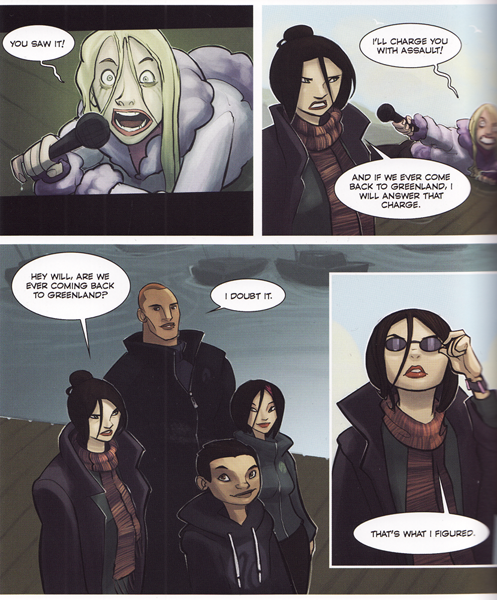

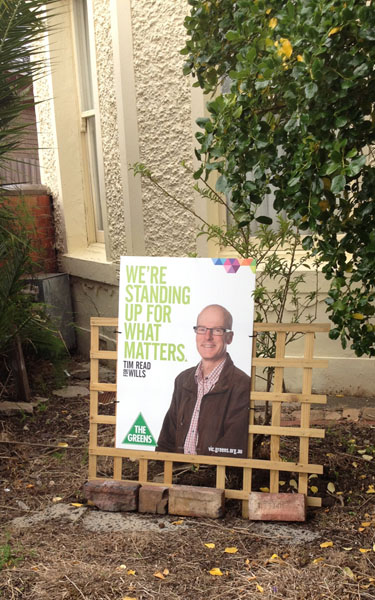


 no-award.net