anthologies in review

Steph loves anthologies; Liz is more ambivalent, being less of a fan of short stories.

(Liz clarifies: I just don’t enjoy anthologies.  Too many stories in too short a space.  I need to read them, like, three stories at a time, or else they become a blur.)

Steph is on her own as she reviews:

  • Dead Sea Fruit, Kaaron Warren (horror)
  • Eat the Sky, Drink the Moon, a whole awesome bunch of stories by Indian and Australian writers and illustrators
  • Phantazein, reworkings of fairy tales, yes excellent, from Fablecroft

Continue reading “anthologies in review”

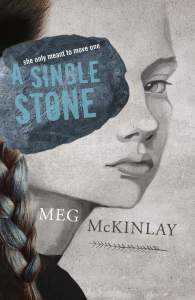
Aussie spec fic for young readers: A Single Stone by Meg McKinlay

A Single StoneEvery girl dreams of being part of the line – the chosen seven who tunnel deep into the mountain to find the harvest. No work is more important.

Jena is the leader of the line – strong, respected, reliable. And – as all girls must be – she is small; years of training have seen to that. It is not always easy but it is the way of things. And so a girl must wrap her limbs, lie still, deny herself a second bowl of stew. Or a first.

But what happens when one tiny discovery makes Jena question everything she has ever known? What happens when moving a single stone changes everything?

A Single Stone is a deliciously claustrophobic piece of semi-dystopian body horror for middle grade readers, inspired by Kafka (because why not?) and The Silver Chair (because it is the best Narnian book FIGHT ME).

Continue reading “Aussie spec fic for young readers: A Single Stone by Meg McKinlay”

Reading the Hugos: The Goblin Emperor by Katherine Addison

This is the last of my Hugo reading, as I decided after the short stories that life is already full of pointless suffering, and why should I inflict more upon myself?  Plus, I’ve had a convention to chair, a novel to write/revise, and also a day job.

Accordingly, my ballot looks like this:

The John W. Campbell Award for Best New Writer and Best Fan Artist

Not voting, haven’t had time to do research.

Best Fan Writer

Not voting, as the only nominated writer I’ve read is Laura J Mixon for her piece on RequiresHate/Winterfox/Benjanun Sriduangkaew, which to my mind doesn’t constitute a body of work.  (Plus, I just hate giving Sriduangkaew oxygen.)

Best Fancast

I’ve only ever enjoyed one podcast enough to listen to it religiously. (Sorry, podcasters, I’m just not very aurally-oriented.)  Luckily, Galactic Suburbia is one of the nominees.  I’m going to give that my first preference, and otherwise not vote.

Best Fanzine, Best Semiprozine, Best Professional Artist, Best Editors (long form and short form)

Not voting, as haven’t had time to look at nominees.

Best Dramatic Presentation, Short Form

Finally, a category where I’m familiar with more than one nominee!  I’ll be voting thusly:

1. Orphan Black, “By Means Which Have Never Yet Been Tried”

2. Doctor Who, “Listen”

3. Game of Thrones, “The Mountain and the Viper”

I haven’t seen Flash or Grimm, so I’m ignoring those.  I hope Orphan Black wins, just because I love it so much, and the second season finale was outstanding — but I also suspect this episode will be completely mystifying to anyone who hasn’t watched at least the preceding season.  Likewise Game of Thrones.

“Listen”, on the other hand, is a perfect, standalone piece of creepypasta, and I adored it, and won’t be at all sorry if it wins.

Best Dramatic Presentation, Long Form

I’ve seen three of the nominated movies — Captain America: The Winter Soldier; Guardians of the Galaxy and The Lego Movie — but I can’t get excited about any of them.  I’m not voting in this category.

(Stephanie note: This is because Liz doesn’t have enough heart to have feelings about the Steeb and Bucky story)

(Liz response: My heart is a cold, misandrist lump of coal with no room for manpain.)

Best Graphic Story

You know, I probably have time to read the nominated works before the deadline.  I read Ms Marvel: No Normal last year, and loved it, but there are a couple of other nominees that were already on my radar.  Let me come back to this.

Best Related Work

I’m not voting in this one, partially because I haven’t read any of the nominees, but also because I’m pissed off that the thoroughly deserving Queers Dig Time Lords didn’t get a nomination, thanks, Puppies.

Plus, Companion Piece — remember that book I co-edited? — is eligible for nomination next year, and I feel like I just have too much personal involvement in this category.

Best Short Story

No Award.  No hesitation.

(Okay, some hesitation.)

Best Novelette and Best Novella

Not voting; haven’t read them.

Best Novel

  1. The Three-Body Problem by Cixin Liu
  2. Ancillary Sword by Ann Leckie
  3. The Goblin Emperor by Katherine Addison
  4. No Award

“Wow, Liz,” you might be thinking, “you’re ranking The Goblin Emperor below Ancillary Sword, which you were quite lukewarm about?”

Yes, Hypothetical Reader, I was surprised, too.  Lots of my friends loved The Goblin Emperor, and found it engaging and enjoyable on every level.  And that’s great!  I am quite happy, and also a little jealous, that they enjoyed it so much.

I found it beautifully written, with interesting worldbuilding, and completely boring.

The plot: Maia, unloved half-goblin son of the elf emperor, unexpectedly takes the throne when his father and half-brothers are all murdered.  Despite his lack of training, and lack of self-confidence, he sorts out various political situations and solves the mystery by being really, really decent to people.

I’ve seen a lot of people saying that The Goblin Emperor is a response to the trend for grimdark fantasy.  I really hope not, because the opposite of grimdark is not dull.

I feel a bit weird saying this, because Characters Being Competent and Political Shenanigans are two of my favourite things in fiction.  But Maia’s competence feels unearned.  He instinctively knows how to deal with people, he instantly befriends trustworthy and reliable allies, and where he makes bad decisions, the consequences are minor.

Likewise, the Political Shenanigans are, well, predictable.  The traitors are just who you would expect, and Maia deals with them appropriately, and no one minds very much because the traitors weren’t even that good at their jobs, let alone popular or widely supported.

I’ve been thinking about the problems with The Goblin Emperor for a few weeks, and I think what it needed was a second POV character.  Maia is interesting, but he has very little context for the places he goes and the things he does, and that gets old fast.  And all of the supporting characters around him are two-dimensional in the extreme.  It’s difficult to imagine any of them having a life that doesn’t revolve around the main character.

Likewise the women — not that there are many.  The sympathetic female characters are what I think of when I hear that horrible phrase “awesome ladies”: they turn up, do or say something to subvert the patriarchy, and then step back and let the men get on with the plot stuff (such as it is).

The unsympathetic women are all ambitious and super-feminine (and they’re still subordinate to the plot-driving men).

In short, I was extremely disappointed in The Goblin Emperor, and really only forced myself to finish it for the sake of the Hugos.  It’s possible I was just in the mood for something more plot-driven.  But I don’t plan to read anything else by Addison, whether under that name or her Sarah Monette identity.  Life’s too short.

No Award leaves the house: #loveOzYA at Readings

Back in May, ALIA (that’s the Australian Libraries and Information Association for those readers who don’t have a defunct Grad Dip in Library and Information Studies) released the top 10 YA titles borrowed from Australian public libraries.

Only two out of the ten were Australian.  John Green had more entries in this list than Australian YA authors.

Out of this problem grew the #loveOzYA hashtag, a grassroots reader movement that was quickly embraced by booksellers and publishers.  Danielle Binks writes more about that for Kill Your Darlings.

I read Australian YA, and I also write it (or try to), so this is an issue very dear to my heart.  I want to be a published author one day, and I want to reach a wide audience — who doesn’t? — but I also want to tell Australian stories.  And I don’t want to choose.

(Yesterday I sat down and made a list of all the ideas I have for middle grade and YA novels, and where they’re at, and roughly how I’d prioritise them.  I have ten ideas that I think are worth pursuing.  Nine are specifically set in Australia.  I clearly have a vested interest in promoting Australian fiction for young readers.)

On Tuesday night, I went to a #loveOzYA event at Readings Hawthorn, a panel discussion titled Where’s OzYA going right, and where’s it going wrong?  The panel was moderated by Isobel Moore, the specialist YA bookseller from Readings St Kilda.  On the panel were Melissa Keil, winner of the inaugural Ampersand Prize and author of contemporary Melbourne-based YA; Marisa Pintado, commissioning editor of YA for Hardie Grant Egmont and coordinator of the Ampersand Prize; the abovementioned Danielle Binks; and Susan la Marca, a senior teacher-librarian.

This was the perfect event — Readings Hawthorn was warm, dry, spacious and had toilets, not to mention that it was full of books, and the panel only ran for three-quarters of an hour, which is handy when it’s a Tuesday night and it takes me an hour to get home.

For once, I didn’t livetweet the event, but instead chose to take notes on my phone.  (Okay, I’ll be honest: I’m nearly out of data.)  Important lesson for Future Lizzes: just take a notebook.  It’s low-tech, but at least doesn’t have autocorrect.

Continue reading “No Award leaves the house: #loveOzYA at Readings”

No Award Reads: The Courier’s New Bicycle

The Courier’s New Bicycle by Kim Westwood is a 2011 Australian SF novel set in a grim dystopian Melbourne approximately a generation into the future.  A bird flu pandemic ravaged Asia and Australia, and an untested vaccine rendered most Australians infertile.  (All we know about the impact in Asia is that Singapore went bust.)

Five years ago, the Generic Christian Oppressor Party (okay, they’re called Nation First) came into government, and along with their dodgy co-religionists (…something-or-other First), they have imposed an oppressive theocratic regime that bans artificial fertility, non-binary gender identities, and queerness in general.

The story follows agender bicycle courier Sal Forth, whose day job is making deliveries for the underground artificial fertility industry, and who is an animal rights activist in zir spare time.  Sal becomes embroiled in a set of mysteries: who is trying to destroy zir’s boss’s business; who is responsible for the beating of a surrogate mother; and who has poisoned zir previously only-once mentioned bestie with a contaminated T-shot.

Spoilers: the answer is, STRAIGHT PEOPLE, but especially STRAIGHT WOMEN, because if there’s one thing this book has, it’s spades and spades of misogyny.  Trans-misogyny, cis-misogyny, unexamined misogynistic treatments of women of colour, it’s all straight-up woman hatin’ here.

Suffice to say, Steph and Liz didn’t care for it.  Which is sad, because lots of people whose taste we normally share loved it!  But by coincidence, we started reading it at the same time, and sent colliding text messages going, “I’M READING THIS BOOK AND IT’S AMAZINGLY TERRIBLE WE HAVE TO TALK ABOUT IT FOR NO AWARD”.

There’s some really awesome stuff around gender and sexuality. Lots of queer relationships and people, and a real consideration of how that impacts peoples’ lives. And so much of the book’s underlying messages are about found family and how great and valid they are. It’s a great look at different conditions and different situations, and the way in which Australia might change in our climate change dystopia (the proliferation of bike couriers, the constant warm weather, the creation of glow in the dark pets, good work CSIRO).

But despite the awesome stuff, Liz and Steph had to take turns encouraging each other to get through the book. And that rarely ever happens.

Spoilers. So many spoilers below.

No Award Disclaimer: When we go on rambles like the 3500 words within, it’s not because we want nobody to write anything new or fun or intersectional. It’s just that we have feelings about the respectful way to do these things, and everybody, even people we love, makes mistakes.

Continue reading “No Award Reads: The Courier’s New Bicycle”

No Award Writes Books (and gives one away)

No Award is coming to a bookshelf near you! Of recent months, No Award has appeared in two books. Liz was critical to the development of them both.

Cranky Ladies of History

Late in 2013, Liz blogged about noted Cranky Lady of History Tsaritsa Sophia Alekseyvna.  First it was a Tumblr post, and when that exploded, she figured it was maybe worth preserving, and cross-posted it to her blog.

It got a tiny bit of attention on WordPress, but attracted a lot of retweets, at which point someone said (to Tansy Rayner Roberts, if memory serves), “Hey, this would make a great anthology.”

Said great anthology then came into existence.

(Despite Liz’s best efforts, nothing else she has ever posted has ever and will ever achieve this level of success.  All those Tumblr ramblings about how Lin Beifong is great, and no one wants to turn Cranky Middle-Aged Cartoon Superheroines into an anthology.  Which is frankly weird.)

Cover of Cranky Ladies of History - red silhouette people

Crowdfunding took place, pitches were submitted, and, miracle of miracles, both Liz and Stephanie had stories accepted.

Stephanie wrote about her favourite pirate and yours, Cheng Shih, Fierce Lady, Pirate, Total Ratbag. There’s not a lot of documentation out there about her, either in English or Chinese texts, so Steph did the best she could (in both English and Chinese, as a noted polyglot) and then wish fulfilled where she couldn’t.

The greatest new thing Steph learnt about Cheng Shih during research for this story was her potential linkages to the start of the Opium War, and her working relationship with Lin Zexu, who started the Opium War. Fighting the British because of opium would have been totally Cheng Shih’s jam, so it sounds legit.

Cheng Shih, like Noted Asian Lee Lin Chin, is one of Steph’s heroes, and if she were to grow up to be just like Cheng Shih, that would be acceptable.

Liz wrote about Queen Mary 1 of England, daughter of Henry VIII and Catherine of Aragon, burner of Protestants and all around cranky lady.  But first, she read half a dozen biographies, one of which turned up a truly amazing anecdote.

From memory: Late in Henry VIII’s reign, when Mary was in her late twenties or early thirties, living as far from her family as she could get without actually running away to Europe, Henry-via-retainer sent her a rather shirty letter to the effect of, he had heard she was entertaining “strangers” in her home, and could she not do that?

Mary replied, effectively, “Surely the king doesn’t want me to abandon the principles of Christian hospitality?  I will continue to act as my conscience dictates, thank you.”

And apparently nothing more came of it, because those letters are published in a rare book, of which only six copies exist.  Suffice to say, Liz’s library didn’t hold it.  (David Starkey owns a copy, but somehow it seemed unlikely he’d lend it to anyone.)

What piqued Liz’s imagination was this: who were these “strangers”?  English aristocrats wouldn’t be strangers.  English peasants wouldn’t come to the king’s attention.  So … time travellers?  Aliens?  ALIEN TIME TRAVELLERS?  (The Doctor?)  Faeries?

None of these questions are answered in Liz’s story because it takes place many years earlier, in the weeks before the downfall of Anne Boleyn.  This was particularly fun because Boleyn is remembered as a light-hearted, witty lady — at least, that was how she interacted with men — whereas Mary quickly went from being a happy, gifted child to a dour young woman with an undefined chronic gynecological complaint.

You can purchase Cranky Ladies of History (please do).

Companion Piece

You might not know this, but Liz loves Doctor Who, and Steph knows that time travel is terrible and no one should do it.  Liz says:

Cover of Companion Piece - a pale brown background with a young woman clambering out of a box. This all started back at Aussiecon 4 in 2010.  Liz and future-co-editor L M Myles were in the bar, as often happens at conventions, and they got to talking about the curious lack of substantial books about Doctor Who companions.  A couple exist, but they’re more promotional than analytical, and at least one is best known for the terrible would-be sexy photos it contains. (Tumblrs that should exist: Unsexy Photoshoots Featuring Sci-Fi Actresses Who Deserve Better.)

Fast forward a couple of years, and Liz Myles had co-edited the Hugo-nominated Chicks Unravel Time, a follow-up to the Hugo-winning Chicks Dig Time Lords.  Liz contributed to Chicks Unravel Time, and publisher Lars of Mad Norwegian Press liked her work enough that when we met at ChicagoTARDIS in 2012, he was willing to give them a chance with a companion book.

Fast forward some more years, in which Liz Myles became a podcasting queen and Liz discovered that programming/chairing a convention and editing a book at the same time is a really bad idea.  And we have, at last, got a book.  An actual book that the two Lizes made, full of essays we’re proud of.  Which brings us to…

Steph wasn’t going to submit anything to this anthology. Liz enticed her in with ‘How would you like to write about the least feminist companion and say something nice about her?’ And you know what? Did Steph ever. Steph mainlined hours of Five and Six, and then wrote several thousand words about how the Doctor is terrible and men are terrible and you should all feel terrible, and misogyny is the thing that keeps Peri from embracing her innate awesomeness. Steph is living her best misandrist life, okay? You should, too.

You can purchase Companion Piece from Amazon and similar places.  (If you do, please feel free to throw a review up on Amazon, GoodReads, etc!)

Alternatively, leave a comment here, and you might be RANDOMLY SELECTED to receive a copy.  IT’S THE FIRST NO AWARD GIVEAWAY!

And if that doesn’t work, we’re also giving away two (!) signed (!) copies at Continuum — go buy yourself a membership, then turn up for the closing ceremony.  Guest of Honour Tansy Rayner Roberts is just one of several contributors attending, so it’s not just Liz and Steph writing their names in the book. (And drawing. Steph will be drawing in books)

No Award in Books: The Live Show

There will be panels about both of these books at Continuum, a speculative fiction convention, of which Liz is Chair and Steph is programmer. Continuum is held over the Queen’s Birthday weekend in Melbourne, Steph uses it to push an agenda, and because this is our blog you’ll be hearing more about it over the next two weeks.

Sunday June 7 6pm, Cranky Ladies of History, including editors Tehani Wessely and Tansy Rayner Roberts. Monday June 8, 2pm.

(PS Don’t try first programming and then chairing a con while co-editing a book.  Learn from Liz’s mistakes.  Sleep is a wonderful thing that you will one day miss.)

Reading the Hugos: The Three-Body Problem by Li Cixin, plus Kevin J Anderson

I loved this book. I inhaled it. I spent two hours sitting on the floor of a cold, empty house, reading it as I waited for a removalist that never came, and I don’t begrudge that time.

And yet, there is a plot-twist so absurd that if it had come from an Anglophone author I would have asked if he was taking writing advice from Rupert Murdoch.  The male protagonist is bland; his family appear for one scene and then vanish, despite numerous developments that would directly affect them; I have doubts about the earth-based worldbuilding, which doesn’t stand up to scrutiny.

But I loved it.

It helps that I read the translated version.  A novel in translation can be challenging to read: phrases that felt natural in its original language become clumsy; the dialogue is nearly always stilted.  2013 saw me reading a lot of Japanese and Scandinavian crime fiction, and I couldn’t shake the feeling that my vision of the text was distorted, like I was wearing semi-opaque lenses.  I couldn’t quite bond with those novels.

With The Three-Body Problem, I appreciated that distance, because it kept reminding me not to judge it by the standards I’d apply to western writing.  That helped me tolerate — and even enjoy — the long expository scenes.  It also meant that when I hit the absurd plot twist, I didn’t write it off as hilariously bad right wing propaganda, the way I would if a western author presented such an idea with a straight face.  I’m not really up on contemporary Chinese politics, so I can’t put his work into a proper context.  I had to take it as it is, and that was refreshing.

(I did recognise one political thread: a debate between aliens about the value of totalitarianism versus democracy when it comes to the long-term survival of a culture.  Basically the only thing I know about current Chinese politics is that that is a heated issue.  Cixin himself doesn’t offer any easy answers.)

Probably part of the reason I loved it is that much of the novel is set during and immediately following the Chinese Cultural Revolution.  Reading reviews, I’m quite surprised at how little American readers seem to know about this period — several even seemed to think the setting was a Communist revolution.

I have an advantage, in that my mother studied Mandarin at university in the late 70s/early 80s, at a time when the department was basically run by Maoists.  I scribbled in her copy of the Little Red Book when I was tiny, and I’ve always been really interested in the Cultural Revolution.

One of Cixin’s themes is that everything can be distorted by politics, including the seemingly immutable facts of the universe, and the Cultural Revolution is a perfect example of how that works.  (This also makes my instinctive desire to put his work into its political context seem all the more ridiculous.)

I’ve heard that the second volume in the trilogy is more character-driven, and I really hope that’s the case, because the male protagonist here was passive and quite dull.  (As opposed to the female lead, but to say more would be a spoiler.)  But I did love The Three-Body Problem — it had lots of things I don’t like, yet it executed them all on such a scale, and with such confidence, that I was drawn in despite myself.  I thoroughly enjoyed reading it, even when I was texting Stephanie to tell her that [SPOILERS] are really [SPOILERS] for a [SPOILER].

At this point, I think The Three-Body Problem is likely to get my first preference in the ballot, and it is absolutely deserving.

Kevin J Anderson’s The Dark Between the Stars, however, is going to go below No Award.  That, too, is deserving.

Obviously Three-Body was going to be a hard act to follow, but The Dark Between the Stars had numerous strikes against it.  I read six chapters (remember, I said I’d give a book three chapters to convince me, so really, I went above and beyond).

I’d complain about Anderson’s two-dimensional female characters, but actually, the men are no better.  I didn’t much care for his depiction of a bitchy, career-driven wife and mother and the husband who kidnaps their son and escapes her.  (It’s not that these things don’t happen, it’s just the complete lack of nuance.)

I had even less time for the clumsy writing, where characters take several chapters to figure out things that were obvious to the reader from the very first scene.  I have no idea what the plot was going to be, or the history of this universe — which I believe is one Anderson has written in before — because the writing was so terrible, my brain just went NOPE and shut down.

An animated gif of an octopus scuttling across the field, the words

That octopus really speaks to me.

Now I’m reading The Outback Stars, which is also terrible, and yet really interesting?  ABORIGINAL RUNES.  But also a completely dysfunctional stores department on a starship, which is (a) interesting; (b) relevant to my peculiar interest in workplace issues; (c) a side of milSF we don’t often get to see.

I mean, that aspect is still terrible (fake rape claims!  All the Japanese officers are either Yakuza or prostitutes!  The space navy is allegedly based on the Australian navy but has US-style rules against fraternisation!), plus I really don’t care for the romance.  And yet I keep reading, because [see (a) through (c)].

Stay tuned for a No Award post about the trilogy.  It’s quite something.

Wednesday reading (on Thursday)

Yesterday was just very busy, okay?  On the upside, the old house is now clean and empty, with the very last round of stuff to be picked up this evening.  I guess I can take time out of reading Free Comic Book Day stuff on Saturday to drop off the keys.

Books Recently Read

The Life and Death of Harold Holt by Tom Frame

This wound up being a bit of a slog, which is what happens when you have a subject who’s basically a decent person who avoided major scandals and kept his private life to himself.  But it didn’t destroy my illusions about Holt being quite a good sort, and made me extra-sad that the Liberal Party has become everything that Menzies and Holt wanted to avoid.

Also read: four out of the five Hugo-nominated short stories.  But you all knew that, because that post was the second-most visited on this blog ever.  (The first: the one where I spoil the ending of the Australian Secrets & Lies.  IDK, it got picked up by an entertainment site or something.)

General consensus on that post seems to be that I’m an easy grader.  And I agree; I think I was trying too hard to not seem like I was rejecting stories just because they were on a slate I strongly disagree with.  So I’m inclined to unearth some of the nominated stories of recent years, read those, and reconsider my choices for this year.

Currently reading…

The Three-Body Problem by Liu Cixin

A nominated novel, of course, and a very good one so far.  I had heard it described as didactic and heavy on the exposition, which are two of my least favourite things ever in fiction — Stephanie, back in our Ann Leckie discussion, was curious to see how I’d cope with Chinese SF — but so far, so good?

But then, I really need some of the scientific exposition Liu supplies — I don’t have much of an education in science at all, and I just can’t get my head around physics whatsoever.  I struggled with the science in Rosemary Kirstein’s The Steerswoman — note to self, make Stephanie read that series so we can talk about it — so the contemporary/near future/recent past stuff is way over my head.

I’ll do a proper post about The Three-Body Problem when I’m finished.

What I’m reading next…

I have the nominated Kevin J Anderson novel checked out from the elibrary.  I don’t expect it will be difficult.  (Not an insult — I love good, solid storytelling.  I breezed through Leviathan Wakes when that was nominated, and loved it.)

I also have The Outback Stars by Sandra McDonald checked out.  I hope it’s good, but Americans writing about Australian Indigenous cultures is always rich with the potential for grossness.  Either way, I’ll probably get a post out of it.  I think Steph is also going to read it, so maybe we can make it substantial.

Wednesday Reading

I have successfully moved house, and some time this year, the old house will be clean and empty, and I will have functional, fast internet at my new place, and won’t be a massive ball of stress.

In the meantime, just about the only thing I have time for is reading as I wait for buses and take trans between home, work and the old place.  So here is a post, based on a meme popular on my Dreamwidth circle in 2014, that I will try to make a regular thing.

Books Recently Read

Sense and Sensibility by Jane Austen with annotations by David M Shapard

S&S has never been my favourite Austen novel, but a friend was recently dumped by her boyfriend (Kickstarter to set him on fire, btw), and coped by going the full Marianne Dashwood, ie, not coping at all.  And that got me thinking how this is one of Austen’s novels that translates particularly well to the modern day, and wondering how that would be done.  Luckily, I had the annotated edition already on my Kindle.

Anyway, the great thing about S&S is that, while every single literate woman on the planet thinks she is Lizzy Bennet, there’s a bit more variation in the question of whether or not you’re an Elinor or a Marianne.  (I’m an Elinor, obviously.)

What struck me on this read-through is that Mrs Jennings, one of Austen’s most ridiculous characters, is also extremely kind, and part of Marianne’s growth is in realising this and valuing her for it, whereas previously she looked down on Mrs Jennings for being vulgar and overly familiar.

Following the book, I’ve acquired copies of the 1996 movie, the 1971 miniseries and the 2007-ish miniseries.  One day I might even have time to watch them.

Still thinking about a modern S&S, and wondering what and who Colonel Brandon would be in a contemporary Australian setting, I read…

Uncommon Soldier by Chris Masters, an account of the training, duties and general experiences of the contemporary Australian soldier, with particular emphasis on service in Afghanistan.

This was an interesting read, frequently made unnecessarily confusing by getting bogged down in acronym soup.  The earlier chapters, about training, including the professional paths and cultures for recruits, ADFA graduates and Duntroon cadets, was more interesting to me, and easier to follow, than the later chapters based on Masters’ experience as an embedded journalist in Afghanistan.

I definitely learnt a lot more about Australia’s role in Afghanistan, and while I am never going to be comfortable with a situation where civilians are so vulnerable, I came away with the impression that the Australian forces were more professional and culturally sensitive than, say, the US.  But also that Masters — probably because he himself is a white Australian man — wasn’t in a good position to see the times where that was not the case.

For similar reasons, I felt that Masters didn’t spend enough time discussing the experiences of female soldiers and officers, or of any military personnel who weren’t straight, white and male.  (Although homsexuality is legal in the Australian defence forces, he notes that homophobia is rampant, to the point where a commando only came out at his retirement party.)

In short, an informative but disquieting read.

Currently reading…

The Life and Death of Harold Holt by Tom Frame.

Saying “May the Sea Return Him” is all very well, but I realised last week that I don’t actually know very much about Holt as a person or politician, save that he was more progressive than he’s often given credit for, and that his life was less interesting than his death.

I’m only 15% into the book, but Frame makes a good argument for Holt’s life being, in fact, reasonably interesting — his parents divorced, his father married a woman Holt himself was courting — but also very private, with few records remaining.  Of Holt’s politics, it’s too soon to say; like most Australian conservatives of the 1940s, he was primarily concerned with finding a democratic balance between socialism and fascism, and upholding the glory of the British Empire.

On entering Parliament, Holt was 27 years old, the most eligible bachelor in the House of Representatives.  One highlight is his thoughts on women and fashion:

“I don’t like women to dress so conspicuously that they make a man feel hot under the collar to be seen with them but on the other hand, they should not be too inconspicuous.  Women seem to be most charming in summer frocks, plain, cool linens, prints and all that sort of thing. Perhaps it’s the prettier colours that appeal to me.  I like pastel shades very much and all the ‘off’ colours, dusty pinks, blues, greens and so on.  They are more subtle.”

He concluded that most women ‘dress to make their sisters sit up and take notice’.

My thoughts:

1. Thanks, Harold, but I’ll dress as conspicuously or otherwise as I want.

2. More male politicians should share their feelings about pretty colours and pastels.  It’s nice.

3. It’s depressing how refreshing it is to see a bloke point out that women mostly dress for themselves and each other.

What I’m reading next…

It’s Hugo season!  Suffice to say there have been some issues this year, and very little of what I nominated made the short lists.

I’ve been chewing over my voting intentions for a couple of weeks, and while I was initially tempted to vote No Award for any Puppy Slate works, I’ve decided that it would be fairer to read everything I can and vote on the merits.

Accordingly, I’ve resolved to read every short story, at least three chapters of every nominated novel, and at least 25% of every novella.  And I’m going to blog about them here.  Look, we named this blog for maximum confusion/hilarious trolling, it’s practically made for this type of thing.

I’ve borrowed The Three Body Problem from the library, requested the Kevin J Anderson novel, and made a note of where I can get the other nominated novels. Short stories etc can wait for the voting pack.

I’m quite excited to read The Three Body Problem, because I’ve wanted to read it since I first heard it was being translated, and until recently the ebook was going for about AU$30.  But I’m also nervous, because I hear it’s quite didactic, which Stephanie says is a feature of Chinese literature, but also something I don’t much care for.  Fingers crossed!

I’m hoping that I’ll like it enough to rank it above Ancillary Sword, which I enjoyed but found inferior to Ancillary Justice.  I do not like to agree with the Sad/Rabid Puppies on anything, but I did feel like Leckie prioritised exposition about social justice over plot in that book.  Unlike the Puppies, I’m quite pro social justice, I just like a bit of subtlety, or at least originality.

I also just became aware of Sandra McDonald, an American author with an SF series “based on native Australian culture”, according to Amazon.  I like bits and pieces of the blurb, but the potential for a trainwreck is also pretty high.  Again, if I have thoughts, I’ll share them here.

‘The Menzies Era’ – drinking game and review review

Former PM of Australia John Howard loves Menzies. He loves Menzies so much, in 2014 he released a 630 page tome about Menzies’ impact on Australia. No Award doesn’t have time to read 630 pages written by a white man about another white man in order to review it for you, so instead we’re going to review the existing reviews of people who could be bothered reading 630 pages a white man wrote about another white man. (Please note: actual tome is 720 pages in length, but only 630 of those pages are biography.)

Rules of reviewing Howard’s Menzies:

  • You have to play the Howard’s Menzies drinking game.
  • Every time someone mentions that Australia was “cheated” by the slandering of Menzies: drink.
  • Every time someone says it was Keating’s fault that Menzies is viewed badly by Australian history: drink.
  • Every time a review says ‘Menzies had his bad points’ but fails to mention that thought Nazism wasn’t that bad: drink.
  • Every time a conservative waxes rhapsodic about Gough’s sweet kisses: drink.
  • Every time someone mentions how amazing John Howard was: drink.
  • Every time someone references light: drink. Drink twice if that light is on a hill.
  • Every time someone mentions a personal anecdote about Menzies or Howard: drink.

Spoilers: Stephanie’s favourite review is the Quadrant one. You’ll know why when you get there. Special mention to the Canberra Times review, for amazingness that we will be discussing later. #regionaldystopia

Overall, Steph has learnt from this process that she maintains a bias in regards to Menzies and his years, and she’ll be damned if she’ll let some baby boomer (or older) take that bias away from her.

Reviewer’s note: None of these reviews are linked, because Steph doesn’t want the bounceback to NA. However you have been presented with all the details you need to google them.

Continue reading “‘The Menzies Era’ – drinking game and review review”