book review: the songlines, by bruce chatwin

Here is 1800 words about a book that Stephanie hated! The only thing that saved it being thrown across the train in disgust was that it was a library book, and she has her lines. (Plus Liz would probably tell her off)

The Songlines, Bruce Chatwin, 1987.

The Songlines is a book about discovery. It’s a travelogue and an adventure and an exploration. It’s fiction. It’s autobiography.

It’s a pretentious pile of racist drivel.

It’s beautifully written. There are some excellent turns of phrase, and it’s got a lovely style, but ultimately it’s about an English man, who believes we’re all nomads, coming to Australia and insisting on creating analogies for literally every element of the lives of the indigenous Australians that he meets. ‘It’d be like America and Russia agreeing to swap their own internal politics-’ he says, of a kin exchange between two different countries.

In chapter 2 he compares Indigenous Australians to Coyotito (a coyote) from Ernest Thompson Seton’s Lives of the Hunted.

Yet Coyotito grew up smart and, one morning, after shamming dead, she bolted for the wild: there to teach a new generation of coyotes the art of avoiding men.

I cannot now pierce together the train of associations that led me to connect Coyotito’s bid for freedom with the Australian Aboriginals’ ‘Walkabout.’ Yet somehow I picked up an image of those ‘tame’ Blackfellows who, one day, would be working happily on a cattle-station: the next, without a word of warning and for no good reason, would up sticks and vanish into the blue.

Bruce keeps comparing Indigenous Australians to fauna. Chapter 12, Flynn (an Indigenous man whose country is never stated, but who is a part of the Boongaree Council) describes allegiances and ‘totemic clans.’ “What this boils down to,” Bruce says:

hesitantly, ‘is something quite similar to birdsong. Birds also sing their territorial boundaries.’

Arkady, who had been listening with his forehead on his kneecaps, looked up and shot me a glance, ‘I was wondering when you’d rumble to that one.’

Here Arkady, a non-Indigenous Australian of Russian descent from Adelaide, who has lived for some time in and around the Northern Territory and serves as Bruce’s guide on this particular exploration, practically gives Bruce permission to describe Indigenous Australian songlines in this fashion, as if Indigenous Australians weren’t legally categorised as fauna until 1967.

Chapter 14, he writes “I was not drunk – yet – but had not been nearly so drunk in ages. I got out a yellow pad and began to write.” The audience is left with most of a blank page and upon turning finds

IN THE BEGINNING…

“In the beginning the Earth was an infinite and murky plain, separated from the sky and from the grey salt sea and smothered in shadowy twilight.” This page contains Old Man Kangaroo and Sky-dwellers and Ancestor and Cockatoo Man and Witchetty Grub Man and Bandicoot Man.

Here, drunk on the liquor condescendingly denied to indigenous people in the town and on his own privilege, Bruce begins to construct what he sees as his own story, coherent within a Dreaming (any Dreaming), as if this is a thing he has permission to do.

He writes the exchange of work between Old Stan Tjakamarra, a Pintupi elder who paints, Enid Lacey, a patronising older White Australian, and two American tourists. And he writes it like a con, coy and roundabout and in jokes and a triumphant ‘rrumpff’ of an Eftpos machine as Arkady comments ‘some nerve,’ without commenting if he talks about Stan, Mrs Lacey, or the demanding tourists. He tells of stopping off in Katherine, where an area was a designated National Park but a ‘loophole’ found by lawyers meant that the land was being claimed ‘back for the blacks,’ causing ‘ill-feeling’ in the town. In the men’s room of a pub in Katherine, a ‘black whore’ offers herself to Bruce, and in the time it takes for him to piss after rejecting her, she’s “attached herself to a stringy little man on a bar-stool.”

The 2012 edition begins with an introduction by Rory Stewart; perhaps a poor beginning, with Stewart mentioning that Bruce never portrays ‘Aborigines’ (in 2012!) as either ‘tragic victims or noble savages,’ but goes on to say that ‘he portrays them as almost unknowable;’ as if by saying that he avoids categorising and stereotyping Indigenous Australians means he doesn’t stereotype them.

Aborigines are often reluctant to trust outsiders, their secret songs are in archaic forms of obscure languages, and the traditional belief systems that underlie them are hard to grasp, categorize, or convey…It is difficult to know what exactly one is talking about here. But Bruce is confident that he does.

This view, both a reiteration of the audience (not Indigenous) and that Bruce is able to talk about it, remains unchallenged through the introduction.

Bruce is not just disrespectful and racist towards Indigenous Australians. Oh, no, quokkas. This beautifully written tome, interwoven with his adventures in other places and other times, with the lessons he’s learnt, is speckled with the disrespect he’s shown other people, too.

The picture I pieced together – true or false I can’t begin to say – was of a ‘scientific’ experiment at which an Aboriginal had sung his Dreaming, a Catholic monk had sung the Gregorian Chant, a Tibetan lama had sung his mantras, and an African had sung whatever.

Not even a fauna comparison for the African person earlier described only as “a black one, a fat one;” they sing a ‘whatever’.

In his series of self-reflective, pretentious notebook scribblings, Bruce notes of a Quashgai woman, perched upon a black horse: “She was also suckling a baby. Her breasts were festooned with necklaces, of gold coins and amulets. Like most nomad women, she wore her wealth. What, then, are a nomad baby’s first impressions of this world? A swaying nipple and a shower of gold.”

[Note that here, he probably means Qashqai, a peoples living across regions in Iran]

‘Alone and amid the nations’, masters of the raid, avid for increase yet disgusted by possessions, driven by the fantasy of all travellers to pine for a stable home – no people but the Jews have ever felt more keenly the moral ambiguities of settlement. Their God is a projection of their perplexity.

He witnesses a Bororo ceremony, described in mystical terms and describing an inexplicable event. Two boys fight, and paint, and wear womens’ clothes, and then return to the palace holding hands, with banknotes pressed onto their painted faces. Some of them are more ‘chic’ than others. Then there are drums, and jewellery glows like phosphorescence.

Bruce has an audience, and it is clear who that audience is. “He wanted to show how every aspect of Aboriginal song had its counterpart in Hebrew, Ancient Greek, Old Norse or Old English: the literatures we acknowledge as our own.” Here in chapter 14, it is clear that the audience is defined as Europeans and Anglo-saxons, with a shared history and linguistic tradition. This book, this exploration, then, is written for men like Bruce.

He uses the term frontier to describe Australia, as if it’s applicable and there was never terra nullis. Arkady uses his ‘reverberative Russian voice he usually reserved for women, to calm them,” because women need calming.

Like many travelogue writers, Bruce wants to know himself and the world around him. “The Pharaohs had vanished: Mahmoud and his people had lasted. I felt I had to know the secret of their timeless and irreverent vitality.”

Like many a western author before and after him, Bruce feels it is his right to demand answers of a people.

He folded his arms. ‘I want to. Yes,’ he replied with inconceivable insolence. ‘But not in a school run by racists.’

She gasped, wanted to block her ears, but he went on, mercilessly. The education programme, he said, was systematically trying to destroy Aboriginal culture and to rope them into the market system. What Aboriginals needed was land, land and more land – where no unauthorised European would ever set foot.

He ranted on. She felt her answer rising in her throat. She knew she shouldn’t say the words, but the words came bursting out, ‘In South Africa they’ve a name for that! Apartheid!’

Lydia, the she here, is the one with whom Bruce gives sympathy; Graham, the white man teaching Indigenous locals, leaves the house and her, and is constructed as the one who is wrong throughout his participation in Bruce’s story.

There are concepts he writes and shares beautifully but, due to what comes before and after, I don’t know if I can believe them.

‘All our words for ‘country,’’ [Flynn] said, ‘are the same as the words for ‘line.’’

For this there was one simple explanation. Most of Outback Australia was arid scrub or desert where rainfall was always patchy and where one year of plenty might be followed by seven years of lean. To move in such landscape was survival: to stay in the same place suicide. The definition of a man’s ‘own country’ was ‘the place in which I do not have to ask.’ Yet to feel ‘at home’ in that country depended on being able to leave it. Everyone hoped to have at least four ‘ways out’, along which he could travel in a crisis. Every tribe – like it or not – had to cultivate relations with its neighbour.

One could believe that; and it’s fun to read. But this narrator is untrustworthy; and more importantly, Bruce Chatwin is intentionally untrustworthy. It is an essential part of his schtick.

Later, on further reflection, having discovered the cause of our misfortunes, he wished to understand the reason for them, he found one very good reason: namely, the natural unhappiness of our weak mortal condition; so unhappy that when we gave to it all our attention, nothing could console us.

And then it ends, trite and all wrapped up and presented so neatly.

One was strong enough to lift an arm, another to say something. When they heard who Limpy was, all three smiled, spontaneously, the same toothless grin.

Arkady folded his arms, and watched.

‘Aren’t’ they wonderful?’ Marian whispered, putting her hand in mine and giving it a squeeze.

Yes. They were all right. They knew where they were going, smiling at death in the shade of a ghost-gum.

Isn’t that beautiful and evocative and absolutely terrible? And it is there that we leave Bruce and his adventure, his autobiography; the way he tears up everything and gives it back to you in a way you’re not sure you want, and completely misses the point.

Further reading: I found this essay by Robert Clarke, Star traveller: celebrity, Aboriginality and Bruce Chatwin’s The Songlines, very interesting.

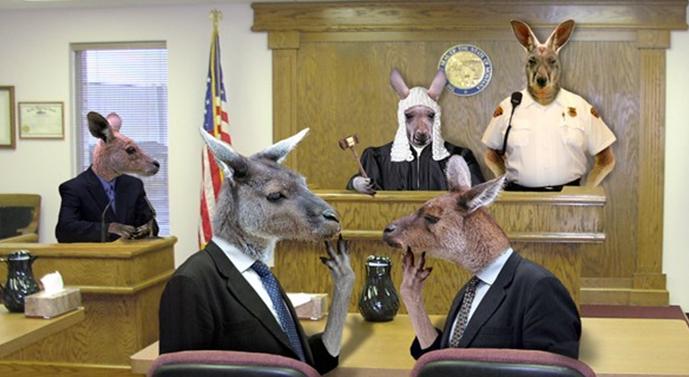
will linkspam ever see your face again

A tumblr thread discusses how all work that is feminised becomes devalued, and it’s a good discussion about the evolution of various fields such as chemical engineering, biology and teaching, and how they became undervalued as more women moved into the fields and they became known as ‘female’ fields. It makes Steph think about her own work in sustainability and climate change mitigation, and the professional workshop she attended last week where of 19 attendees, all sustainability professionals and experts, only 3 of those attendees were men. And sustainability and climate change are controversial, soft topics, and how much does that have to do with how many women are in the field?

(Liz notes that Lois McMaster Bujold has written about this for a long time — her novels are often dismissed as “soft” sci-fi, or not “real sci-fi” at all, because the primary technological innovations she writes about are biological — uterine replicators, social implications of genetic engineering, adaptive surgeries for people with disabilities.  You know, lady science.)

Not Australian, but as Terrible Young People, No Award is especially interested in this article at Treehugger: More proof that millennials are ditching the car. Please note that 100% of No Award contributors do not own a car (50% of contributors have current drivers licenses valid in Australia).

(Liz wishes to point out that her learner’s permit is current and valid in the state of Victoria, and she can totally go, um, forwards and around corners.  SO THERE.)

Following on from the Great Potato Cake War (aka the Potato Scallop Police Action aka WHY AM I NOT EATING POTATO RIGHT NOW), The Guardian looks at regional variations in Australianisms.  Liz, having moved from NSW to Queensland during primary school, prides herself on never having used the terms togs” or “port rack” except in conversations where she expresses pride in never having used these terms.  Internalised Queenslandophobia?  Ponder that while we wonder why Far North Queensland and the delightful regional language of Katter Country was excluded from this study.

New Matilda reveals that English professor/curriculum reviewer Professor Barry Spurr is a deeply unpleasant man who yearns for a time when — we quote — “Abos, Chinky-poos, Mussies, graffiti, piercings, jeans, tattoos, obese fatsoes or darkies formed no part of the Australian landscape.  In addition to the ugly, racist language, the link above includes misogyny, transphobia, victim blaming, the violation of a disabled student’s privacy, and also he’s bigoted against Methodists, which is small cheese compared to the rest, yet somehow impressive.

Liz notes, however, that as much as she sympathises with the people who’d prefer to see him summarily dismissed from society in general and the University of Sydney in particular, there’s a lot to be said for organisations taking their time to follow procedures and conduct investigations.  Mostly because, if that doesn’t happen, they tend to get sued, and Liz would rather that Professor Spurr doesn’t ultimately walk away with a taxpayer funded windfall.

In any case, next time someone says something about ignorance and lack of education being the cause of racism, we can trot out Spurr as proof that education is no help if one is determined to be a dipstick.

‘Am I Being Catfished?’ An author confronts her number one online critic.  Or, Kathleen Hale is a terrible person who demonstrates exactly why people use pseudonyms online, even for something as innocuous as book reviewing.  Since the reviewer wasn’t threatening Hale with violence or saying she should be raped and/or murdered, there’s no reason at all to link her online identity with her real life.

Smart responses to Hale:

Smart Bitches, Trashy Books – The choices of Kathleen Hale

An Open Letter to Kathleen Hale & Guardian Books: Stalking is not okay

A response to the support received by Kathleen Hale after she stalked a book blogger

Liz adds here: I have a lot of sympathy for authors who feel that their books are being misrepresented or misinterpreted by reviewers.  Not that I’m a published author, but I’ve kicked around fandom long enough to be declared The Worst Person In Doctor Who Fandom by an anon meme.  It’s hard to resist the urge to explain yourself, or at least ask for clarification.

(Once I posted a fic which, although it was rough due to a deadline, basically said what I wanted it to say, though not as well as I’d have liked.  One reviewer described it as nihilistic and politically regressive.  I was going for realism and bittersweet hope mixed with angst!  Which other reviewers said I achieved!  But it’s always the awful reviews that stick in your head, right?)

But I think most of my author friends know that the appropriate response is to vent in email or in person, or in a forum where the public can’t see.  And maybe basing a future villain on your reviewer.  (Liz, uhhhh, may have inspired a villain in a popular author’s contemporary mysteries.  She regrets nothing.)  Stalking: not the answer.  Did we really have to say that?  Seriously?

In important shark news: a 13 year old surfer dropped in on a wobbegong shark while surfing at Avoca, and then facebooked about how it wasn’t the shark’s fault. THIS IS CORRECT. She dropped in on the shark, as it was minding its own business and she was gadding about on a giant fucking board, and the shark just did what it had to do! Killing sharks for being in their own environment is never the answer.

Sidenote from Liz: this girl is EXCELLENT, and is welcome to come and catsit any time.  House o’Squid: over a year since our last cat mauling!

BookThingo, linked above, is an Australian book blog that mostly covers romance.  We here at No Award don’t read much romance, not out of any disdain for the genre, but it’s not our cup of tea.  Here, blogger Kat highlights the link between a publisher’s lawsuit against a blog that discussed its shady business practices, and Australia’s ongoing refusal to protect whistleblowers.

At the Guardian, Top 10 Female Power Dressers. Steph notes: If I had the time I would compose a post to Miss Parker (from the Pretender), who is the Power Dresser Hero of my youth. Also she would include Dowager Empress Cixi, and Fan Bingbing.

Things said incorrectly by Sydneysiders (A list).

still from the boxing kangaroo, 1896

There is a great divide across Australia. It causes minor squabbles and major fisticuffs. The fights have been extensively documented, as has the divide. And no where is this great division more more obvious than in the differences, linguistically, between Sydney and Melbourne.

Although often Melbunnies are incorrect, I can tell you with great certainty, being from Perth (the most distant capital city in the world), that Sydneysiders are incorrect like 99% of the time. The bridge goes to their heads (and at least our Arts Centre looks like an actual building instead of a deformed bird).

The rest of you: Pick a side, losers.

I can't find the ownership of this photo, let me know if you know it!

Things said incorrectly by Sydneysiders (A list) (AKA the great Aussie linguistic divide)

Juice boxes (also known, in this instance, correctly, as poppers).

Potato cakes (Melbourne, Perth) vs Potato scallop (Sydney) vs the completely incomprehensible Potato fritter (SA). (I really now want a deep fried potato slice)

Water fountain, incorrectly known as the bubbler (or the bubblr).

Queenslanders call suitcases ports, and they’re wrong.

Other things Queenslanders do: the eternal but. Versus the eternal Victorian tho.

Bathers; also known as swimmers and togs. I’ve heard cossie in Sydney so clearly it’s wrong (and also the name of a movie featuring Barry Otto (Miranda Otto’s dad), Toni Collette, Rachel Griffiths, and David Wenham, so obviously it can’t be a thing you wear in the water).

But Melbunnies are painfully tragic, and so there are some ways in which they’re imperfect. The following refusals to let go of their inferior and long distant past are prime examples:

The insistence on using ‘Safeway’ when the rest of the country has been Woolworths for eleven trillion years. Let go.

Southern Cross has been so named since 2005. Let go.

Say these words out loud: castle; dance. If it sounds like you’re saying ‘cattle’ and ‘farce’ then you’re totally wrong.

Zooper doopers. ZOOPER DOOPERS. NEITHER OF THOSE ARE REAL WORDS. They’re goddamn funny faces. (Liz disagrees; they’ve got a cool space theme and she’s gonna fight Steph to the death. But at least we can all agree that they’re superior to Sunny Boys (incidentally not called sunny boys in Perth – thanks to Amber for reminding me they’re called FREEZAS))

An audio history of Gough Whitlam

It’s Time

At least he asked permission, unlike some prime ministers.

Gough – The Whitlams

I’ve got a song about a man called Gough.

From Little Things Big Things Grow – Kev Carmody and Paul Kelly

The Native Title decision was due to the amazingness of Vincent Lingiari and the Wave Hill mob. But after decades of racism and genocide by the Australian Government, as evidenced by its disgusting behaviour, it was significant that Gough Whitlam, then Prime Minister, exchanged a handful of sand with Vincent Lingiari.

It’s Time from Keating

Not sung by Gough, but a demonstration of how Gough influenced those Labor prime ministers who followed him, and symbolic of his legacy. Under his government Australia gained Legal Aid, free university education, no-fault divorce and universal health care. His government abolished the death penalty for federal crimes, and conscription. He established the National Employment and Training Scheme, the Family Law Act, the Aboriginal Land Fund Commission, and Environment.

EDITED TO ADD

The beginning is the end, also from Keating, feat. the ghost of Gough 

(thanks to DanniP for the reminder)

Please add your other reminders in the comments.

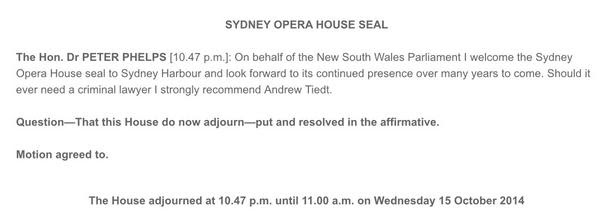
The NSW Parliament welcomes the Sydney Opera House seal; recommends a criminal lawyer, proving the NSW parliament doesn’t understand how migration works

Yesterday, Tuesday 14 October, the NSW Parliament took time out from being massively corrupt to welcome the Sydney Harbour Seal to Sydney Harbour.  And also to recommend a criminal lawyer in case it, too, is massively corrupt.

unnamed

[SYDNEY OPERA HOUSE SEAL

THE Hon. Dr PETER PHELPS [10.47 p.m.]: On behalf of the New South Wales Parliament I welcome welcome the Sydney Opera House seal to Sydney Harbour and look forward to its continued presence over many years to come. Should it ever need a criminal lawyer I strongly recommend Andrew Tiedt.

Question-That this House do now adjourn-put and resolved in the affirmative.

Motion agreed to.

The House adjourned at 10.47 p.m. until 11.00 a.m. on Wednesday 15 October 2014]

nz fur seal

A three year old New Zealand fur seal has been hanging out on the steps of the Sydney Opera House for a few weeks. When it first arrived the New South Welsh police were called (because Sydney, I guess), but it was officially welcomed by the New South Wales Parliament yesterday and also recommended to a criminal lawyer.

This is clearly a misleading recommendation as, if anything, the seal will require a migration agent. However given the current state of Australia’s immigration climate, the recommendation of a criminal lawyer may not be completely remiss.

Further complicating matters, and in long-standing tradition, Australia has already claimed the New Zealand seal for itself, naming it the Sydney Opera House Seal despite it clearly being a Kiwi. We expect the seal will be lounging around and claiming the dole shortly.

linkspam of the night

Hilarious article about media bias and journalism over at Junkee: The Australian’s Media Editor Goes To Uni “Undercover”; Is Outraged That Media Degrees Are Teaching Media Students About The Media

Disclaimer: No Award is a ridiculously leftist website. In case you hadn’t noticed.  Also, Liz did, like, six months of a Bachelor of Journalism before she realised she hated talking to people.  That was back when NewsCorp was more or less respectable, and it still provided 95% of examples of terrible media bias.

Stephanie adores Leigh Sales, and she interviews Annabel Crabb re: the Wife Drought and allows me to love her even more (and Annabel is also good). Annabel Crabb explores the Wife Drought.

Stephanie super loves art, and she especially loves south east asian art, and being mean to European art, so this article at The Toast, Literally All of Europe Can Suck It, about the new discoveries in Indonesia, fills her with glee and delight. (Here is an article in Nat Geo if you didn’t know about it yet)

Frozen, Legend of Korra, Avatar: The Last Airbender, and the Narrative Right to Trauma

Trauma in modern American media is a tricky thing. On one hand, the backstories of nearly everyone, heroes and villains alike are full of it. On the other, trauma is heavily shamed, and leaves characters open to accusations of weakness, or of being whiny. This means that while we want characters who go through traumatic experiences, we are extremely uncomfortable with expressions of trauma. Also, we are much more comfortable with some expressions of trauma than with others. Only certain kinds of traumatic expression are allowed, and like so much about culture, who and what a character is determines what kind of traumatic expression we as a society will allow them to have. Straight white men are given the most freedom to be traumatized, and stereotypically masculine trauma is the most widely viewed as legitimate within fandom in my experience.

Don’t Look Up: a Guide to not Being Completely Gullible and Making an Idiot of Yourself by Reblogging False Information on Tumblr

One of Liz’s pet peeves is the way Tumblr culture encourages rumour, misinformation and outright falsehood.  It’s partially a problem with the platform’s limitations in general, but it’s more complex.

Anyway, this post gives some useful, practical tips on finding sources and confirming facts, and generally applying critical thinking.  (One of the advantages in growing up in a super right wing household, as Liz did, is that her parents taught her how to critique the left, and then she discovered the same skills could be applied to anything.)

In amazingness, British backpacker Daniela Liverani had leech up her nose for weeks.

This weekend unexpectedly split Australia as we saw the great potato CAKE debate of 2014. Important Australian stuff. Stephanie stopped off on her way home for a potato cake.  PS TEAM POTATO CAKE.

Talking about chronic illness, as a reader and as a writer.

On Chinese Horror: Part 1 at Snow Pavilion

No Award around the place: Steph forgot to mention, but a couple of weeks ago she put up her long essay on feminist monsters of Asia! It’s 8500 words originally published by The Lifted Brow, now available for download. Sympathy for Lady Vengeance: Feminist Ghosts and Monstrous Women of Asia. The monstrous women of Asia, feminism, and colonialism.

book review: chinese whispers

In Chinese Whispers, Ben Chu “examines the myths that have come to dominate our view of the world’s most populous nation, forcing us to question everything we thought we knew about it. The result is a penetrating, surprising and provocative insight into China today.” It’s provocative and surprising because it’s so poorly referenced and researched, with significant weighting given to personal anecdata, a significant lack of actual referencing, and an over reliance on stereotypes whilst promising to debunk them.

The task Chu assigns himself is not insignificant; nor is it a wrong task to undertake. There are stereotypes of Chinese people, and they can wear a person down. But the way he goes about it is just as lacking in scientific rigour as the stereotypes he promises to debunk, and in the end the book changes nothing and offers no real insights into anything other than more prejudice and stereotypes.

In ‘Whisper Five: The Chinese Live to Work,’ Chu examines the stereotype of the Chinese work ethic, the myth that Chinese people are industrious, more hard working than westerners, willing to pull 20 hour days because of an innate desire to do so. In this chapter he describes the perceived docility of Chinese men working on railways in the USA, the tales of missionaries in the 1800s of peasants out in the fields from dawn till dusk, and Orwell’s 1984, in which the inhabitants of Eastasia can’t be conquered because of their industriousness and fecundity. Chu also looks at domestic and Chinese cultural elements of this stereotype, such as the chengyu 吃苦耐劳, to eat bitterness and endure labour, and how Mao played on this traditional stereotype in implementing workers villages.

He attempts to debunk this stereotype by highlighting how Mao’s model villages were secretly manufactured; and goes on with further evidence of the youth of today, how the 八零后, those born since the 80s, are lazy little emperors, thereby defeating the myth of Chinese innate industriousness. Chu also mentions an interview in which a Chinese labourer in Italy remains, though he has earned sufficient to go home, because he wants to pay for his son’s education, raising the question: why is one of the myths debunked in this book not the Chinese love of money?

This is the point at which I elected not to finish the book. After five whispers (of seven), frustration at the roundabout construction of the chapters and the lack of referencing and consistency (

And it remains today. We hear complaints that Chinese labour teams sent to Africa by their government to work on infrastructure construction projects…do not patronise local shops, but instead shut themselves off in their fortress-like compounds until their work is done and they can return to China.

Do we? I don’t know, because he doesn’t provide any evidence!), and the clear way the book was written for a white audience with an us versus them dynamic (“Why do we assume China’s culture is immutable?” and the vague implication of racism against white people), I finished the chapter (to see if he took the lazy young people analogy anywhere), and gently closed out of the book.

As a Chinese person, this book does nothing for me. In the context of Australia in the Asian Century, and the constant ebb and flow of Australia working within a Chinese business context, this book does nothing for us. As a non-Chinese person looking to learn more about Chinese traditions and, I suppose, Chinese ways of thinking, this book does nothing for you. Do not read this book. I don’t know what I’m going to do with this terrible copy.

ZERO TRAMS OUT OF ANY TRAMS.

Further notes:

  • Whisper Three, on politics, is called “The Chinese don’t want freedom”, a loaded title.
  • “‘Who has more power, businessmen or politicians?’ I once asked my aunt. ‘Politicians, by far,’ was her unambiguous reply” – offered in chapter 3 with no further discussion, as if this is evidence and not an autobiographical note.
  • Whisper Four, on education, is called “China has the world’s finest education system.”
  • “The episode attracted a million hits on the day it was released,” offered (again, with no references), as evidence of the popularity of satire against the government. In a population of 1.37 billion people, can this truly be called evidence?
  • “One constantly hears that representative democracy would lead to violent chaos.” Oh, does one? One wouldn’t know, because Chu doesn’t deign to offer references!
  • “Indeed, the fact that the forms of constitutional government were kept on, even when they were empty, represented a tacit acknowledgement of their legitimacy, just as hypocrisy is the tribute that vice pays to virtue.” What does this even mean?
  • There is so much more, just ask me, I’ve got pages and pages of notes of my disappointment and dislike.

linkspam is the fatberg of the night

Hey have some feels about the lack of representation of brown people in a movie about EGYPT. ABOUT BROWN PEOPLE. I mean, I adore Geoffrey Rush as much as the next Australian in her early 30s, but never in my entire life did I imagine him as Ra the Sun God. If Geoffrey Rush can be Ra, why can’t I? All lead actors in The Gods of Egypt will be white by Ruby Hamad (an awesome writer)

Lian Low has written part 1 of 3 about the Inaugural Asia Pacific Writers Forum at this year’s Melbourne Writer’s Festival! Stay tuned to Peril for life, but also for further parts!

List of complaints against Beyond Blue campaign dismissed by ASB.

Hey there is some shit going down with the way that Muslim Australians are currently being terrorised, targeted and treated, and it is not cool.

On Numan Haider at SBS (I’m not typing out that headline and you can’t make me)

Three fans ‘humiliated’ by police treatment at Roosters-Cowboys match

A quick recap of all the times Australia treated Muslims like complete garbage (last) week at Junkee.

On the security stuff: Journalists and whistle blowers will go to jail under new national security laws; #heyasio (the only thing that got me through Friday).

Important info on FATBERGS: How bad are they; an Oxford ‘out of control’ fatberg (in April) was threatening homes. HOMES. More recently, Richmond (in Twickenham) was named a fatberg HOTSPOT. We can only aspire to that sort of ecological horror, I suppose. Good thing we have a Great Barrier Reef to ruin.

Liz wants to link us to ‘Is Agents of Shield really an interracial family show?’ Liz is appropriately embarrassed about watching Agents of Shield, but in her heart Melinda May hangs out with Lin Beifong and they trade stories about being reluctant mentors to young women, so that’s okay.

At Kill Your Darlings: Oversharing is caring: the rise of the twenty-something memoir.

SURPRISE: The AFL has a racism, sexism, and homophobia problem.

Busted flush: corruption in Queensland at Overland.

No Award loves infrastructure: The weird afterlife of the world’s subterranean ‘ghost stations’

The Australian Women’s Writers Challenge has a series at the moment, focusing on women writers with a disability. Check it out!

Also on disability, Liz on her tumblr points out a case of disability policing by those who are not really in a position to do so.

The emotion involved in caring for a parent with Younger Onset Dementia at the Dementia Research Foundation.

THINGS TO ATTEND (Melbs only; please submit links to No Award for anything else that might be of interest/relevance) (neither of these are things we have been asked to promote, Steph is just interested in them):

Key of Sea at The Wheeler Centre (free; this Wednesday at 6:15) (Steph will definitely be at this)

Join us for an emotional night of storytelling and song. The Key of Sea produces creative projects – albums and journals – that celebrate Australia’s cultural diversity. The albums pair established artists with musicians escaping war, hardship or persecution.

In this intimate evening, we’ll hear from Danny Katz, Oslo Davis, Alice Pung, Zakia Baig, Awaz and Murtaza, as they share their work. All proceeds of album and journal sales on the night will go to the Asylum Seeker Resource Centre.

The Privacy Workshop ($65/$45; 17 October)

The Privacy Workshop is a world class symposium on digital privacy, rights, and access. A range of respected speakers and thought leaders will gather in Melbourne, Australia, for a day of exceptional discourse through lectures, workshops and panel discussions.

a family situation of dementia

September is Dementia Awareness Month, and I was in the office when I started crying.

We don’t really talk any more because there’s not a lot she has to say. If she does talk to me, it’s usually to ask, “Can you help me? Is today Friday or Wednesday?”

The saddest part has been losing the person you go to when your world falls apart. No matter how old they get, a lot of girls think, “Mum will know how to fix that.”

[x]

I was a daddy’s girl, growing up. I tagged along with my dad to train shows and plane shows; we walked on ahead of my mum and my sister on family bushwalks and stomped on ant nests together; we’d look at books of airplane schematics and exchange thick spy novels and murder mysteries.

A few years ago, my father started to change. He was a little slower; a little angrier. He made wildly out of character accusations (but not completely out of character. Just enough). He stopped answering questions.

When I was seven, his parents died. They both had degenerative mental illnesses when they went and, oh, how I was ready for this day. I have been ready since I was seven.

**

When daddy got the diagnosis, I was told (not by my dad) not to talk about it. Nobody needs to know. But now that it’s a part of our daily lives I’ve overruled that request more times than I can say, so many times that I don’t even try to hide it any more. When people ask ‘how was your trip to Perth?’ or ‘how are your parents?’, I tell the truth. “Dad has Alzheimer’s,” I say, if they don’t already know. “And we’re getting by.”

I talk about the ups and the downs. I talk about his slowness and his distance. I talk about the toll it’s taking on my mother, his primary caregiver; on my sister, for whom he now plays up, like a child. I talk about how he needs to be told what to do, sometimes, but how I don’t want to take away his autonomy and I don’t know how to balance that. I talk about how my family is struggling and I’m 3000 kilometres away, but I worked hard for this life and I’m not sure I’m willing to give it up.

I talk about how I’m Chinese and Chinese daughters don’t put their fathers in homes; how can I be a good Chinese daughter if I even think about it? But my dad’s not Chinese, so does that mean I can?

**

Instead of moving back to Perth, right now the compromise is flying there once every 4-6 weeks. I rearrange my work week and I go straight from the office to Tullamarine and from there into four days of family time, giving my mum some breathing space and my sister some room. And I sit beside my father, asking questions and paying attention, letting him be ‘naughty’ but not too far, not far enough to hurt himself. Which he sometimes does. Late on Monday, I fly back to Melbourne, tumble into bed in time for a 7am wake up and back to work.

I thought I’d been open about it, talking about it despite the anguish burning inside, the shame nibbling at the edges. But still my friends ask how my visit home was, genuinely expecting to find it was a fun holiday in the sun and sand. Still other friends ask me to spend time with them in Perth, as if I’m there with moments to spare. So I’m obviously not talking enough.

**

I was walking through Flinders Street Station on Friday, and saw a bunch of people handing out things. They’re things for September, their blue declaring that it’s Dementia Awareness Month. By Friday, I’d been back from my most recent visit to Perth by three and a half days, and I was exhausted because I hadn’t had a weekend for a while. And there they were, raising awareness about dementia.

My dad has Alzheimer’s. And when I started telling people that he has it, there’s always someone who has been touched by it, too. The woman I call Nan (not my actual Nan). My friend Nic. People at work, who understand when I suddenly disappear to take a half hour call from a family member.

Maybe I’ll get it, too. Maybe I won’t. But if we talk about it, maybe we’ll all be a little better prepared.

**

What’s really important to me is that we get to treat my dad (and others, of course, with dementia) in a way that respects them, in a way that still allows them autonomy and decision-making. Sometimes I catch myself talking to him as if he doesn’t understand, and it’s not that; he’s just changing, and I can accommodate that.

People with dementia often feel isolated, because they don’t get visited so much – a person with dementia can be confronting, and scary for a host of reasons. But that’s why I want to talk about it. I’m always trying to get people to visit my dad when I can’t be there, and being with my dad all the time is wearying on my mum and my sister.

Alzheimer’s Australia has a bunch of dementia-friendly resources for creating a dementia-friendly Australia.

I’m super into dementia enabling environments (the subtle changes I plan to make on my next visit to the family home are not major but they will, I hope, help).

**

For example, she says a recent survey showed over 50 percent of Australians think a person with dementia can’t have a meaningful conversation.

“We really need to challenge that, so we would encourage more understanding about the function of the brain, that the messages are just not getting through with dementia,” Mary says.

“So we would try and encourage people to understand some of those behaviours, to take it quietly, to slow things down, and people will understand, to just give people time to respond.”

David and Lennyce both encourage carers and people who have recently been diagnosed with dementia to access all available services, educate themselves and attend support groups.

[x]

It’s hard going, but I have hope.

[a photo of me and my dad is going to go here later. but it turns out i don’t have any electronically, and isn’t that an interesting thing]

Letters to NA, the Prime Ministerial Edition

Dear No Award,

The Governor-General is avoiding me and I just caught Malcolm Fraser measuring the curtain rods in the Lodge.  Is this a sign from the universe that I should totally go ahead and borrow money from those totally-not-shady Middle Eastern dudes?

Yours, Gough

**time

Dear No Award,

I really love swimming, but my staff think I go too often. Do they really care about my health, or are they just being ninnies?

Yours, H.H.

**

Dear No-Award,

The PM won’t return my calls and is pretending that we didn’t pinky-swear about the PMship in Kirribilli that one time. How do I make him step aside?

Yours faithfully,

PK

**

Dear No Award,

I have a plan for fighting the Depression, which is an excellent plan, and much better than the Melbourne Plan, which is silly because it comes from Melbourne not Sydney.  In the event that the Governor of NSW sacks me, would you recommend getting the NSW Police to fight the army?

Sincerely, Jack Lang, The Big Fella

**

Dear No-Award,

The PM won’t return my calls and is pretending that we didn’t pinky-swear about the PMship in Kirribilli that one time. How do I make him step aside?

Yours faithfully,

PC

**

No Award 亲爱的,如果我被解雇,几年可以败坏而且我的替补员还有我的政党,因此摧毁,好不好?K07

[Dear No Award,

In the event that I’m fired, is it reasonable to spend the next few years undermining my replacement and my party, leaving it in a shambles?

K07]

**

Dear NA,

Are you there, God? It’s me, Tony.

**

Dear No Award,

There’s no possibility that history will judge my government’s policy of limiting immigration to white people, is there?

Yours faithfully,

Edmund Barton

**GILLARD STATUES UNVEILING CANBERRA

Dear No-Award,

My opposition to the Japanese racial equality proposal at the Paris peace conference after WWI won’t have any lasting repercussions for Australia, will it? I’m pretty confident about this one, ngl.

Best,

Billy “That Pestiferous Varmint” Hughes

**

Dear No Award,

Look, I just think that Hitler guy isn’t so bad.  Sure, he invaded Poland, but who needs Poland?  Nazism has its good points, though it’s all a bit too foreign and weird.  Do you think I should keep urging England to keep on appeasing Germany?

Hugs and kisses,

RMenz

PS, I’ve been thinking about using nuclear weapons to dredge harbours. That couldn’t have any side effects, could it? Best.

**

Dear No Award,

Some dickhead keeps lighting lanterns on hills in Bathurst. Is there anything I can do to stop the bastard?

Cheers

Ben Chifley

**

Dear No Award,

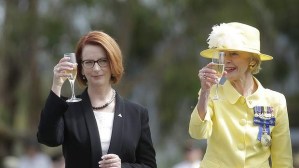
I really want to become Australia’s most effective yet least popular PriPrime Minister Julia Gillard and Governor General Quentin Bryce toast the Centenary of Canberra. Photo: Andrew Meares  stolen from the SMH webpageme Minister yet. Should I start by being a woman or calling the Opposition Leader a misogynist in parliament?

All the best, Julia

**

Dear No Award,

It looks like there’s going to be a war, and I’m feeling a bit neglected by HH. Thinking about hooking our great nation to that charming Roosevelt inspite of the objections of a whole lot of losers. I’m also going to introduce unpopular but socially and racially progressive politics during a time of upheaval. This can’t end badly, can it?

Best Regards,

John Curtin

**

Bonus Premiers:

Dear NA,

Someone seems to be coming along in the middle of the night and smashing up all the heritage buildings in Brisbane.  Unfortunately, the noise attracts protesters.  How many cracked skulls will shut that nonsense down?

JBP

**

Dear No Award,

I’m worried my legacy won’t uphold itself after I’ve gone. I’d really like to build something in my image, that really speaks to me. I love my mancave back in my house, so what about giving the state a really gigantic shed?

Love lots, Jeff.

**

Dear NA,

I can’t recall.

Carmen


And here’s the thing that started it all:


Royal Commission resumes

Former PM Gillard has returned to the witness box, where she’s facing questions over renovations she made on her home in 1993 – allegedly funded by money from the union slush fund.

Gillard has just told the commission that she went to Queensland for a holiday, and that while she was away, her then-boyfriend Bruce Wilson “commenced with a group of friends demolishing the bathroom”.

Gillard had apparently been talking about renovating the bathroom for months. “BruceWilson obviously thought I should get on with it and created circumstances where I had to get on with it,” she said.

“By the time I came back the bathroom had been demolished so I had no option but to get the rest of the renovations done.”

To which NA respectfully replies: dump that bastard, and you too can become PM of Australia.

This post was constructed with assistance from noted Fatberg Zoe (again. She’s pretty gold).