the fatberg of melbourne

In early September, Fatberg Fever gripped Melbourne, after the announcement of a Fatberg discovered by Yarra Valley Water in February.

Fatbergs are a serious problem, and one about which Stephanie, as an environmental professional, is qualified to speak.

SOME FACTS ABOUT FATBERGS and your drain system:

  • A fatberg is caused when fat, grease and oils smush together and block pipes. It’s kind of like fat in your arteries, but it’s the arteries of your city!
  • The problem is compounded by increased waste generation in urban centre.
  • Improper waste disposal is a sin! (And also a crime)
  • Things that you can’t put down the toilet or the sink: wet wipes; tissues; pads and tampons; condoms; oil; nappies WHY WOULD YOU EVEN WHAT IS WRONG WITH YOU, plastics, paint.
  • Things that you shouldn’t put down the sink: food scraps.
  • Fatbergs could possibly be a source of biofuels, but do not try to create one in order to find out.
  • The biggest fatberg ever found was under London, the size of a 747.

Stormwater drains go straight into the sea/river/ocean/bay. There are not consistently filter systems. Drains are different, but not that much different, as demonstrated by Fatberg.

My favourite quote ever is this one, from David Snadden of Yarra Valley Water:

“We all know where number ones and number twos should go, but there is no such thing as a number three, so please do not put anything else down the drain.”


If you want to see some pictures, check them out here – I won’t gross out NA readers by subjecting you without warning.

Our love of Fatbergs is so strong, music happened:

“FATBERG FATBERG, WHAT YOU GONNA DO
WHAT YOU GONNA DO WHEN IT COMES FOR YOU”

“SHA LA LA LA LA LA MY OH MY, LOOK LIKE THE BOY TOO SHY, WHY DON’T HE KISS THE FATBERG”

“Fatberging across the universe, on the starship Fatberg, under captain weaves!”

In conjunction with some friends and a need to avoid work, here is an ode to the Fatberg, written by noted Fatberg Zoe:

In sleep it blurbs to me
In dreams it came
That berg which calls to me and blurbed my name
And do I dream again for now I find
The fatberg of the city is there
Inside the drain

Blurble once again with me
Our strange duet
My power over you grows stronger yet
And though you turn from me to glance behind
The fatberg of the city is there
Inside the drain.

Those who have seen your fat
Draw back in fear
I am the fat you wear
It’s me they hear…

Your/My foodscraps and my/your fat in one combined
The fatberg of the city is there/here
Inside my/your drain

It’s there, the fatberg of the city!
Beware, the fatberg of the city!
It’s there, the fatberg of the city!
Beware the fatberg of the city!

In all your fantasies, you always knew
that blob and blurbleness
Were both in you
And in this drainage pipe
where fat is blind
the fatberg of the city is there
inside the drain

it’s there, the fatberg of the city

squiiiiiiidge, my fatberg of sewerage
squiiiiiidge, my fatberg
squiiiiiiidge for me

squiiiiiidge, my fatberg!
squiiiiiiidge for me!


Good day, No Award. Please watch what you throw down the sink, toilet, and stormwater drains. Your city thanks you. 

other places; other people; othering people

A travelogue is an old tradition; an old form of writing. There are records of travel diaries as early as the second century CE; there are Arabic travel journals in the twelfth century and Chinese travel literature in the tenth. There are diaries and journals; maps and economics; boredom and poetry.

A travelogue is the transcription of an adventure; of an exploration; a movement into the unknown or, less commonly, into the known. Travel literature considers one’s identity, and one’s country, and one’s world.

A travelogue is, often, a reflection of the self.

A travelogue tells the audience a lot about a traveller. Between the lines are the things the traveller sees every day, and the assumptions a traveller makes, and the joys a traveller takes from moving through the world.

writer's victoria tweet:
writer’s victoria tweet: “what drives people to suffer in parts of the world with unpronounceable names & indigestible food? we’ll ask @tomdoig”

**

In Australia, and predominantly in English-language writing, a travelogue is about the traveller; and in its way, it is about the other. This requires an assumption around who is the audience, and who is the other, for there are few other ways to represent those with whom the narrative comes in contact.

I love travelogues. I love them for what they tell you about a person, and a place, and sometimes, what they tell you about yourself. I love travelogues of Australians in Australia; non-Australians in Australia; Australians not in Australia. (I also love travel tales of people in China and Malaysia and Singapore, the other places of my heart) I love these because whether these are travel stories of people in their homes or not in their homes, their stories are always new to me, and there’s always an exploration and an unfamiliarity and a joy, of sorts.

**

I love it when people talk about their travelogues!

In other news, here’s Other Places, a thing Writer’s Victoria is hosting tonight:

What drives people to leave the comfort of their everyday lives and suffer in far-flung parts of the world with unpronounceable names and indigestible food? Is it our essentially “nomadic” nature, as Bruce Chatwin claims? Is it “The Call of the Wild”? Or is that just a bunch of pretentious First World rubbish? All of the above, according to Tom Doig, author of Moron to Moron: two men, two bikes, one Mongolian misadventure. Come along and find out why.

The audience: clearly not me. Though I choose to leave the comfort of my inner-north Melbourne home, it’s for the comfort of the family home in Malaysia, with its squat toilets and five grown adults in two bedrooms and mosquito netting. I’m a person with a name that is, in its way, unpronounceable (certainly many people mispronounce it). My food is, to many people, indigestible. So, in the dichotomy of the audience and the other, I’m pretty comfortable in assuming I’m the other, here, despite having been born in Australia and loving a good travelogue.

People not from the “first world” travel, and then write about it. People from the first world can be pretty rubbishly pretentious.

“The Call of the Wild” is primarily a racist concept used in racist situations (white people talking about not-white people).

I really wanted to go, because I love travel writing and I’m currently working on a brown person’s travelogue (mine). Now, I really want to go and find out if this event is gonna be as casually, thoughtlessly racist as it sounds like it’s going to be, but I really can’t justify the $50 just to get angry.

If you go, let me know. I’ve got some questions.

writer's victoria tweet:
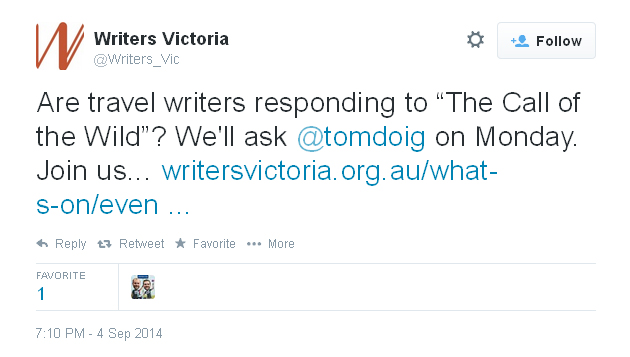
writer’s victoria tweet: “are travel writers responding to ‘The Call of the Wild”? we’ll ask @tomdoig on Monday. Join us…”

Other Places
Writer’s Victoria
The Wheeler Centre
September 8, 18:30 – 20:30
Non-member $50 / Member $35 / Concession $30

I have not made my sadness known to Writer’s Victoria, as I’m not currently a member. Lately, as I publish more and more regularly, and as I truly begin to consider myself the writer part of ’emerging writer’, it’s something I’ve been considering. But right now, after this, I don’t want to. How can I expect support from an organisation that promotes this exclusion?

indigenous literacy day

As a Chinese-Australian, growing up in Perth’s outer suburbs, Steph was privileged to gain an excellent education and a sufficient reading level, that she has used to collect degrees to hang around her neck. Not all Australians have that same advantage, however, and Indigenous Australians are amongst the least able to access education and literacy resources.

The first Wednesday of September is Indigenous Literacy Day, and today is that Wednesday. Last year, Steph and Liz Got Caught Reading (wow, based on those photos, it sure was warmer this time last year!), but this year we are both at work so probably shouldn’t publically admit to being reading right now. But you can!

You can find out all about Indigenous literacy at the Indigenous Literacy Foundation webpage, but here are some key facts:

  • Indigenous homes, particularly those in remote communities, have fewer books, computers and other educational resources than non-Indigenous homes. All of these factors are linked to children’s achievements at school and in the development of English literacy skills. (Bortoli and Cresswell, 2004)
  • The development of English literacy skills is important for the life opportunities of Indigenous children and youth. Literacy provides them with ‘the necessary skills to interact within mainstream society and avail themselves of the broadest range of civic, social, educational and employment possibilities’. (Mellor and Corrigan, 2004)
  • The gap between Indigenous and non-Indigenous students emerges early. Non-Indigenous students far out-perform Indigenous students in benchmark tests for reading, writing and numeracy in Year 3 and Year 5. By Year 7, the gap has widened, particularly for numeracy. (DEET NT 2006)
  • By the age of 15, more than one-third of Australia’s Indigenous students ‘do not have the adequate skills and knowledge in reading literacy to meet real-life challenges and may well be disadvantaged in their lives beyond school’. (PISA cited in Bortoli and Cresswell, 2004, page 11).

That is bullshit, right? Help close the gap by supporting the Indigenous Literacy Foundation and Indigenous Literacy Day. There are lots of events across the country, many bookstores are donating a percentage of takings for the day to the ILF, and if you donate you’ll not only be helping our country and Indigenous Australians but also you’ll probably look more attractive.*

Donate early, donate often. No Award will love you for it. 

Track ILD events on the hashtag #ILD14


Quick Link Roundup

The always excellent Luke Pearson at Eureka Street: Making Indigenous Literacy Day Obsolete

Carla McGrath, this week’s IndigenousX tweeter: Indigenous excellence is personal, it’s individual, and it’s about education

At the Wheeler Centre: It’s Indigenous Literacy Day Tomorrow, a good summary post

At the SMH: Tiwi Islands students take part in writing workshop for Indigenous Literacy Day


*not guaranteed by NA.


movies in melbourne (as if we don’t have enough of that)

In blatant Melbourne bias, now that the Melbourne International Film Festival is over, here is a list of film festivals on over the next five to six weeks. You should go see some movies!

Arab Film Festival, currently running until Saturday.

Israeli Film Festival, currently running until 4 September. Also in Sydney, Canberra, Brisbane, Perth, Adelaide, Byron Bay.

Czech and Slovak Film Festival, 21 August – 10 September. A theme of resistance and a celebration of Czech and Slovak events. Also taking place in Sydney.

Bayside Film Festival, 27-31 August. I am particularly excited about their youth project where they work with Bayley House and Berendale.

Environmental Film Festival, 4-12 September. Advancing the knowledge and understanding of environmental issues.

Korean Film Festival in Australia, 9-16 September. Also taking place in Sydney, Canberra, Brisbane, Perth, Adelaide. With a welcome to Hallyuwood and some awesome Korean cinema.

Girls on Film Festival, 12-14 September. Movies by feminists, for feminists. Stories of women and strength.

Italian Film Festival, 17 September – 12 October. Also in Sydney, Canberra, Hobart, Brisbane, Perth, Adelaide, Byron Bay.

Also the Melbourne Writer’s Festival starts tonight!

in your face

Hello! As ladies with opinions, Liz and Stephanie are here to bring you some opinions on books recently consumed.

These are not really SFF, but they are Australian, so if you like crime and mystery check out the books shortlisted for the Ned Kelly awards, noted here by friend of No Award Fi. The Ned Kellys are the annual crime awards for Australia. There are some excellent reads on that short list.

On Stephanie’s to be read list this week: The Wrong Turn at the Office of Unmade Lists, Jane Rawson.  Melbourne’s climate change dystopia. SUPER EXCITE.

Liz does not plan her reading in advance, as that’s a level of organisation that’s beyond her.  Her recent reading includes:

The Sleeping Partner by Madeleine E Robins, a mystery set in a very-slightly-alternate Regency England.  This series has been out of print and hard to find for a while, but has just recently become available in ebook form, with a brand new third novel.  I appreciate the way Robins mostly uses her alternate history to increase the presence of women — here, Queen Charlotte becomes George III’s regent, and Mary Wollstonecraft Godwin survives the birth of her younger daughter, albeit with a disability.  The heroine is not quite Lizzie Bennet with a sword, but she’s delightful nonetheless.

For 88 cents, she bought Operation Mincement by Ben Macintyre.  This was picked up because Liz enjoys the interesting corners of history, but it’s also quite funny (if you enjoy shenanigans with corpses and wry observations about imperialism).

Stephanie is currently reading a book that will shortly be included in an article temporarily titled “doing it wrong”. It’s River of Gods by Ian McDonald, which is a gross example of entitlement and cultural appropriation in science fiction and fantasy; in this instance set in and stealing from India.

Liz recently finished Hild by Nicola Griffith, and found it disappointingly dudecentric. Though the heroine is very much bisexual, and has close sexual and platonic relationships with women, her primary attraction is to her illegitimate half-brother, a jerk who badly needs punching in the face.  Hild is interesting despite its flaws, but the reader’s hard work is rewarded with gross non-consensual incest (as Hild’s brother isn’t aware they’re related).

Please use the comments to rec and anti rec this week’s books.


service: tell my jerkbrain that i can do this thing

Dear all who were raised whilst being told they weren’t as good as white men, here is an article that tells you nothing new.

The Confidence Gap

A review of personnel records found that women working at HP applied for a promotion only when they believed they met 100 percent of the qualifications listed for the job. Men were happy to apply when they thought they could meet 60 percent of the job requirements. At HP, and in study after study, the data confirm what we instinctively know. Underqualified and underprepared men don’t think twice about leaning in. Overqualified and overprepared, too many women still hold back. Women feel confident only when they are perfect. Or practically perfect.

Australian ladies are in no way exempt from this terrible phenomenon, and although I’m struggling to find evidence, I suspect they are further constrained by the frustrating Tall Poppy Syndrome.

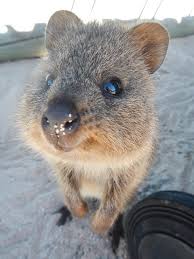
Photo: smiling quokka (Fin Popper/Creative Commons)
a quokka – secretly a killer (like all australians)

And non-ladies will also find this relevant; basically any member of any minority group who was told they weren’t as good as a conforming white man. Please ignore the USA tech industry biases in this article and apply its truths to your life as you see relevant. Note that what is considered self-confidence varies across cultures, traditions and upbringing, and can be exacerbated: when this article comments that assertive women are often considered bitches, it fails to note that black women (and men) in North America are considered uppity; that Asian women in Australia are considered dragons; that Aboriginal people are ignored as if they are not even there.

In light of this not new and completely unsurprising information about the role of misogyny in our established societal systems and jerkbrains, No Award and Penguin Productions are compelled to offer a new service: the I Can Burn It Down service.

Services provided in this program:

  • You ask: No Award, can I do this thing and crush this city to the ground? No Award replies: Indeed, you can do this thing, and lists you why so you can shut up your lying jerkbrain.
  • Positive reinforcement is aided by motivational sharks, an evil cat, and adorable penguins who will assess your abilities (all excellent) and experience (so great) and confirm for you that you can do this thing.
  • Reassessment of negative feedback from jerkface other parties, and confirmation that you can indeed burn it down.

This service was designed with Australians in mind, and please note that it is opt-in for all self identifying ladies, gender non-specifics, those who were forced to be ladies against their actual identity, and any others who were raised whilst being told they weren’t as good as gender-conforming white men and currently feel a need for this service.

The management recognises that sometimes it will not be available to provide this service, as all service operators are currently located in Melbourne, Australia. To that end, we also provide a handy toolbox below.

Techniques for those momentarily lacking the confidence to burn it down:

  • Armour yourself for battle. Stephanie likes to do this wearing wings and bright pink clothes, but this is not suitable for all world-destroying tasks.
  • Confirm it for yourself: Can I do 50% of this thing; if I were marked on my performance for this thing, would I earn a passing grade? If the answer is yes, then do the thing.
  • Is your jerk brain telling you no? Literally do the thing anyway.
  • Say this out loud: I contain multitudes. They will swarm out and subdue my enemies if I do not get my way.
  • Don’t take responsibility for things outside of your control. You are not a godling, despite your multitudes.
  • When someone tells you you can’t do the thing, put your feet firmly on the ground, cross your arms, and assert your dominance through an eyebrow raise.
  • Do not give ground.
  • On public transport, always establish your dominance, especially against those who consume more spaces than allotted. If you push back against their lavaballing, they will give way in surprise. Take advantage of this, and the endorphins of success it provides, to push harder. Hold onto this feeling when you disembark the tram.
  • Accept negative feedback, but only after running it through a trusted third party. You cannot have any of the best friends associated with No Award, but they are very good at their jobs and we recommend someone with similar skills.
  • ALWAYS ask someone society says is better than you to move their bag from the train seat. (Please don’t put your bag on the seat, anyone else, because I don’t want to have to consume you with my multitudes)
  • If you have something to say, say it.
  • Remember that your failures belong to society. Blame it accordingly.
  • Do not say sorry (except if you run over a cat. Then, maybe. MAYBE).
  • Always check the emails you write and remove excess apologies. Do not feel regret.
  • Do not run over a cat.
Creative Wombat - Common Wombat (Vombatus Ursinus) / https://www.flickr.com/photos/53368913@N05/6850727567/
wombat – definitely a killer

Leave a comment below to receive useful feedback from the No Award service. Others of the
No Award community are encouraged to aid this No Award service by also offering useful feedback. White cis men are allowed in the comments but will be gazed upon with non-yielding eyes.


snowpiercer: the revolution cannot be trusted if it’s white

Here at No Award, there are two things we know for sure about our dystopic climate change future: It is brown; and we will be eating cockroaches.

In related news, you know that No Award went to the movies this week! I really, really liked Snowpiercer (Liz and I disagreed on how great Pacific Rim was, as well). But this is not that joyful shrieking as I clapped my hands. This is a look at the use of non-white bodies and Western imperialism and moral attitudes in our dystopic future. This analysis accepts the basic premise of Snowpiercer: that is, that all of humanity remaining exists on a high speed train that hasn’t stopped in 17 years. There are no questions about track repairs, wear and tear on the outside of the train, and the supply of animal carcasses. Maybe later.

The movie ends with two brown babies leaving to start the world again. Everyone else seems dead. This is correct. End of the world boils down to an Asian girl and a brown boy, protected at the end by an Asian father and a white man. I dig it.

Racially, there are few other things I dig.

This revolution is peppered with brown faces but ultimately led by white ones, from one end of the train to the other. It starts with the disobedience of a white dude, who is oppressed by a white lady (using her tools of white and not-white). It is controlled by two white men, paternalistic imperialists who do what they do for the good of everyone else, never mind what anyone else has to say. It’s led by the man-pain of a white man, and takes a long pause when we learn what we already knew (he knows what babies taste like, man, because being 17 when the world froze he was probably privileged and shielded).

As Liz mentioned, Curtis (the beautiful Chris Evans) turns his judgey face on those he is leading when he discovers that protein bars are made from cockroaches. He decides they don’t need to know. Never mind that people (not white people) willingly eat cockroaches now, before our dystopic future has arrived. Never mind that he makes the decision on their behalf, like a patronising jerk. Never mind that in 17 years on a train, they’ve probably already realised. But this is a story about a white man, at its core, and the decisions white men make on the behalf of everyone they think is less than them (every one).

It’s uncool that we had to watch brown bodies being used for everything; literally, brown bodies. Grey, played by Luke Pasqualino, had to use his shirtless brown body to communicate because he was unable to speak. I enjoy a brown man as much as the next person (probably more, being a brown bisexual, and I have loved Luke Pasqualino since he was in the Borgias and fully clothed), but this is hugely problematic. Brown bodies, especially male brown bodies, have long been used in Western media as either items of lust and hyper-sexuality or as items of abuse (including in slavery). The hairless, shirtless brown man who can’t speak in English has often been shorthand for the exotic, noble savage, and Grey, following Gillam’s instructions, does nothing but support that stereotype: the brown person here for the story of the white person.

Like Elysium, the white-skied brown-earthed saved by the localised/nativised white man story starring Matt Damon and Jodie Foster and fewer brown people than I would have liked, the segregation of the brown tail end and the white-ish front end makes sense within the world. (I was, incidentally, so happy to see some brown children in the school car, though we really only saw that one smart-ass white girl). That the faces of control and violence are all white makes sense. That the faces of rigour and sticking to the rules are Asian are an uncomfortable stereotype of the model minority and super racist.

That the brown players are here for the consumption of the white person is confirmed by the costuming process, which you can read about in this interview. It is, at its essence, look at all the exotic clothes I put on all these white bodies. They’re so multi-ethnic! And they are. But, as always, with a white face, who takes what they can see and find but ultimately doesn’t understand what we’re here to do or what these stolen tools are for.

And in the end, Snowpiercer merely confirms everything we already knew. A cis white man cannot be trusted to smash the system; do not trust the white dudes with the revolution (cf Ms Hayley Inch in a text this morning). The system is always supported by brown bodies – literally, in the case of Grey’s very attractive yet constantly bare torso. And our climate dystopia is coming.

End note: I am interested in thoughts re: the ending, where Tanya, the African-American mother, has been replaced by Yona, holding Timmy’s hand as they walk (BARE-HANDED) into the snow. Whilst two brown babies is correct, there are thoughts around racial conceptions of motherhood that I don’t feel able to talk to but are worth discussing.

things your government has been doing

UGH, AUSPOL. Why must you be the blurst? Anyway, to keep you up to date on reasons to hate our federal government, here’s a summary of some things over the last week. Don’t worry, there’s more.

Proposed Changes to the Dole

I HOPE YOU AREN’T ON THE DOLE, not because you’re lazy (you’re not) or undeserving (your government should support you), but because of the proposed job applying thingy. If you’re on Newstart or Work for the Dole, you might be applying for 40 jobs a month.  “What we want to do is to motivate job seekers to leave no stone unturned in the pursuit of a job,” Assistant Minister for Employment Luke Hartsuyker said, because people who are long term unemployed are definitely doing it on purpose.  Excitingly, Eric Abetz, actual Employment Minister, admits that this might mean employers are spammed with fake, insincere, inconvenient job applications. But I am sure he is just being over-cautious.

Excellently, Centrelink won’t help you do selection criteria for jobs because it takes too long! And someone has handily put together this guide for applying for 40 jobs as quickly as possible.

157 Tamil Asylum Seekers Not on a Boat

157 asylum seekers have been stuck on a boat for a month (thanks, Customs, for keeping us safe), but have finally been allowed to get off the bloody boat. Scott Morrison says this is only because India wants to interview them and take them back, not because he is stopping his very important task of turning back the boats. This might not actually be legal? Who knows anymore. Scott Morrison says the Tamil asylum seekers are ‘economic migrants’ from India which suggests he doesn’t really know a lot about Sri Lanka and India and Tamils, which doesn’t surprise me at all. Even the Indian High Commissioner to Australia, Biren Nanda, says Tamil people living in Indian refugee camps usually aren’t actually citizens of Indian, which demonstrates just how much Morrison listens to brown people (never).

Carbon Tax

Fulfilling a grand total of one actual election promise, the Carbon Tax has left us temporarily (give it time). Given Steph is a climate change campaigner, it will not surprise you to learn she disagrees with our PM’s assessment of it as ‘toxic’, and that its abolishment will boost confidence.

Privacy and Spy Stuff

Although it’s pretty traditional to make fun of ASIS and ASIO, there’s some new stuff being proposed about data retention (which nope. Nope. I can barely be trusted to keep my own records, I don’t want others keeping it), ASIS’ ability to spy on Australians overseas without Ministerial approval (which makes me feel super safe), and compelling use of third-party computers (ie, people who aren’t under investigation).

The Great Barrier Reef

I am super pleased to tell you, via information provided by Environment Minister Greg Hunt, that Australia’s largest coal mine, recently approved and between us and the GBR, will not impact the Great Barrier Reef! The extra 450 large ships that will have to sail through the GBR to get there every year are totally negligible, and the high water use of coal mines will absolutely not impact the local marine areas. Handily, if this seems confusing, yesterday saw the triumphant return of Ian the Climate Denialist Potato at FDotM to explain the impacts of the mine and how it’s all totally okay and Greg’s a great guy.


Tribe: One Heartbeat

You can be forgiven for not knowing what that means. I’ve read the flyer and looked at the facebook page, and I still don’t know.

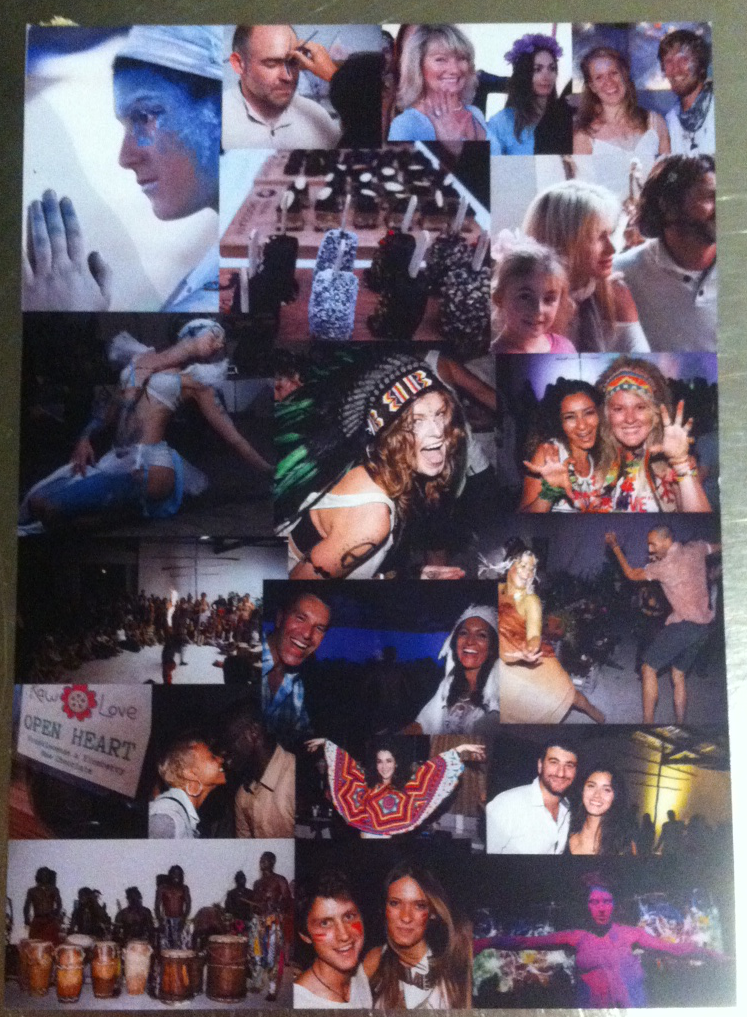
What I do know is that this is what the back of the flyer looks like:

tribe ugh

And that the front of the flyer says ‘connect feeling, share expression, awaken life.’ This event is apparently about community, but whose community? At between $55 to $80 for a ticket, with a WHITE AS clientele except for performers (and that one kissy face dude in the corner), I have my suspicions.

From the Trybooking page: WHO COMES: Everyone is invited! From children to grandparents! The main clientele is usually conscious people who want to celebrate their hearts openly in fun and play. And by defacing the heritages and cultures of other peoples, I guess. This event will apparently open with a sacred ceremony (sacred to whom? Cannot wait to see whose culture they indiscriminately mine to contribute to this feeling of transformation).

As always, thank you for including brown people in your event. By paying us to be performers and then abusing our cultures and heritages.

the bata shoe museum and the centering of the western experience

I’m in North America at the moment, having a grand old time, visiting museums and eating at vegan restaurants and buying more things than I should. Last week I visited the Bata Shoe Museum in Toronto, which has a lot of shoes, and some interesting curation notes, including the one notation about Australia, which I have in part transcribed for you. Only in part because my photo didn’t really turn out, but you get the gist:

Among the indigenous people of Central Australia a Kurdaicha is a respected elder … the spiritual power to execute a transgressor. With this ability, the Kurdaicha is able to … with a pointing stick and secretly send some of the energy to the transgressor that will kill. The shoes the Kurdaitcha wears are … constructed out of emu feathers and kangaroo hair.

The museum was fun, but it was all like this. A complete disrespect of indigenous people, and non-European histories.

Deerskin slippers made by Wendat women in Canada impressed visitors at the Universal Exhibition in 1855. These deerskin vamps are decorated with very fine moose hair in a floral pattern appealing to the Western market.

Some questions one might ask:

  • Central Australia is pretty big and filled with a number of peoples. Is there any one peoples in particular this tradition belongs to?
  • How did you get these shoes, museum? Did some coloniser steal them?
  • I’m so glad the slippers impressed visitors! WHY ARE WE CENTRING THE WESTERN EXPERIENCE?
  • How did you get these slippers?

I love museums so much. But other problems this museum had: outdated names for indigenous Canadian nations and peoples, and a general lack of specificity around a number of cultures and countries. This is hardly a unique problem; it’s just disappointing. The colonial gaze is prioritised, and the voices of those whose lands we’ve stolen are smushed together and silenced. Great. Good job.

**

Other things at the museum: the family behind me who looked at the lotus flower shoes and said “Are these for a child? These must be for a child” despite the notes on bound feet right there; learning about crinoline fire death; the chestnut crushing clog; and the smuggler’s clog, that looks like it’s stepping in the reverse direction.